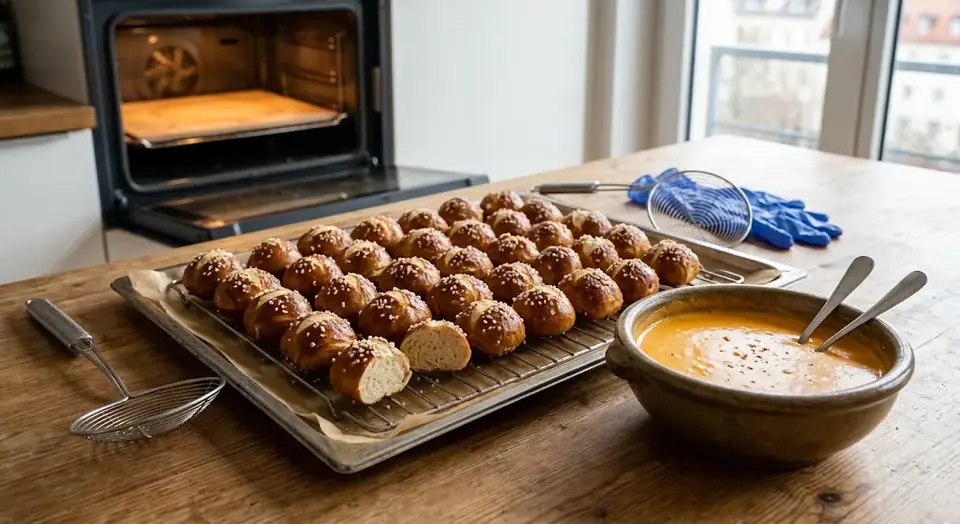
Germany, by way of the American bar · 51.08° N, 10.27° E
Pretzel Bites
Bite-size Laugengebäck for a crowd, with a cheddar sauce to dip.
At a glance.
Pretzel Bites comes from Germany, by way of the American bar and appears in The Bread Atlas, in the chapter Rolls, Buns & Bagels. It makes about 40 bites, takes about 3 hours, and uses 16 ingredients and 11 steps.
- Yield
- Makes about 40 bites
- Method
- Oven 220°C / 425°F
- Time
- 3 hours
Ingredients
Tap an ingredient to tick it off.
- The Dough
- Baked-Soda Bath
- Cheddar Beer Cheese Sauce
Method
-
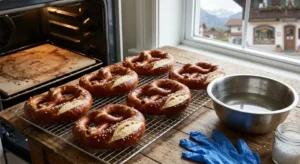
Bake the soda first: spread the bicarbonate on a parchment-lined steel tray and bake at 120°C / 250°F for 1 hour. It loses water and carbon dioxide and becomes sodium carbonate, a stronger alkali. It will weigh about 60 g afterwards. Handle it with gloves; it is caustic enough to irritate skin.
-
Mix the flour, salt and yeast, dissolve the malt in the water at 18°C, add it with the butter, and knead 10 minutes to a firm, smooth dough at a final temperature of 23°C. Bulk ferment 60 minutes at 22°C.
-
Divide the dough into 6 pieces and roll each into a rope 2.5 cm thick, resting them halfway if they resist. Cut each rope into 2.5 cm lengths with a bench scraper — about 40 pieces of roughly 20 g.
-
Spread the pieces well apart on lined trays and chill uncovered for 30 minutes at 4°C. They need a dry surface for the same reason a full pretzel does, and small pieces skin over quickly.
-
Dissolve all the baked soda in 1 L of warm water in a stainless or glass bowl. Wearing gloves, lower the bites in with a spider, a dozen at a time, and leave them 20 seconds only — a short dip, because a small piece takes on far more alkali per gram than a large one.
-
Drain each batch well, set them on parchment-lined trays with 2 cm between them, and scatter the coarse salt over while the surface is still wet. Heat the oven to 220°C / 425°F.
-
That oven is 10°C lower than a full pretzel wants, and the reason is geometry. A 20 g bite has roughly twice the crust area per gram of a 100 g pretzel, so it browns and dries about twice as fast; at 230°C the crust is mahogany before the crumb is cooked.
-
Bake 12–14 minutes, rotating at 8, until glossy chestnut brown and firm. The internal temperature should read 96°C, though at this size it is simpler to sacrifice one and look at the crumb: even, close, no wet seam.
-
While they bake, make the sauce. Melt the butter, stir in the flour, and cook 2 minutes over medium heat without letting it color. Whisk in the warm milk in three additions, then the beer, and simmer 4 minutes until it coats a spoon.
-
Take the pan off the heat before the cheese goes in — cheese added to a boiling sauce splits and turns grainy. Add both cheeses in handfuls, stirring until each melts, then the mustard, cayenne and salt. Keep it warm over the lowest possible heat or in a bowl set over hot water.
-
Brush the bites with melted butter if you like and cool them for 10 minutes on a rack before serving. This is the one bread in the chapter with almost no shelf life: the same surface area that browns fast also stales fast, and by the second hour the skin has gone soft and leathery.
Cook’s notes
- To serve and keep
- Serve them hot in a bowl with the sauce beside, plus mustard for anyone who finds cheese sauce too much of a good thing. They are a bar snack and behave like one: made for a crowd, eaten in half an hour, not worth storing. Beer is not decoration here; the malt in both matches.

Where it comes from
Small alkaline pastries are ordinary bakery goods in southern Germany — Laugenstangen, Laugenecken, Laugenknoten, the whole Laugengebäck family sold by weight for breakfast and Vesper. The bite-size version belongs to somewhere else: the American appetizer menu. Pretzels reached American malls and stadiums through the Pennsylvania Dutch counties, where hard pretzel bakeries have operated since the nineteenth century, and the soft mall pretzel became a national format after Anne Beiler began selling them from a farmers' market stand in Pennsylvania in 1988. Cutting the pretzel into pieces solved a commercial problem rather than a baking one: a shared plate needs no shaping skill, travels from kitchen to table without breaking, and gives every piece an edge to dip. That last point drove the cheese sauce alongside it, descended from ballpark nacho cheese, which is why pretzel bites are almost never served alone. Baked small, they are a genuinely different technical proposition from a full pretzel, and the recipe changes accordingly.
All 13 recipes from Germany
All 303 recipes from United States
Pretzel Bites: quick answers
How long does Pretzel Bites take?
About 3 hours.
How many does this Pretzel Bites recipe make?
This recipe makes about 40 bites.
Where does Pretzel Bites come from?
Small alkaline pastries are ordinary bakery goods in southern Germany — Laugenstangen, Laugenecken, Laugenknoten, the whole Laugengebäck family sold by weight for breakfast and Vesper. The bite-size version belongs to somewhere else: the American appetizer menu. Pretzels reached American malls and stadiums through the Pennsylvania Dutch counties, where hard pretzel bakeries have operated since the nineteenth century, and the soft mall pretzel became a national format after Anne Beiler began selling them from a farmers' market stand in Pennsylvania in 1988. Cutting the pretzel into pieces solved a commercial problem rather than a baking one: a shared plate needs no shaping skill, travels from kitchen to table without breaking, and gives every piece an edge to dip. That last point drove the cheese sauce alongside it, descended from ballpark nacho cheese, which is why pretzel bites are almost never served alone. Baked small, they are a genuinely different technical proposition from a full pretzel, and the recipe changes accordingly.
More from Germany

More in Rolls, Buns & Bagels

https://www.atlasserie.com/recipes/bread/pretzel-bites/