France · Classical Technique · 46.56° N, 2.35° E
French Omelette
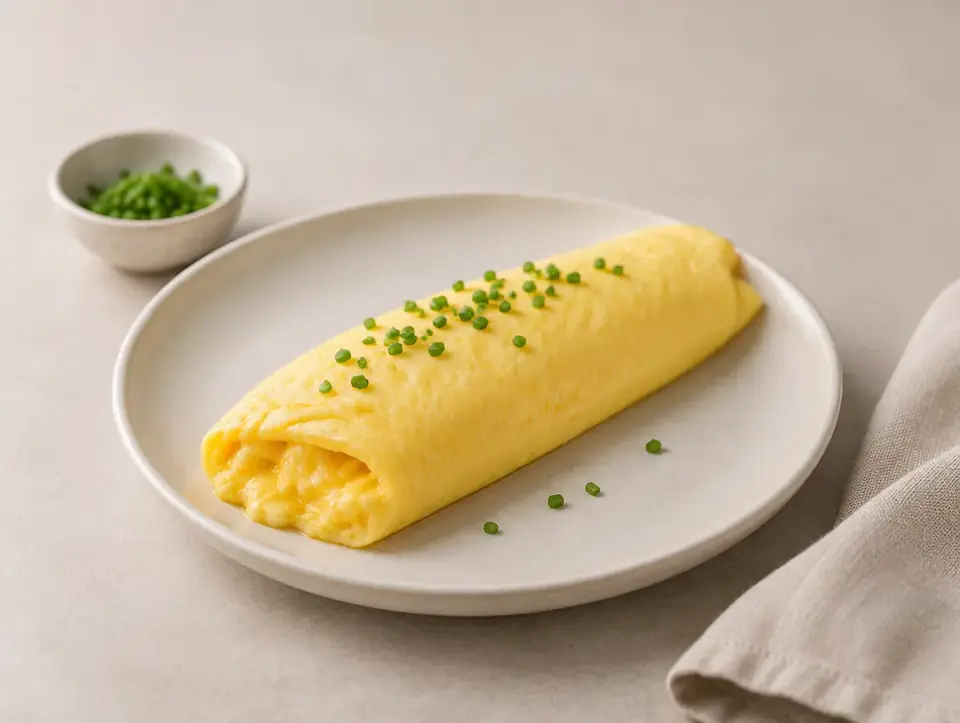
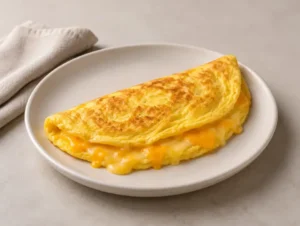
Pale as a baguette crumb, rolled tight, still baveuse at the center.
At a glance.
French Omelette comes from France · Classical Technique and appears in The Breakfast Atlas, in the chapter Eggs. It serves 1, takes about 8 minutes, and uses 5 ingredients and 9 steps.
- Yield
- Serves 1
- Method
- Stovetop
- Time
- 8 minutes
Ingredients
Tap an ingredient to tick it off.
Method
-
Beat the eggs with the salt using a fork rather than a whisk, for about 20 seconds. Work until the mixture runs off the tines in a single stream with no gelatinous strands of white left.
-
Pass the eggs through a fine sieve for the smoothest surface. This removes the chalazae, the twisted cords anchoring the yolk, which otherwise show as tiny pale specks.
-
Set a 20 cm (8 in) nonstick pan over medium heat and add the cubed butter. The moment the foam subsides, but before any color develops, is the point to pour.
-
Pour in the eggs all at once. Count two seconds, then shake the pan forward and back with one hand while stirring in small circles with a fork held flat in the other.
-
Continue for 30–45 seconds. The eggs pass through a soup stage into a mass of tiny wet curds that no longer flow freely. Do not let the fork score the pan surface.
-
Stop stirring and shake once to level the curds. Let the pan sit for 10–15 seconds so a thin, unbroken skin sets on the base — the shell that holds the roll together.
-
Tilt the pan away from you at 45 degrees and fold the far third down over the middle with the fork. The curds should still glisten and look barely set.
-
Knock the handle sharply with your fist so the near edge climbs the pan wall, then roll the omelette out onto a warmed plate, seam-side down, as a plump, tapered cylinder.
-
Tidy the shape by pressing gently with a clean tea towel, rub the top with cold butter until it shines, and scatter over the fines herbes. Serve within a minute.
Cook’s notes
- The technique
- The shake-and-stir does one job: it keeps every part of the egg moving so none sits against hot metal long enough to brown. Browning is a Maillard reaction between the egg's proteins and sugars, and it needs both a hot surface and stillness. Deny it stillness and you get color-free curds; the residual liquid egg then binds them into a custard as you roll, which is what baveuse means.
- Make ahead
- This is a dish of the moment. Prepare instead: chop the fines herbes and cover with a damp cloth, bring the eggs to room temperature, warm the plate. If cooking several, beat all the eggs together but cook one omelette at a time.
- Troubleshooting
- Brown patches — the pan was too hot or the stirring stopped early; lower the heat and keep moving. Omelette splits when rolled — the base is underset, so give it another 10 seconds. Dry and tight — you cooked past the curd stage; fold while it still looks wet.
- Variations
- Omelette aux fines herbes is the classical version above. Omelette Arnold Bennett, from the Savoy in London, is opened out and finished with smoked haddock, cream and parmesan under a grill. In the Loire, crème fraîche stirred into the raw eggs makes a softer, richer roll.
- Serve with
- Eat it alone, as the French do, with a green salad in sharp Dijon vinaigrette and a piece of baguette. A glass of dry white — Chablis or a Loire Sauvignon — if it is lunch rather than breakfast.

Where it comes from
The rolled French omelette is a technical set piece, taught as a benchmark in French professional training and in the CAP cuisine examination, where a cook is judged on whether the surface carries any color at all. It should be the pale yellow of the inside of a baguette, smooth as suede, with a soft interior the French call baveuse. Auguste Escoffier codified the classical method in his Guide Culinaire of 1903, treating the omelette as a scrambled egg arrested early and given a shape. Popular telling runs it back to Annette Poulard, who from 1888 cooked for pilgrims at Mont-Saint-Michel and whose supposed secret was chased for decades; in truth hers was a different dish — eggs beaten to a foam over a wood fire, closer to a soufflé. What the modern omelette demands is the simultaneous shake and stir: the pan jerked back and forth while the fork moves, so curds form and break before any of them can brown.
French Omelette: quick answers
How long does French Omelette take?
About 8 minutes.
How many does this French Omelette recipe make?
This recipe serves 1.
Where does French Omelette come from?
The rolled French omelette is a technical set piece, taught as a benchmark in French professional training and in the CAP cuisine examination, where a cook is judged on whether the surface carries any color at all. It should be the pale yellow of the inside of a baguette, smooth as suede, with a soft interior the French call baveuse. Auguste Escoffier codified the classical method in his Guide Culinaire of 1903, treating the omelette as a scrambled egg arrested early and given a shape. Popular telling runs it back to Annette Poulard, who from 1888 cooked for pilgrims at Mont-Saint-Michel and whose supposed secret was chased for decades; in truth hers was a different dish — eggs beaten to a foam over a wood fire, closer to a soufflé. What the modern omelette demands is the simultaneous shake and stir: the pan jerked back and forth while the fork moves, so curds form and break before any of them can brown.
More from France
More in Eggs


https://www.atlasserie.com/recipes/breakfast/french-omelette/