United States · Diner Counter · 39.87° N, 98.73° W
Cheese Omelette
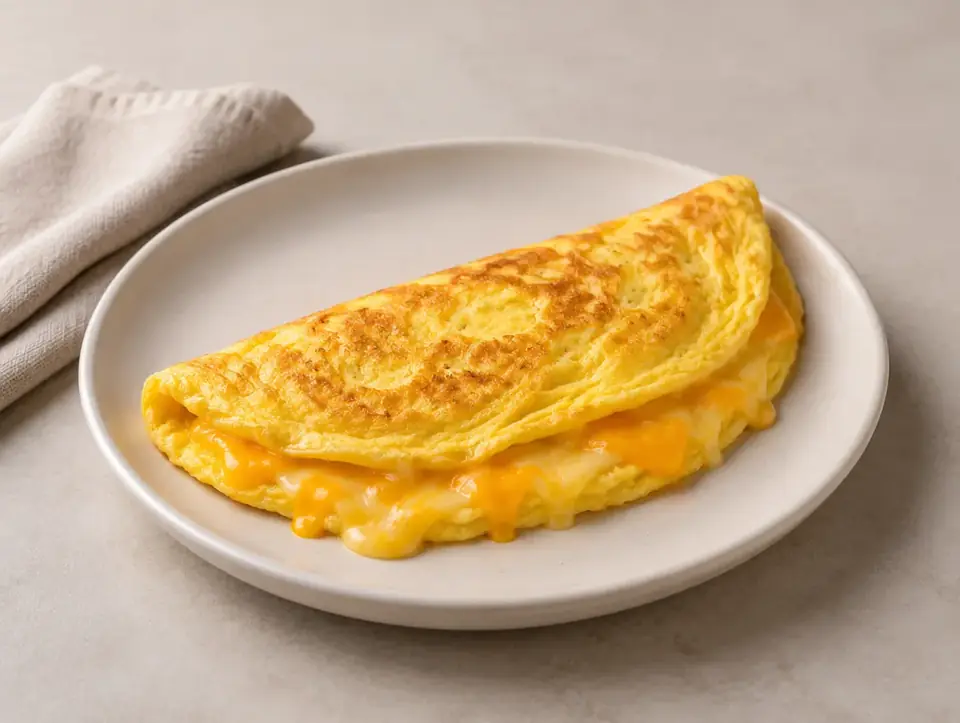
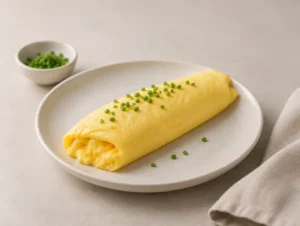
A half-moon fold, faintly golden outside, molten cheese running from the seam.
At a glance.
Cheese Omelette comes from United States · Diner Counter and appears in The Breakfast Atlas, in the chapter Eggs. It serves 1, takes about 10 minutes, and uses 7 ingredients and 9 steps.
- Yield
- Serves 1
- Method
- Stovetop
- Time
- 10 minutes
Ingredients
Tap an ingredient to tick it off.
Method
-
Grate the cheese coarsely and let it sit at room temperature. Cold cheese takes longer to melt than the omelette takes to cook, and you will overcook the eggs waiting for it.
-
Beat the eggs with the milk, salt and pepper for 20 seconds. The milk is not for richness — it dilutes the protein slightly, which buys a wider margin before the eggs tighten.
-
Set a 22 cm (9 in) nonstick skillet over medium heat for a full minute, then add the butter. It should foam energetically and go quiet within about 20 seconds; that quiet is your signal.
-
Pour in the eggs and leave them undisturbed for 20 seconds, until the outer rim turns opaque and begins to climb the side of the pan.
-
Push the set edges toward the center with a spatula and tilt the pan so raw egg floods the channels you open. Repeat three or four times over the next minute.
-
Stop when the surface is still visibly wet but no longer runs when you tip the pan. The base should be one continuous sheet with a pale gold blush, not a deep brown.
-
Scatter the cheese over the half nearest the handle, keeping a 1 cm border clear so it does not weld to the pan. Cover for 30–45 seconds to trap steam and melt it through.
-
Slide the spatula under the bare half and fold it over the cheese in one motion. Press the seam lightly for a few seconds so it seals.
-
Cook 20 seconds more, then tilt the pan and let the omelette slide onto a warmed plate. Scatter chives over and serve while the cheese still pulls in a thread when cut.
Cook’s notes
- The technique
- Cheese choice decides whether this works. Younger, wetter cheeses — Jack, mild cheddar, Gouda, process cheese above all — have loosely bound protein and enough moisture to flow when the fat softens. Hard aged cheeses such as pecorino have tighter, calcium-crosslinked networks that break under heat and weep oil. Grate coarsely: fine shreds clump and scorch on contact with the pan.
- Make ahead
- Grate the cheese and beat the eggs a day ahead, both covered in the fridge, and let them stand 15 minutes before cooking. The omelette must be cooked to order; folded and left standing, it sweats and goes leathery within minutes.
- Troubleshooting
- Cheese still solid at the fold — it went in too cold or too late; cover the pan to steam it. Omelette tears when folded — the base was underset, so wait until it moves as one sheet. Greasy pool inside — the cheese was too aged, or the heat too high for it.
- Variations
- A New England diner order pairs Swiss with mushrooms; the Southwestern one takes cheddar and jalapeño. Add sautéed onion under the cheese for a Massachusetts-style plate. In Britain the same fold uses mature Cheddar with a spoon of Worcestershire sauce beaten into the eggs.
- Serve with
- Hash browns, buttered rye toast and a slice of tomato is the counter-service plate. Hot sauce or ketchup on the side, unapologetically. Bottomless filter coffee, though strong tea does the job.

Where it comes from
Where the French omelette is a discipline, the American one is a service: three eggs, a filling, a fold, and a plate that arrives in four minutes. The form was standardized by the diner, which spread across the United States from the 1920s in prefabricated cars built by firms such as the Worcester Lunch Car Company and Jerry O'Mahony of New Jersey, each fitted with a griddle where a cook could hold a dozen orders in his head. On that griddle an omelette is cooked hotter and faster than the classical method allows, which gives it what French training forbids — a light tan freckling underneath and a firmer skin that holds a fold without splitting. Cheese made it the most-ordered variant on the board. Process cheese, patented in the United States in the 1910s and engineered not to separate when melted, suited the griddle exactly; sharp cheddar, Swiss and Monterey Jack followed as tastes broadened. It endures because it is the omelette people actually cook at home on a Tuesday.
Cheese Omelette: quick answers
How long does Cheese Omelette take?
About 10 minutes.
How many does this Cheese Omelette recipe make?
This recipe serves 1.
Where does Cheese Omelette come from?
Where the French omelette is a discipline, the American one is a service: three eggs, a filling, a fold, and a plate that arrives in four minutes. The form was standardized by the diner, which spread across the United States from the 1920s in prefabricated cars built by firms such as the Worcester Lunch Car Company and Jerry O'Mahony of New Jersey, each fitted with a griddle where a cook could hold a dozen orders in his head. On that griddle an omelette is cooked hotter and faster than the classical method allows, which gives it what French training forbids — a light tan freckling underneath and a firmer skin that holds a fold without splitting. Cheese made it the most-ordered variant on the board. Process cheese, patented in the United States in the 1910s and engineered not to separate when melted, suited the griddle exactly; sharp cheddar, Swiss and Monterey Jack followed as tastes broadened. It endures because it is the omelette people actually cook at home on a Tuesday.
More from United States



More in Eggs



https://www.atlasserie.com/recipes/breakfast/cheese-omelette/