Italy · 43.43° N, 12.37° E
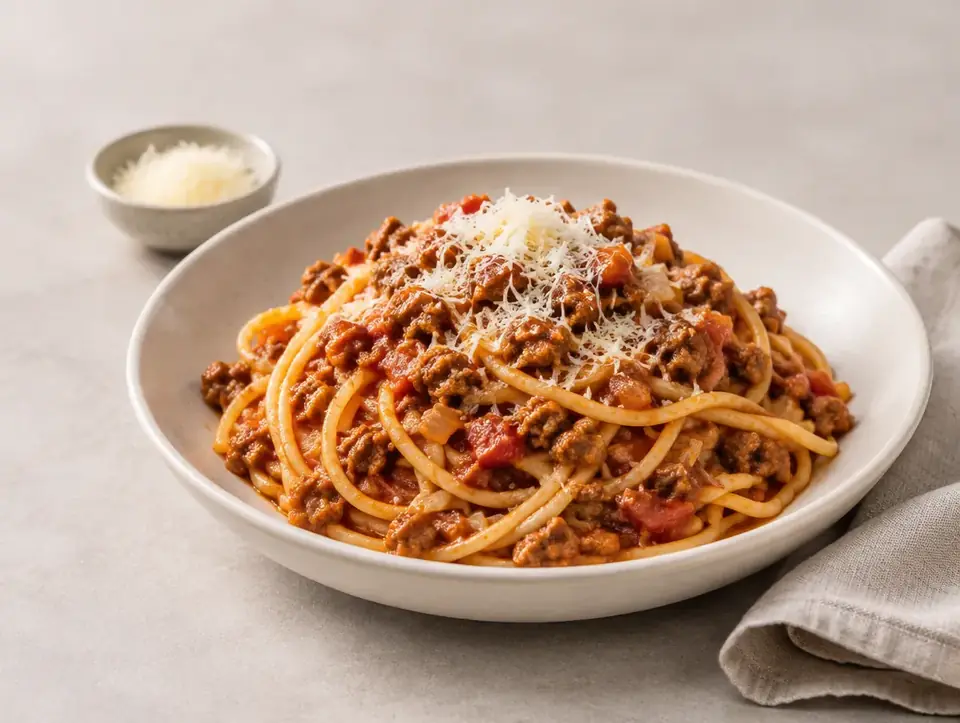
Spaghetti Bolognese
Spaghetti in a slow-simmered beef and tomato ragu, showered with parmesan.
At a glance.
Spaghetti Bolognese comes from Italy and appears in The Dinner Atlas, in the chapter Pasta & Noodles. It serves 4, is made on the stovetop, and uses 9 ingredients and 8 steps.
- Yield
- Serves 4
- Method
- Stovetop
Ingredients
Tap an ingredient to tick it off.
Method
-
Dice the onion, carrot, and celery very finely. This trio is the soffritto, and it is the flavor base of the entire sauce.
-
Sweat the soffritto in olive oil over low heat for 10 minutes, until soft and sweet but not browned.
-
Raise the heat, add the beef, and break it up. Let it sit undisturbed in patches so it browns rather than steams.
-
Stir in the tomato paste and cook it for 2 minutes until it darkens. This removes its raw, tinny edge.
-
Pour in the wine and let it bubble away almost completely, scraping the browned bits off the bottom.
-
Add the passata and milk, bring to a bare simmer, and cook uncovered for at least 45 minutes, ideally 2 hours.
-
Cook the spaghetti in heavily salted water until al dente, reserving a cup of the pasta water.
-
Toss the drained pasta directly into the sauce with a splash of pasta water, then serve with parmesan and basil.

Where it comes from
The true ragu alla bolognese was codified by the Bologna chamber of commerce in 1982, and it uses tagliatelle, not spaghetti, with far more meat than tomato. The spaghetti version is a British and American adaptation that has taken on a life of its own.
Spaghetti Bolognese: quick answers
How many does this Spaghetti Bolognese recipe make?
This recipe serves 4.
Where does Spaghetti Bolognese come from?
The true ragu alla bolognese was codified by the Bologna chamber of commerce in 1982, and it uses tagliatelle, not spaghetti, with far more meat than tomato. The spaghetti version is a British and American adaptation that has taken on a life of its own.
What is the secret to a good Spaghetti Bolognese?
Simmer the ragu low and slow. A twenty-minute sauce never develops the depth of a two-hour one.
More from Italy






More in Pasta & Noodles
https://www.atlasserie.com/recipes/dinner/spaghetti-bolognese/