Britain · Everyday Cookery · 53.77° N, 2.57° W
Poached Eggs on Toast
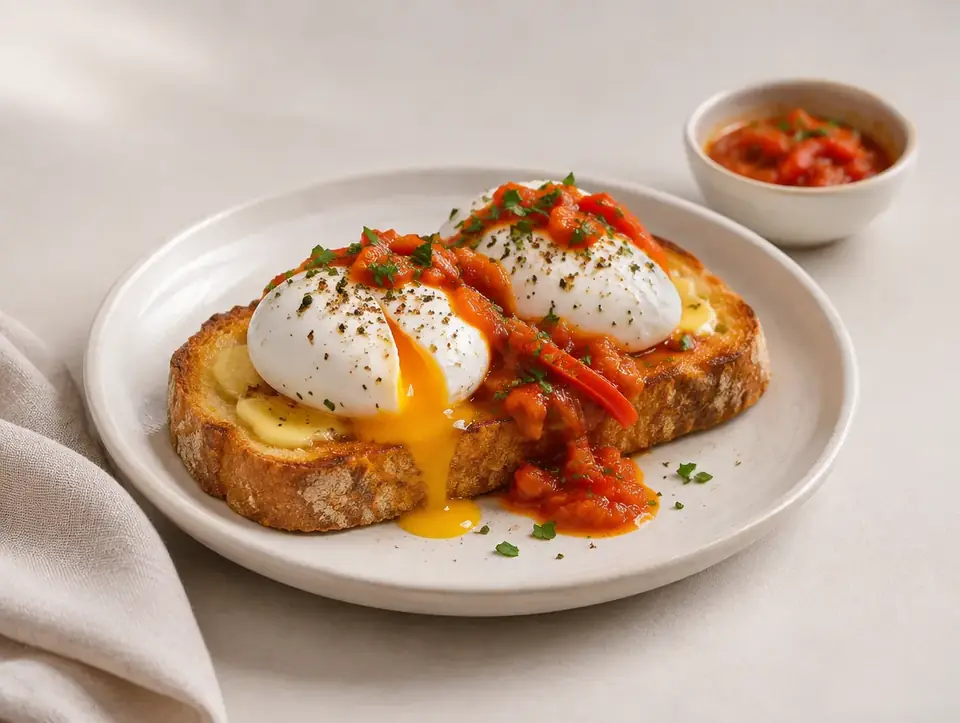
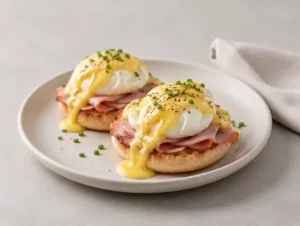
Vortex-poached eggs on buttered toast with a warm tomato-pepper drizzle.
At a glance.
Poached Eggs on Toast comes from Britain · Everyday Cookery and appears in The Breakfast Atlas, in the chapter Eggs. It serves 1, takes about 20 minutes, and uses 16 ingredients and 9 steps.
- Yield
- Serves 1
- Method
- Stovetop
- Time
- 20 minutes
Ingredients
Tap an ingredient to tick it off.
- For the eggs and toast
- For the tomato-pepper drizzle (makes about 120 ml)
Method
-
Make the drizzle first. Warm 2 tbsp of the oil in a small pan over medium heat, add the tomatoes cut-side down and cook 4–5 minutes until the skins blister and their juices run.
-
Add the garlic and smoked paprika and stir for 30 seconds, only until fragrant — paprika scorches fast and turns bitter. Tip in the roasted pepper, torn into pieces, and cook 2 minutes more.
-
Blend or crush to a loose sauce, then stir in the sherry vinegar, salt, the remaining oil and the sugar if needed. Keep it warm; it should pour in a thick ribbon, not a paste.
-
Fill a wide, deep pan with the water, add the vinegar and bring to 82–85°C — a bare shiver at the surface with a thin stream of bubbles rising. A rolling boil will shred the whites.
-
Crack each egg into a fine sieve held over a bowl and let the loose, watery outer white drain away for 20 seconds. This does more for a tidy poached egg than any amount of swirling.
-
Tip each drained egg into its own cup. Stir the water briskly with a spoon handle to set a vortex spinning, then lower the cup to the surface at the center and let the egg slide in.
-
Poach 3 minutes for a liquid yolk, 4 for one beginning to thicken. The white should be opaque and wrapped smoothly around the yolk, the egg lifting as a single teardrop rather than trailing threads.
-
Toast the bread while the eggs cook and butter it right to the crusts while hot, so the butter soaks in rather than sitting on top.
-
Lift each egg with a slotted spoon, blot the underside, and set it on the toast. Spoon the warm drizzle around and partly over, season, and scatter the herbs.
Cook’s notes
- The technique
- Freshness governs the shape of a poached egg. An egg has a thick inner white and a thin outer one, and as it ages the thin white grows more plentiful — that is what forms the ragged streamers. Straining it through a sieve removes the problem at source. Vinegar helps too: the acid lowers the pH of the water, and with it the temperature at which the white’s proteins coagulate, so they set a fraction sooner on contact with the water.
- Make ahead
- The tomato-pepper drizzle keeps four days refrigerated and improves overnight; warm it gently and loosen with water. Eggs can be poached ahead, chilled in iced water for two days, then reheated in 70°C water for a minute.
- Troubleshooting
- Wispy, cloudy whites — old eggs or water too hot; strain the eggs and drop the temperature. Flat, spreading egg — the water was barely warm, so it needs to shiver. Soggy toast — the egg was not blotted, and the butter did not go on hot enough to seal the surface.
- Variations
- Turkish çılbır sets poached eggs over garlicky yogurt with chilli butter poured over. In Ireland, they go on toasted soda bread with smoked salmon. For a lighter plate, skip the toast and set the eggs on wilted spinach or dressed watercress.
- Serve with
- Grilled tomatoes or sautéed mushrooms round it out, and a few lemon-dressed leaves keep it from feeling heavy. Strong tea is the traditional British partner; a flat white if you are treating it as brunch. Made in full within this recipe — Tomato-Pepper Drizzle. Also listed in the Component Index at the back.

Where it comes from
Poaching an egg without its shell is an old kitchen problem, and the English answer was to make it a domestic staple rather than a restaurant flourish. Victorian household manuals, Isabella Beeton's among them, gave instructions for eggs poached in shallow water and lifted onto buttered toast, and the dish settled into British life as nursery food, invalid food and the reliable supper of people cooking for one. Tinned egg-poaching pans with their greased cups were selling by the late nineteenth century, a sign of how ordinary it had become. Its enduring form is the plainest: an egg on toast, seasoned, eaten with a knife that breaks the yolk into the butter. The vortex technique — vinegar in the water, a swirl set spinning, the egg dropped into the eye of it — belongs to a later, more self-conscious era of home cooking, spread by television kitchens from the 1990s. The warm tomato-pepper drizzle here is a Mediterranean borrowing that adds acidity and color without changing the dish.
Poached Eggs on Toast: quick answers
How long does Poached Eggs on Toast take?
About 20 minutes.
How many does this Poached Eggs on Toast recipe make?
This recipe serves 1.
Where does Poached Eggs on Toast come from?
Poaching an egg without its shell is an old kitchen problem, and the English answer was to make it a domestic staple rather than a restaurant flourish. Victorian household manuals, Isabella Beeton's among them, gave instructions for eggs poached in shallow water and lifted onto buttered toast, and the dish settled into British life as nursery food, invalid food and the reliable supper of people cooking for one. Tinned egg-poaching pans with their greased cups were selling by the late nineteenth century, a sign of how ordinary it had become. Its enduring form is the plainest: an egg on toast, seasoned, eaten with a knife that breaks the yolk into the butter. The vortex technique — vinegar in the water, a swirl set spinning, the egg dropped into the eye of it — belongs to a later, more self-conscious era of home cooking, spread by television kitchens from the 1990s. The warm tomato-pepper drizzle here is a Mediterranean borrowing that adds acidity and color without changing the dish.
More from United Kingdom
More in Eggs

https://www.atlasserie.com/recipes/breakfast/poached-eggs-on-toast/