Turkey · Istanbul · 39.06° N, 35.37° E
Turkish Simit
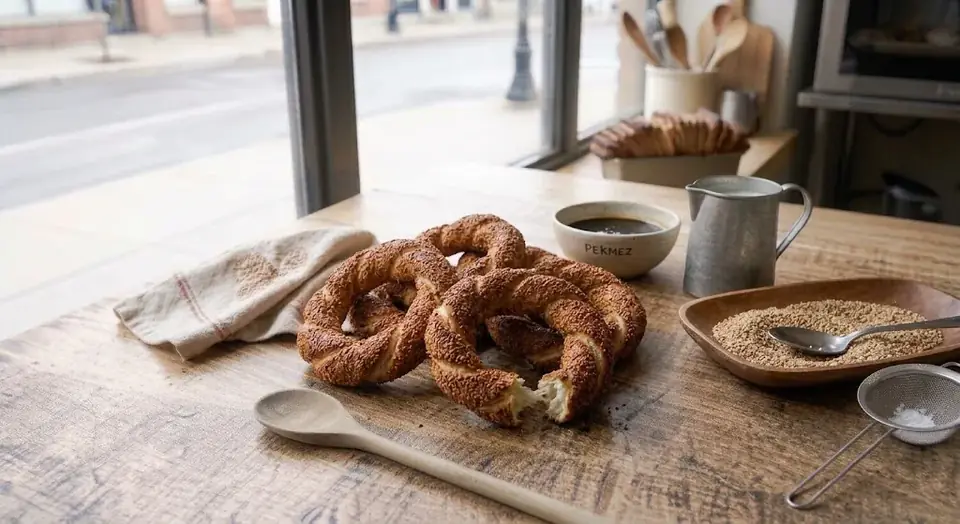
Twisted sesame rings dipped in grape molasses, sold from a red cart.
At a glance.
Turkish Simit comes from Turkey · Istanbul and appears in The Bread Atlas, in the chapter Breads Around the World. It makes 8 simit, takes about 3 hours, and uses 9 ingredients and 10 steps.
- Yield
- Makes 8 simit
- Method
- Oven 220°C / 425°F
- Time
- 3 hours
Ingredients
Tap an ingredient to tick it off.
- The Dough
- The Pekmez Dip
- The Sesame Coating
Method
-
Mix the flour, salt, sugar and yeast, add the water at 24°C and the olive oil, and bring together into a firm dough. Knead 10 minutes until smooth, tight and slightly resistant. Simit dough is leaner and stiffer than a sandwich dough by design. Target 25°C.
-
Bulk ferment 60–75 minutes at 24°C, covered, until risen by half. A short controlled bulk keeps the crumb close and shreddy; a long one opens it out and takes you toward a bagel, which is not the object.
-
Divide into 8 pieces of about 100 g, roll each into a short cylinder, cover, and rest 15 minutes. This is a stiff dough and it will not extend to length without the rest.
-
Roll each cylinder under flat palms into a rope 65–70 cm long and about as thick as a finger, working from the middle outward. Ease off if the rope fights back and let it relax a minute before finishing.
-
Fold the rope in half, twist the two strands firmly around one another five or six full turns, then bring the ends together into a ring and roll the join on the bench to weld it shut. A loose join opens in the oven.
-
Whisk the pekmez into the warm water — roughly one part to three. It should look like weak tea and taste faintly of raisins. This is neither an egg wash nor a lye bath: pekmez is boiled-down grape must, and its sugars give simit its russet color.
-
Dip each ring bodily into the pekmez water, turning it so every surface is wet, drain for a second, then lay it into the sesame. Press and turn until it is armored on both faces and around the sides. Simit is coated all over, not on the crown alone.
-
Set the rings well apart on lined trays and prove 35–45 minutes at 24°C, uncovered, until visibly puffed but still holding a clear twist. Uncovered is deliberate — a dry skin stops the sesame sliding off.
-
Heat the oven to 220°C / 425°F with a stone in the middle and add no steam. Steam softens sesame and dulls the crust, and a simit is judged on a crust that shatters into flakes.
-
Bake 16–20 minutes, turning the trays once, to a deep reddish brown with the sesame toasted gold and an internal 96°C. Pekmez browns faster than plain dough, so watch the last four minutes. Cool 20 minutes before eating, so the crust dries and crisps.
Cook’s notes
- To serve and keep
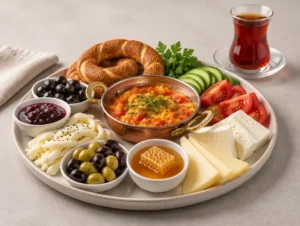
- Bought from the cart and eaten walking, or torn up with beyaz peynir, tomato, cucumber and olives as part of a Turkish breakfast. Split and filled with kaşar for children. Best within four hours; keep in paper, never plastic, which softens the crust in minutes.

Where it comes from
Simit is one of the very few street foods with an archival record. Ottoman palace kitchen accounts refer to it from the sixteenth century, the simitçi bakers of Istanbul were organized into their own guild, and Evliya Çelebi, writing in the seventeenth century, counted the city's simit bakeries in the dozens and their sellers in the hundreds. Price and weight were regulated by decree, which tells you how central it was to how the city ate. The trade survives essentially intact: a simitçi still walks the ferry docks and side streets with a glass-fronted red cart or a tray balanced on his head, and simit is still bought at eye level for small change and eaten immediately, usually with a paper cone of white cheese or a glass of tea. Regional forms differ sharply. The Istanbul ring is thick, chewy and heavily sesamed; İzmir calls it gevrek, meaning crisp, and makes it thinner and drier; Ankara's is smaller, and there the rings take a brief dip in boiling water before baking.
Turkish Simit: quick answers
How long does Turkish Simit take?
About 3 hours.
How many does this Turkish Simit recipe make?
This recipe makes 8 simit.
Where does Turkish Simit come from?
Simit is one of the very few street foods with an archival record. Ottoman palace kitchen accounts refer to it from the sixteenth century, the simitçi bakers of Istanbul were organized into their own guild, and Evliya Çelebi, writing in the seventeenth century, counted the city's simit bakeries in the dozens and their sellers in the hundreds. Price and weight were regulated by decree, which tells you how central it was to how the city ate. The trade survives essentially intact: a simitçi still walks the ferry docks and side streets with a glass-fronted red cart or a tray balanced on his head, and simit is still bought at eye level for small change and eaten immediately, usually with a paper cone of white cheese or a glass of tea. Regional forms differ sharply. The Istanbul ring is thick, chewy and heavily sesamed; İzmir calls it gevrek, meaning crisp, and makes it thinner and drier; Ankara's is smaller, and there the rings take a brief dip in boiling water before baking.
More from Turkey


More in Breads Around the World
https://www.atlasserie.com/recipes/bread/turkish-simit/