Philippines · Manila Breakfast · 15.74° N, 121.55° E
Pandesal
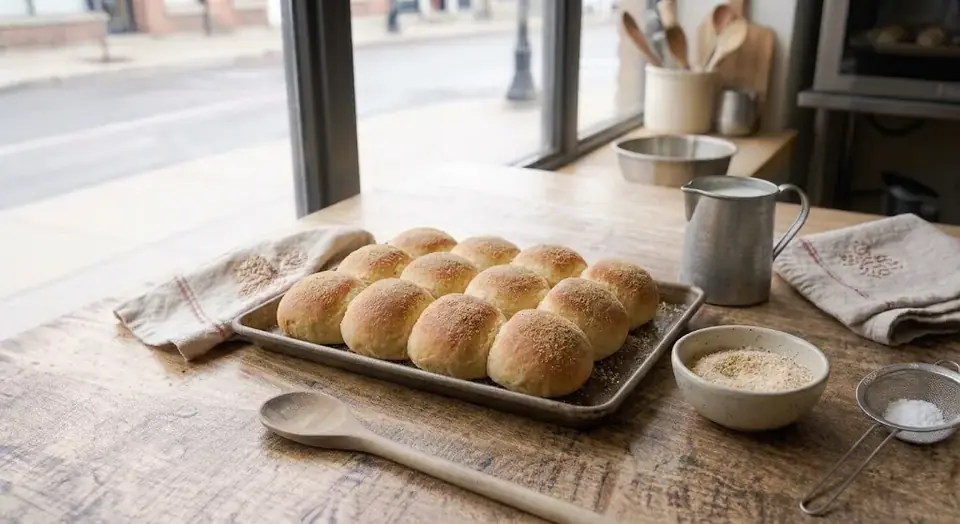
Soft breadcrumb-dusted Manila rolls, bought hot in a paper bag.
At a glance.
Pandesal comes from Philippines · Manila Breakfast and appears in The Bread Atlas, in the chapter Breads Around the World. It makes 16 rolls, is made by oven 190°c / 375°f, and uses 9 ingredients and 10 steps.
- Yield
- Makes 16 rolls
- Method
- Oven 190°C / 375°F, 3½ hours
Ingredients
Tap an ingredient to tick it off.
- The Dough
- Breadcrumb Coating
Method
-
Warm the milk to 32°C and whisk in the sugar and beaten egg. Combine the flour, salt and yeast in a wide bowl, pour in the liquid, and mix to a shaggy, sticky mass. Rest 20 minutes.
-
Knead 8 minutes by hand or 6 on a mixer's second speed, until the dough clears the bowl. Work the softened butter in over three additions, stopping when a stretched piece passes light without tearing. Target 26–27°C.
-
Round the dough, cover, and bulk ferment 60–75 minutes at 26°C. It should rise by about three-quarters and hold a slow-filling dent when a floured finger presses in to the first knuckle.
-
Sieve the breadcrumbs into a shallow tray and stir the sugar through. Use pale, fine crumbs from a day-old white loaf; the coarse orange kind sold for schnitzel scorches long before the rolls take color.
-
Press the dough flat, roll it into a log about 40 cm long, and cut into 16 pieces of roughly 60 g. Pandesal is cut rather than rounded — the raw cut faces are what grip the crumbs.
-
Roll each piece through the crumbs, pressing so the coating takes on the cut sides too. Set them cut-side up on lined trays, 3 cm apart, so they meet and hold each other upright as they expand.
-
Prove 50–65 minutes at 26–28°C under a cloth, until nearly doubled and barely touching. The dough should feel like a filled balloon and spring back halfway. Underproved pandesal bakes tight, dry and squat.
-
Heat the oven to 190°C / 375°F, rack in the middle, and add no steam. Pandesal wants a soft matte crust, and steam sets a shine and a crackle on it that do not belong there.
-
Bake 15–18 minutes, turning the trays once, until the tops are pale gold and the crumbs a shade darker. Internal temperature 90°C — enriched dough sets lower than lean, and 96°C here means a dry roll.
-
Slide onto a rack and leave 15 minutes. Pandesal is eaten deliberately hot, but the crumb still needs that quarter hour to set, or it drags gummy against the roof of the mouth.
Cook’s notes
- To serve and keep
- Eaten hot from the paper bag on the walk home, split and spread with coco jam, or packed with salty kesong puti. Dunked whole into black coffee or thick tsokolate at breakfast. Keep in a bread box for a day; the refrigerator ruins it.

Where it comes from
Pan de sal means bread of salt, which is the first puzzle, since the modern roll is sweet. The name belongs to the Spanish colonial period, when Manila's bakeries made pan de suelo — floor bread, baked on the hearth of a wood-fired oven, crusty and genuinely salted. Wheat was shipped in, so bread was a town food and something of a status food, and the panaderia arrived as a Spanish institution transplanted whole. The roll softened across the twentieth century: American flour came in quantity after 1898 and again as post-war aid, domestic sugar was cheap, and mechanical mixers rewarded a slack enriched dough over a lean hearth one. Bakers began rolling the cut pieces in fine breadcrumbs, which keeps the cut faces from sticking and is now the visual signature. What has not changed is the hour. Panaderias fire before four, and pandesal is sold hot at first light.
Pandesal: quick answers
How many does this Pandesal recipe make?
This recipe makes 16 rolls.
Where does Pandesal come from?
Pan de sal means bread of salt, which is the first puzzle, since the modern roll is sweet. The name belongs to the Spanish colonial period, when Manila's bakeries made pan de suelo — floor bread, baked on the hearth of a wood-fired oven, crusty and genuinely salted. Wheat was shipped in, so bread was a town food and something of a status food, and the panaderia arrived as a Spanish institution transplanted whole. The roll softened across the twentieth century: American flour came in quantity after 1898 and again as post-war aid, domestic sugar was cheap, and mechanical mixers rewarded a slack enriched dough over a lean hearth one. Bakers began rolling the cut pieces in fine breadcrumbs, which keeps the cut faces from sticking and is now the visual signature. What has not changed is the hour. Panaderias fire before four, and pandesal is sold hot at first light.
More from Philippines

More in Breads Around the World
https://www.atlasserie.com/recipes/bread/pandesal/