China · Northern Wheat Belt · 36.75° N, 103.42° E
Mantou
Snow-white steamed buns, smooth as porcelain, the daily bread of the north.
At a glance.
Mantou comes from China · Northern Wheat Belt and appears in The Bread Atlas, in the chapter Breads Around the World. It makes 12 buns, is made by steamed, and uses 6 ingredients and 10 steps.
- Yield
- Makes 12 buns
- Method
- Steamed, 2½ hours
Ingredients
Tap an ingredient to tick it off.
- The Dough
Method
-
Whisk the yeast and sugar into water at 30°C and leave 5 minutes. Stir the flour and salt together, pour in the liquid and the oil, and mix to a stiff, rough dough. At half hydration it looks impossibly dry. Persist.
-
Knead hard for 10–12 minutes. This is genuine work at 50% water. The dough travels from craggy to firm, close-grained and faintly cool, more like modelling clay than bread dough. Aim for 26°C.
-
For the porcelain finish, pass the dough through a pasta roller on its widest setting, folding it in three between passes, eight to ten times. This is how commercial mantou gets its silk, and it beats any amount of extra kneading.
-
Round the dough, cover tightly, and ferment 50–70 minutes at 28°C until doubled and webbed with fine bubbles when torn. It should smell faintly sweet and yeasty rather than sour at all.
-
Knock the dough back and knead 3 minutes more to drive out every large bubble. Visible holes in a finished mantou are counted as a fault in China, and this is the step that prevents them.
-
Roll the dough into a sheet 25 × 40 cm, brush off loose flour, and roll it up tightly from the long side. Cut into 12 with single decisive strokes and set each on a square of parchment.
-
Prove 25–35 minutes at 28°C until half again as big and light in the hand. Pressed gently, the dough should yield and return most of the way. Overproved mantou wrinkles in the steamer.
-
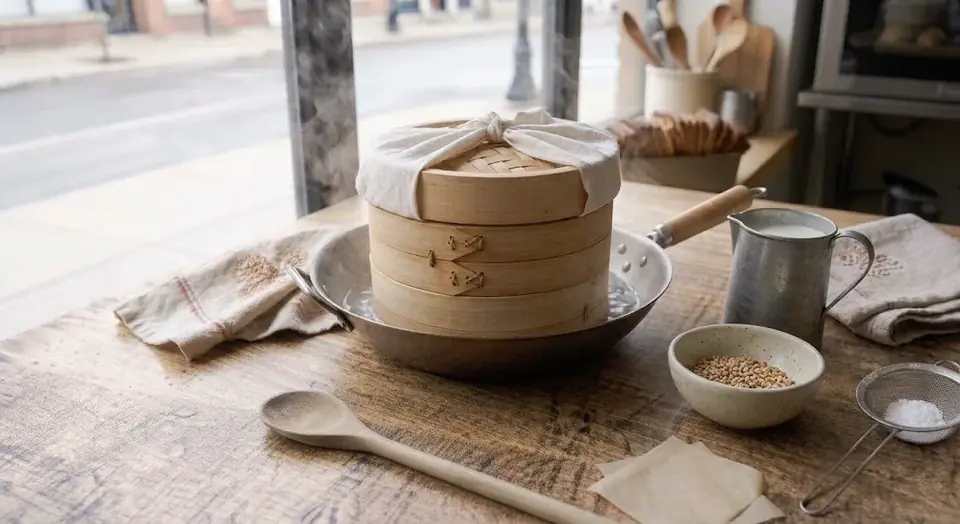
Set the steamer over a steady moderate boil with the baskets 3 cm above the water. Wrap the lid in a cloth tied over the top, so condensation is absorbed rather than dripping onto the buns and pitting them with grey craters.
-
Steam 12–14 minutes, keeping the heat constant. A furious boil throws water up onto the buns; too slack a boil leaves them doughy at the base. Do not lift the lid to check.
-
Turn the heat off and wait a full 5 minutes before opening. A sudden drop in pressure shrinks the gas cells and the smooth face collapses into wrinkles — the commonest failure with steamed bread. Lift onto a rack and eat warm.
Cook’s notes
- To serve and keep
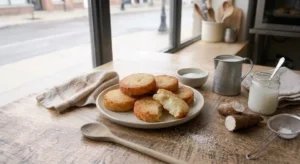
- Eaten as the starch of a northern meal in place of rice, torn and dipped into the sauce of a braise, or split around red-cooked pork belly. At breakfast, steamed beside congee and pickles, or sliced and pan-fried until the cut faces crisp.

Where it comes from
North of the Huai river wheat rather than rice has been the staple for two thousand years, and mantou is what most of it becomes. Steaming rather than baking is the Chinese default: a wok, a stack of woven baskets and a modest amount of fuel do the work that elsewhere demanded a masonry oven, and the practice is documented from the Han dynasty, once rotary querns made fine flour widely available. The origin story attached to the name is folklore and deserves the label. It is told — in Song compilations, and popularized far later by the novel Romance of the Three Kingdoms — that the strategist Zhuge Liang, faced with a river spirit demanding severed heads, had his cooks shape flour dummies instead, and that mantou therefore means barbarian heads. The tale is first written down close to a millennium after the events it describes. Usage varies regionally: across the north mantou is plain and unfilled and a pleated filled bun is a baozi, while in parts of the Yangtze delta the words swap places.
Mantou: quick answers
How many does this Mantou recipe make?
This recipe makes 12 buns.
Where does Mantou come from?
North of the Huai river wheat rather than rice has been the staple for two thousand years, and mantou is what most of it becomes. Steaming rather than baking is the Chinese default: a wok, a stack of woven baskets and a modest amount of fuel do the work that elsewhere demanded a masonry oven, and the practice is documented from the Han dynasty, once rotary querns made fine flour widely available. The origin story attached to the name is folklore and deserves the label. It is told — in Song compilations, and popularized far later by the novel Romance of the Three Kingdoms — that the strategist Zhuge Liang, faced with a river spirit demanding severed heads, had his cooks shape flour dummies instead, and that mantou therefore means barbarian heads. The tale is first written down close to a millennium after the events it describes. Usage varies regionally: across the north mantou is plain and unfilled and a pleated filled bun is a baozi, while in parts of the Yangtze delta the words swap places.
More from China
More in Breads Around the World
https://www.atlasserie.com/recipes/bread/mantou/