
Türkiye · Kahvaltı · 39.06° N, 35.37° E
Turkish Breakfast
A table laid edge to edge with cheese, olives, honey and endlessly poured tea.
At a glance.
Turkish Breakfast comes from Türkiye · Kahvaltı and appears in The Breakfast Atlas, in the chapter Breakfast Around the World. It serves 4, takes about 45 minutes, and uses 17 ingredients and 10 steps.
- Yield
- Serves 4
- Method
- Stovetop
- Time
- 45 minutes
Ingredients
Tap an ingredient to tick it off.
- For the çay
- The cheese and olive plates
- The vegetable and egg plates
- The sweet plate and bread
Method
-
Fill the lower chamber of a çaydanlık — the stacked double teapot — with the cold water and bring it to a rolling boil. Put the loose tea dry into the empty upper pot and set it on top so the leaves warm and open.
-
Pour about a third of the boiling water over the leaves in the upper pot, top up the lower one, and return both to low heat. Steep 12–15 minutes without letting the upper pot boil; boiled leaves go bitter and cloudy.
-
The tea is ready when the liquor pouring from the upper pot is dark and clear with a red edge held to the light — tavşan kanı, rabbit's blood, is the phrase for it. Serve it in tulip glasses, diluted to taste from the lower pot.
-
Boil the eggs in gently simmering water for 6½ minutes for a jammy yolk, or 9 minutes if you want them firm enough to quarter. Cool them briefly under the tap, peel, and halve into a small dish.
-
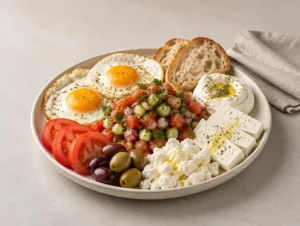
Cut the cheeses and set each on its own small plate. Turkish breakfast is composed of many vessels, not one platter; the visual density of the table is part of what the meal is for.
-
Dress the cracked green olives with the olive oil and thyme and leave them 15 minutes for the flavor to move. Keep the black olives plain and glossy in their own oil.
-
Fan the tomato rounds on a plate, lay the cucumber batons beside them, and season both only at the moment of serving so they do not weep. Add the herbs on their stems, untrimmed, for tearing.
-
Spoon the kaymak into a shallow bowl and pour the honey over it so it pools rather than mixes. This is bal kaymak, and the technique is to scoop both together with torn bread rather than spread them.
-
Warm the simit or bread in a 180°C (355°F) oven for 4 minutes until the crust crackles, then split and pile it into a basket, covered with a cloth.
-
Set everything down at once, tea last, and keep the çaydanlık on the lowest heat throughout. A glass that stands empty for long is considered a failure of hospitality.
Cook’s notes
- The technique
- The double teapot exists so tea is never boiled and never weak. Concentrated liquor brews in the upper chamber over the steam of the lower, which means the leaves sit at around 90°C rather than 100°C — hot enough to extract color and tannin, cool enough to avoid the harsh, stewed edge boiling produces. Each glass is then poured to strength: koyu for dark, açık for pale, mixed at the table.
- Make ahead
- Cure the olives with oil and herbs a day ahead, and boil the eggs the night before, leaving them unpeeled in the fridge. Cheeses cut better cold but taste better after 30 minutes out. Bread and tea must be fresh; a simit reheated twice is beyond saving.
- Troubleshooting
- Bitter, cloudy tea — the upper pot came to the boil, or the leaves steeped past 20 minutes. Weeping tomatoes — salted too early. Chalky, flavorless white cheese — served straight from the refrigerator, so let it stand. Honey and kaymak stirred into a paste — spoon them together, do not mix.
- Variations
- A Van serpme runs to thirty plates and includes otlu peynir studded with wild sirmo, plus kavut, a toasted flour and butter porridge. Aegean tables add wild greens dressed in olive oil and lemon. Where a hot dish is wanted, sucuklu yumurta — eggs broken over slices of frying garlic-and-cumin sausage — is the usual choice.
- Serve with
- Tea from beginning to end, and Turkish coffee only afterwards, which is what the meal's name assumes. Fresh orange juice is common in cities. Leave the table set; kahvaltı is expected to last, and second and third glasses are the point of it. Made in full within this recipe — Turkish Çay. Also listed in the Component Index at the back.

Where it comes from
Kahvaltı names itself precisely: kahve altı, literally what goes under coffee — the food eaten before the morning cup, from a period when coffee, not tea, was the Ottoman drink. Tea only became the national beverage after the 1920s, when the state pushed plantations around Rize on the eastern Black Sea coast and cheap domestic çay displaced expensive imported beans. The meal is defined not by a dish but by breadth: small plates covering every centimeter of the table, eaten slowly, refilled as they empty. Its most theatrical form belongs to Van, on the eastern shore of Lake Van, where a street of kahvaltı evleri serves serpme kahvaltı — scattered breakfast — with the region's herbed otlu peynir, kavut and murtuga, and where the meal can run three hours. The Aegean coast leans on olive oil, wild greens and fresh herbs; Gaziantep adds spice and pistachio. What holds everywhere is the social contract of it: kahvaltı is a Sunday spent at the table with other people, not a plate eaten standing up.
Turkish Breakfast: quick answers
How long does Turkish Breakfast take?
About 45 minutes.
How many does this Turkish Breakfast recipe make?
This recipe serves 4.
Where does Turkish Breakfast come from?
Kahvaltı names itself precisely: kahve altı, literally what goes under coffee — the food eaten before the morning cup, from a period when coffee, not tea, was the Ottoman drink. Tea only became the national beverage after the 1920s, when the state pushed plantations around Rize on the eastern Black Sea coast and cheap domestic çay displaced expensive imported beans. The meal is defined not by a dish but by breadth: small plates covering every centimeter of the table, eaten slowly, refilled as they empty. Its most theatrical form belongs to Van, on the eastern shore of Lake Van, where a street of kahvaltı evleri serves serpme kahvaltı — scattered breakfast — with the region's herbed otlu peynir, kavut and murtuga, and where the meal can run three hours. The Aegean coast leans on olive oil, wild greens and fresh herbs; Gaziantep adds spice and pistachio. What holds everywhere is the social contract of it: kahvaltı is a Sunday spent at the table with other people, not a plate eaten standing up.
More from Turkey



More in Breakfast Around the World


https://www.atlasserie.com/recipes/breakfast/turkish-breakfast/