
North America · The Co-op Bakery Counter · 39.87° N, 98.73° W
Multigrain Rolls
Barley and oat porridge, toasted seeds, a chew that lasts.
At a glance.
Multigrain Rolls comes from North America · The Co-op Bakery Counter and appears in The Bread Atlas, in the chapter Rolls, Buns & Bagels. It makes 12 rolls, takes about 5 hours, and uses 16 ingredients and 11 steps.
- Yield
- Makes 12 rolls
- Method
- Oven 200°C / 400°F
- Time
- 5 hours
Ingredients
Tap an ingredient to tick it off.
- Cooked Barley and Oat Porridge
- Toasted Seed Mix
- The Dough
- Seed Topping
Method
-
Simmer the barley in the water with the salt, covered, for 25 minutes. Stir in the steel-cut oats and cook 8–10 minutes more, until the barley is tender and the mass is thick enough to hold a spoon upright. Spread it on a plate and cool to below 28°C.
-
Toast the sunflower, linseed and sesame in a dry pan over medium heat for 4–5 minutes, shaking often, until they smell of nuts. Tip them straight out of the pan; seeds left in it go on cooking and turn acrid.
-
Mix both flours with the water at 26°C, the honey and the yeast, holding back salt, oil, porridge and seeds. Rest 30 minutes — the whole wheat needs it and the white flour benefits.
-
Add the salt and oil and knead 6 minutes to a smooth, moderately firm dough. Then work in the cooled porridge and the toasted seeds in two additions, mixing only until distributed. Final dough temperature 26°C.
-
The dough will feel heavy, bumpy and slightly sticky, and it will not windowpane — inclusions cut every sheet you build. Judge it instead on whether it holds together in a coherent mass when gathered.
-
Bulk ferment 90 minutes at 26°C with a fold at 30 and 60 minutes. The folds do the structural work that kneading cannot do in a dough this loaded, stacking the gluten in layers around the grain rather than through it.
-
Divide into 12 pieces of about 95 g and round each one gently, without the hard tightening you would give a white roll. Rest them 10 minutes so the surface relaxes enough to take the seed topping without tearing open.
-
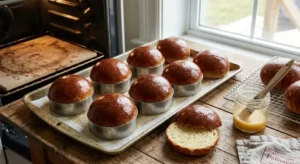
Roll each ball briefly on a damp cloth or dip the top in the dish of water, then press it face-down into the seed tray and lift straight up. A wet surface holds seed; a floured one drops it in the oven.
-
Set the rolls seeded side up, well apart, on two lined trays. Prove covered 45–60 minutes at 26°C, until visibly swollen and slow to fill a dent. Heat the oven to 200°C / 400°F with a steel tray on the floor.
-
Load the trays, pour 100 ml of boiling water into the hot tray, and bake 18–22 minutes, rotating once, until dark brown and the seeds are toasted, to an internal 96°C. These are lean enough to want the higher finish temperature.
-
Cool on a rack for 30 minutes at least. Porridge breads taste wet and heavy while warm and come into focus as they cool — the gelatinized starch is still redistributing water through the crumb for the first half hour.
Cook’s notes
- To serve and keep
- These are lunch rolls: cheese and pickle, ham, a bowl of soup. Split and toasted they are better than fresh on the second day. Store in a cloth bag or paper — plastic softens the seeded crust within hours, and the crust is half the reason to make them.

Where it comes from
Multigrain is a claim, not a specification. No regulation anywhere requires it to mean whole grain, or to set a minimum, and a roll can list six grains that together amount to a rounding error. The honest version of the category came out of the North American co-operative and wholefood bakeries of the 1970s, which bought their grain from the same bulk bins their customers did — Bob's Red Mill, founded in Oregon in 1978, is the best-known survivor of that trade — and used the seven-grain and nine-grain cereal blends sold for breakfast porridge as bread ingredients. Cooking them first was the obvious move for anyone who had already stood over the pot. The roll rather than the loaf became the format that stuck, because a dinner roll or a lunch-counter bun is where a bakery can put coarse grain without asking anyone to accept a heavy slice. German bakeries had reached the same shape from another direction with the Mehrkornbrötchen, rolled wet and pressed face-down into a tray of seed.
Multigrain Rolls: quick answers
How long does Multigrain Rolls take?
About 5 hours.
How many does this Multigrain Rolls recipe make?
This recipe makes 12 rolls.
Where does Multigrain Rolls come from?
Multigrain is a claim, not a specification. No regulation anywhere requires it to mean whole grain, or to set a minimum, and a roll can list six grains that together amount to a rounding error. The honest version of the category came out of the North American co-operative and wholefood bakeries of the 1970s, which bought their grain from the same bulk bins their customers did — Bob's Red Mill, founded in Oregon in 1978, is the best-known survivor of that trade — and used the seven-grain and nine-grain cereal blends sold for breakfast porridge as bread ingredients. Cooking them first was the obvious move for anyone who had already stood over the pot. The roll rather than the loaf became the format that stuck, because a dinner roll or a lunch-counter bun is where a bakery can put coarse grain without asking anyone to accept a heavy slice. German bakeries had reached the same shape from another direction with the Mehrkornbrötchen, rolled wet and pressed face-down into a tray of seed.
More from United States





More in Rolls, Buns & Bagels

https://www.atlasserie.com/recipes/bread/multigrain-rolls/