
United States · American West · 39.87° N, 98.73° W
Denver Omelette
Ham, sweet pepper and onion cooked down hard, folded into eggs with cheese.
At a glance.
Denver Omelette comes from United States · American West and appears in The Breakfast Atlas, in the chapter Eggs. It serves 1, takes about 20 minutes, and uses 10 ingredients and 9 steps.
- Yield
- Serves 1
- Method
- Stovetop
- Time
- 20 minutes
Ingredients
Tap an ingredient to tick it off.
Method
-
Dice the ham, peppers and onion to a uniform 5 mm. Even dice matter here, because the filling has to cook through in the same minutes and sit flat enough to fold over.
-
Heat the oil in a 22 cm (9 in) skillet over medium-high. Add the ham and cook 2–3 minutes without stirring much, until the cut faces catch and brown and the fat renders out.
-
Add the onion and both peppers with a pinch of salt and cook 4–5 minutes, until the onion turns translucent, the peppers soften, and their raw, grassy smell is gone.
-
Stir in the paprika, cook 20 seconds, then tip the filling onto a plate. Wipe the pan clean — burnt fragments left behind will speckle the omelette.
-
Beat the eggs with the salt and black pepper. Return the pan to medium heat and melt the butter, swirling to coat the base and 2 cm up the sides.
-
Pour in the eggs and let them sit 20 seconds. Then draw the set edges inward, tipping the pan so liquid egg fills the gaps, until the surface is thickened but still glossy.
-
Spoon the warm filling over half the omelette and scatter the cheddar on top of it. Cold filling stalls the cheese and forces you to overcook the eggs while waiting.
-
Cover the pan for 45 seconds so steam melts the cheese and finishes the top of the eggs, which should lose their shine and look matte and barely set.
-
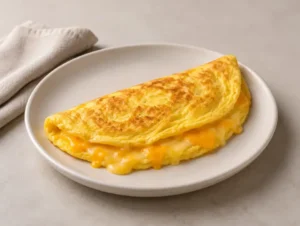
Fold the empty half over, count to fifteen, then slide onto a warmed plate. It should be plump and slightly domed, faintly gold outside, with no filling leaking.
Cook’s notes
- The technique
- Cook the filling separately and cook it hard. Peppers and onion are mostly water, and dropped raw into eggs they release it as steam, which turns the omelette wet and slack and stops the cheese binding anything. Driving that moisture off first, and browning the ham to render its fat, concentrates the flavor and leaves a filling dry enough to fold around.
- Make ahead
- The ham, pepper and onion mixture is the whole prep job and keeps three days refrigerated in a sealed container. Warm it in a dry pan for two minutes before use, never straight from the fridge. Grate the cheese and dice the vegetables the night before.
- Troubleshooting
- Watery omelette — the vegetables went in underdone; cook them until the pan is dry. Filling falls out at the fold — too much, or piled too near the edge. Rubbery, browned base — the pan stayed on high after the filling came out; drop to medium before the eggs go in.
- Variations
- A Denver scramble breaks the same ingredients together rather than folding them, and is what most Colorado diners make if you ask. The Western sandwich, the original form, stacks the egg-bound filling between buttered toast. Diced potato makes a heartier mountain-town version.
- Serve with
- Home fries or hash browns, buttered wheat toast and a wedge of orange. Tabasco or a green chile salsa on the table, which in Colorado is close to mandatory. Coffee, black and endlessly refilled.

Where it comes from
This began life as a sandwich. Newspapers and menus across the American West advertised a Denver sandwich and a Western sandwich — chopped ham, onion and pepper bound with egg, served between slices of bread — from the early twentieth century, and the omelette came afterwards, as diners moved the same filling onto a plate. Where the filling came from is genuinely uncertain, and two explanations circulate without documentary support. One holds that Chinese cooks working railroad and mining camps adapted egg foo young to Western ingredients; the other that chuckwagon and boarding-house cooks used strong onion and pepper to cover the taste of eggs that had traveled too far in warm weather. Both are plausible, neither is proven, and any account stating one as fact is overreaching. What is certain is the dish's regional identity: it belongs to Colorado and the mountain states, where it appears on nearly every breakfast menu, and it carries the frontier logic of building a meal from cured meat, storable vegetables and eggs.
Denver Omelette: quick answers
How long does Denver Omelette take?
About 20 minutes.
How many does this Denver Omelette recipe make?
This recipe serves 1.
Where does Denver Omelette come from?
This began life as a sandwich. Newspapers and menus across the American West advertised a Denver sandwich and a Western sandwich — chopped ham, onion and pepper bound with egg, served between slices of bread — from the early twentieth century, and the omelette came afterwards, as diners moved the same filling onto a plate. Where the filling came from is genuinely uncertain, and two explanations circulate without documentary support. One holds that Chinese cooks working railroad and mining camps adapted egg foo young to Western ingredients; the other that chuckwagon and boarding-house cooks used strong onion and pepper to cover the taste of eggs that had traveled too far in warm weather. Both are plausible, neither is proven, and any account stating one as fact is overreaching. What is certain is the dish's regional identity: it belongs to Colorado and the mountain states, where it appears on nearly every breakfast menu, and it carries the frontier logic of building a meal from cured meat, storable vegetables and eggs.
More from United States




More in Eggs





https://www.atlasserie.com/recipes/breakfast/denver-omelette/