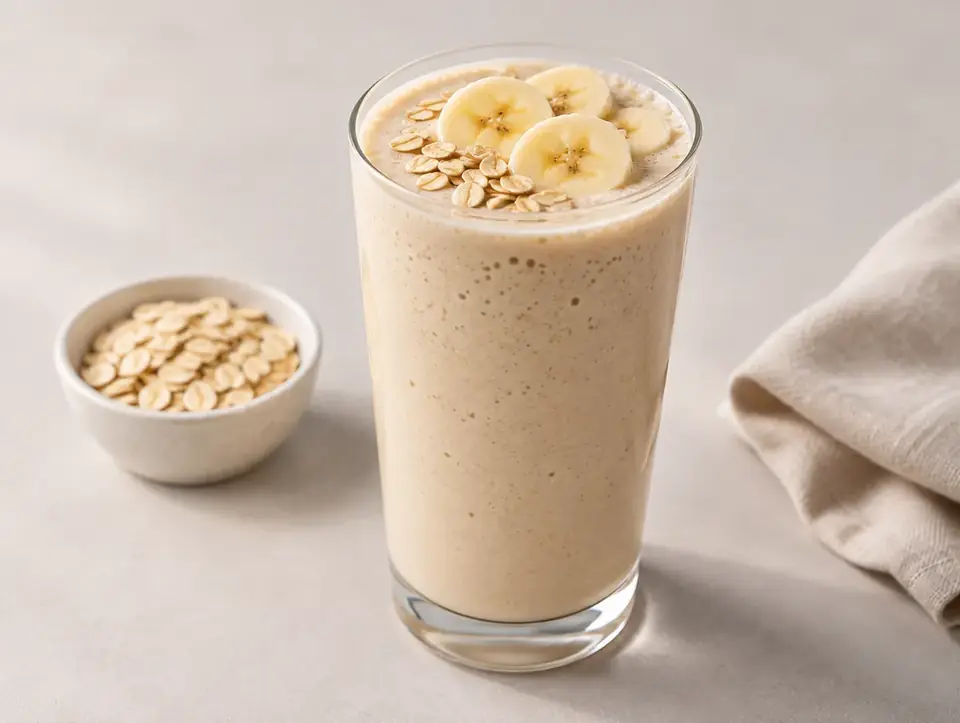
United States · Sports Nutrition · 39.87° N, 98.73° W
Protein Shake
Liquid first, powder onto a moving surface, banana and oats for body.
At a glance.
Protein Shake comes from United States · Sports Nutrition and appears in The Breakfast Atlas, in the chapter Smoothies & Breakfast Drinks. It serves 1, takes about 5 minutes, and uses 10 ingredients and 10 steps.
- Yield
- Serves 1
- Method
- Blender
- Time
- 5 minutes
Ingredients
Tap an ingredient to tick it off.
Method
-
Put the liquid in the jar before anything else. Powder that lands on a dry blade or a dry jar base cements itself to the metal and comes off later in pale, rubbery flakes.
-
Start the motor on its lowest setting and rain the powder onto the moving surface rather than tipping it in. This is the whole of the anti-clumping technique, and it takes five seconds.
-
Understand why it works. A dumped lump of powder wets only on the outside, where the protein hydrates into a gel skin that seals dry powder inside; the resulting pellet survives any amount of further blending.
-
Mixing in a shaker bottle rather than a blender inverts your instincts. Add 50 ml of liquid, then the powder, and shake that to a smooth paste before adding the remaining 200 ml.
-
Blend 10 seconds to hydrate the protein fully before anything solid joins it. Whey takes a few seconds to dissolve; give it those seconds alone.
-
Add the oats, peanut butter, cinnamon and salt and blend 15 seconds. Oats blended into liquid at this stage thicken the drink and stop it reading thin and watery, which is the usual complaint about powder-based shakes.
-
Add the frozen banana and blend 40 seconds, no more. Whey is a foaming protein — the same behavior that whips egg white into meringue — and a long, fast blend leaves you with a glass that is a third air and a mustache.
-
If you are using plant protein, add the lemon juice and the extra 50 ml of liquid now, let the jar stand two minutes to hydrate, then pulse for five seconds. Pea and rice proteins absorb slowly and taste chalky until they have.
-
If you are using casein rather than whey, add a further 80 ml of liquid. Casein forms a gel as it hydrates and will set to pudding thickness in the glass within a minute or two.
-
Pour, tap the glass firmly on the counter to knock the foam down, and drink within five minutes before it thickens and separates.
Cook’s notes
- The technique
- Order of addition decides everything about texture here, and the rule is counterintuitive: liquid first, powder second, onto moving liquid. Protein clumps are not a mixing problem but a wetting problem, and once a lump has formed its skin, no blender will open it. The second rule is restraint. Every protein in the tub is there because it dissolves and foams readily, so long blending buys you air rather than smoothness.
- Make ahead
- Pre-portion the powder, oats and cinnamon into a jar so the morning is one pour and one blend. A whey shake can be blended the night before and kept covered in the fridge for twelve hours, though it will thicken; casein and plant blends set too firmly to bother. Frozen banana coins keep three months.
- Troubleshooting
- Rubbery lumps — the powder went in first, or in one heap. Dense foam and a shrinking glass — over-blended. Chalky, drying finish — plant protein that has not been given time to hydrate. Thick as wallpaper paste — casein without the extra liquid. A cardboard taste — old, oxidized powder.
- Variations
- Whey isolate is the fastest to dissolve, the thinnest in the glass and the most prone to foam. Micellar casein thickens dramatically and suits a spoon rather than a straw. Pea-and-rice blends carry an earthy note that peanut butter, cocoa or a squeeze of lemon covers well. Soy sits between the two, and skyr does the job of all of them without a scoop.
- Serve with
- Worth saying plainly: whole food does most of this. Two hundred and fifty milliliters of milk with 200 g of skyr, a banana, oats and a spoon of peanut butter gives around 35 g of protein, plus fiber, calcium and a drink that tastes of something. Powder is a convenience, not a category of nutrition. Serve cold, after training or as breakfast, with fruit.

Where it comes from
Whey was a nuisance long before it was a supplement. Every kilo of cheese leaves roughly nine liters of thin green liquid behind, and for most of dairying history that liquid went to pigs, onto fields or into rivers — a genuine pollution problem in cheesemaking regions, since it is rich enough to strip oxygen from a waterway. Some of it was rescued by cooks: ricotta means recooked and is made from it, and Norwegian brunost is whey boiled down to a caramel-colored block. The commercial turn came with membrane filtration in the 1970s and 1980s, which let processors separate and concentrate the protein cheaply and at scale, converting a disposal cost into the highest-margin product on the site. Powdered protein for athletes was already on sale — Bob Hoffman marketed a soy-based Hi-Proteen to American weightlifters from the 1950s, and it was by all accounts hard to swallow. Whey concentrate and isolate solved both the taste and the texture, and the fitness boom of the 1990s carried the tub from gym bags into supermarkets.
Protein Shake: quick answers
How long does Protein Shake take?
About 5 minutes.
How many does this Protein Shake recipe make?
This recipe serves 1.
Where does Protein Shake come from?
Whey was a nuisance long before it was a supplement. Every kilo of cheese leaves roughly nine liters of thin green liquid behind, and for most of dairying history that liquid went to pigs, onto fields or into rivers — a genuine pollution problem in cheesemaking regions, since it is rich enough to strip oxygen from a waterway. Some of it was rescued by cooks: ricotta means recooked and is made from it, and Norwegian brunost is whey boiled down to a caramel-colored block. The commercial turn came with membrane filtration in the 1970s and 1980s, which let processors separate and concentrate the protein cheaply and at scale, converting a disposal cost into the highest-margin product on the site. Powdered protein for athletes was already on sale — Bob Hoffman marketed a soy-based Hi-Proteen to American weightlifters from the 1950s, and it was by all accounts hard to swallow. Whey concentrate and isolate solved both the taste and the texture, and the fitness boom of the 1990s carried the tub from gym bags into supermarkets.
More from United States


More in Smoothies & Breakfast Drinks
https://www.atlasserie.com/recipes/breakfast/protein-shake/