Caribbean & Hawai‘i · Island Fruit · 39.87° N, 98.73° W
Tropical Smoothie
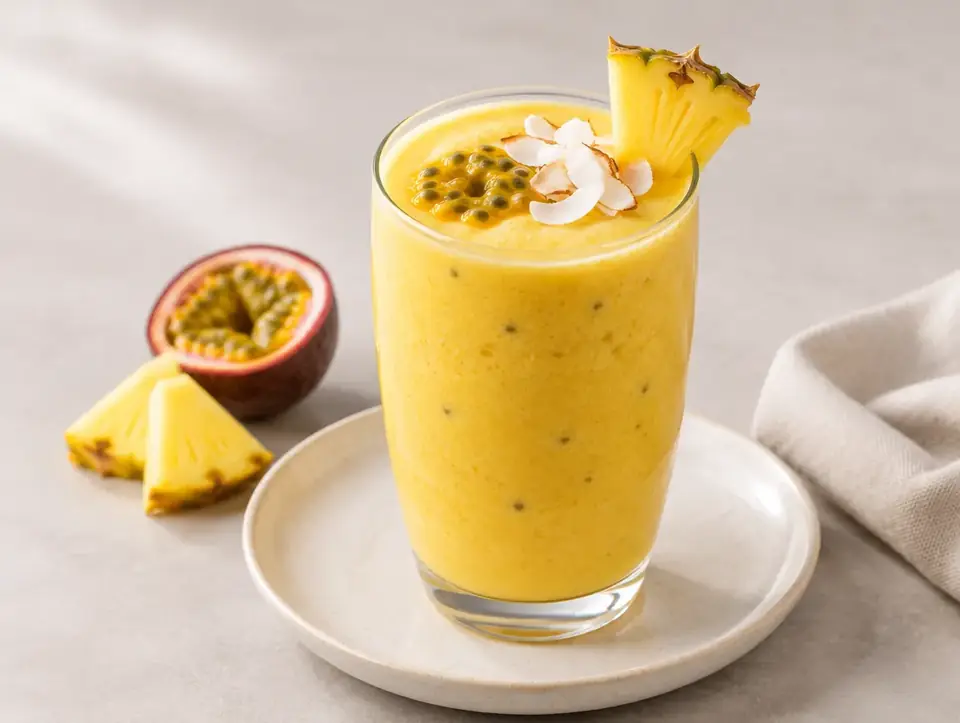
Pineapple, passionfruit and coconut, with the bromelain problem settled before blending.
At a glance.
Tropical Smoothie comes from Caribbean & Hawai‘i · Island Fruit and appears in The Breakfast Atlas, in the chapter Smoothies & Breakfast Drinks. It serves 2, takes about 12 minutes, and uses 9 ingredients and 10 steps.
- Yield
- Serves 2
- Method
- Blender
- Time
- 12 minutes
Ingredients
Tap an ingredient to tick it off.
Method
-
Settle the pineapple question first. Use tinned pineapple, drained and frozen, whenever dairy is involved or the drink will stand more than a few minutes. Fresh pineapple is for a coconut-only blend drunk immediately.
-
Toast the coconut flakes in a dry pan over medium heat for 2 minutes, shaking often, until the edges turn gold and the kitchen smells of them. Tip them onto a plate; they crisp as they cool.
-
Halve the passionfruit and scoop out the pulp. Push half of it through a sieve to lose some seeds and keep the rest whole — the seeds crack between the teeth and are much of the pleasure.
-
Shake the tin of coconut milk hard before opening. Chilled or long-stored, the cream sets in a solid plug at the top and the water below runs thin, and an unshaken tin gives you one or the other rather than both.
-
Load the liquids first: coconut milk, coconut water, lime juice, honey and salt. Keep the split near 60 percent coconut milk to 40 percent coconut water, which is 120 ml to 80 ml here.
-
Add the frozen pineapple, mango and passionfruit pulp on top. Fit the lid, start low and climb to full speed once the fruit is moving.
-
Blend 45–60 seconds. Coconut fat emulsifies as it goes, and the drink will look visibly glossier and paler at the end than it did at thirty seconds.
-
Judge the body and adjust with one liquid at a time. Coconut milk carries aroma and adds weight; coconut water thins and brings a faint salinity that reads as freshness. More milk gives a spoonable drink, more water a pourable one.
-
Taste for lime last. Tropical fruit is high in sugar and low in acid, and without a sharp edge the whole glass turns syrupy and hard to finish.
-
Pour into two chilled glasses, scatter the toasted coconut over the surface, and serve with wide straws.
Cook’s notes
- The technique
- Raw pineapple contains bromelain, a protease vigorous enough to be sold as a meat tenderizer. In a dairy blend it cleaves milk proteins into short peptides that taste bitter and metallic, so a smoothie that was clean at the first sip turns unpleasant within ten minutes. The same enzyme digests gelatine, which is why a raw pineapple jelly never sets. Heat destroys it: tinned pineapple is already inert, and fresh fruit simmered two minutes at around 80°C becomes safe to blend with milk or yogurt.
- Make ahead
- Drain a tin of pineapple and freeze it in 200 g portions, ready to go. Passionfruit pulp freezes beautifully in an ice-cube tray for six months, seeds and all. Toasted coconut keeps a week in a jar. The blended drink does not hold — the coconut fat separates as it warms.
- Troubleshooting
- Bitter, metallic aftertaste — raw pineapple met dairy; switch to tinned. Tongue tingling or sore — again bromelain, this time working on you. Stringy threads — the fibrous pineapple core went in; cut it out. Thin and watery — too much coconut water. Lumps of white fat — the tin was not shaken, or was used fridge-cold.
- Variations
- A Dominican batida de piña blends fresh pineapple with ice, evaporated milk and sugar, and is drunk within the minute for exactly the reason above. A Hawaiian version leans on lilikoʻi and guava nectar with no dairy at all. A virgin piña colada swaps coconut milk for the much sweeter cream of coconut and doubles the pineapple.
- Serve with
- Serve very cold with a wedge of lime on the glass. A rim dipped in chilli-lime salt is a Mexican and Caribbean habit worth borrowing, since the heat and salt make the fruit taste more like itself. Good with a coconut bun or plain toast.

Where it comes from
Pineapple is South American by origin and had spread through the Caribbean long before Columbus recorded it on Guadeloupe in 1493. Its industrial career, though, belongs to Hawai‘i: James Dole founded the Hawaiian Pineapple Company in 1901, bought most of the island of Lāna‘i in 1922 and turned it into a single vast plantation, and for decades the islands supplied the bulk of the world's canned pineapple. Passionfruit travelled the other way, introduced to Hawai‘i from Australia in the 1880s and named lilikoʻi after the Maui gulch where it first ran wild. In the Spanish-speaking Caribbean the blended fruit drink has its own name and its own habits — the batida, whipped up with ice and often evaporated milk, sold from Dominican and Puerto Rican colmados, and made as readily with guava, soursop or mamey as with pineapple. The café tropical smoothie borrows from both traditions. It also inherits, from the pineapple, one real technical problem that no amount of good fruit will solve on its own.
Tropical Smoothie: quick answers
How long does Tropical Smoothie take?
About 12 minutes.
How many does this Tropical Smoothie recipe make?
This recipe serves 2.
Where does Tropical Smoothie come from?
Pineapple is South American by origin and had spread through the Caribbean long before Columbus recorded it on Guadeloupe in 1493. Its industrial career, though, belongs to Hawai‘i: James Dole founded the Hawaiian Pineapple Company in 1901, bought most of the island of Lāna‘i in 1922 and turned it into a single vast plantation, and for decades the islands supplied the bulk of the world's canned pineapple. Passionfruit travelled the other way, introduced to Hawai‘i from Australia in the 1880s and named lilikoʻi after the Maui gulch where it first ran wild. In the Spanish-speaking Caribbean the blended fruit drink has its own name and its own habits — the batida, whipped up with ice and often evaporated milk, sold from Dominican and Puerto Rican colmados, and made as readily with guava, soursop or mamey as with pineapple. The café tropical smoothie borrows from both traditions. It also inherits, from the pineapple, one real technical problem that no amount of good fruit will solve on its own.
More from United States


More in Smoothies & Breakfast Drinks
https://www.atlasserie.com/recipes/breakfast/tropical-smoothie/