Philippines · 15.74° N, 121.55° E
Buko Pie
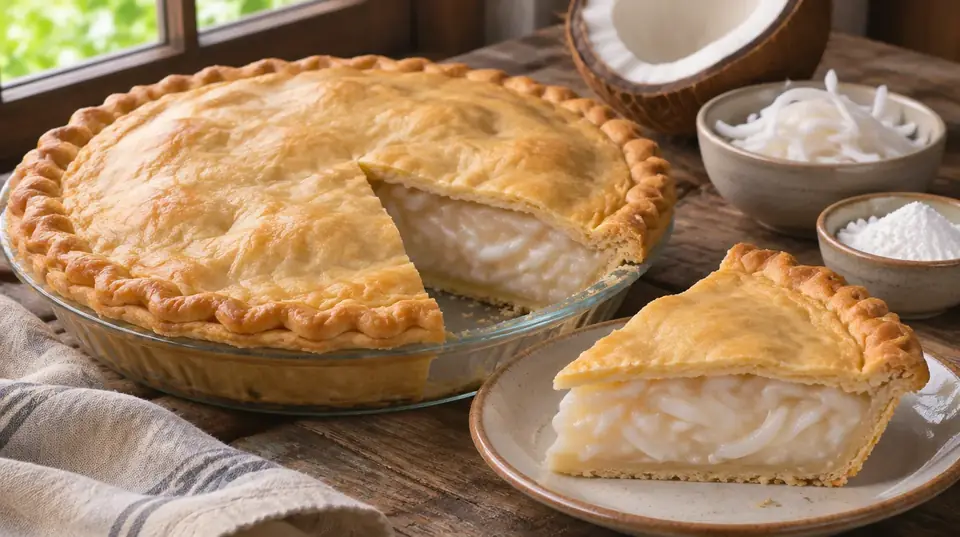
Ribbons of young coconut suspended in a pale, milky filling set firm with cornstarch, sealed under a plain double crust that gives away nothing about what is inside.
At a glance.
Buko Pie comes from Philippines and appears in The Pie Atlas, in the chapter Pies Around the World. It serves 8, takes about 50–55 minutes, and uses 11 ingredients and 8 steps.
- Yield
- Serves 8
- Method
- Oven 400°F then 350°F
- Bake
- 50–55 minutes
Ingredients
Tap an ingredient to tick it off.
Method
-
Split the nuts, save the water, and scrape the flesh out in long strips with a sturdy spoon rather than chopping it. Strips carry the texture; diced coconut vanishes into the set filling.
-
Roll two-thirds of the pastry to 1/8 inch (3 mm), line a 9 inch (23 cm) plate, and refrigerate it 30 minutes with the rolled lid, so the gluten stretched by the pin can slacken.
-
Whisk the cornstarch into the cold coconut water until no grains remain. Starch dropped into hot liquid seizes on contact and no beating smooths it out afterward.
-
Heat the whole milk, evaporated milk, sugar, and salt to a simmer, pour in the slurry, and cook at a bare boil for a full 2 minutes, stirring. Cornstarch has to pass 203°F (95°C) to gelatinize, and undercooked starch tastes chalky and sets weak.
-
Off the heat, stir in the butter and vanilla, fold the coconut strips through, and spread the filling on a tray to cool refrigerator-cold, at least 2 hours.
-
Fill the shell, lay on the lid, trim, crimp tightly, and cut four short vents at the center. A starch filling throws off a great deal of steam and a sealed pie lifts its own lid.
-
Brush with the egg and milk wash, bake at 400°F (200°C) on the lowest shelf for 15 minutes to set the base, then reduce to 350°F (175°C) for a further 35 to 40 minutes, until evenly gold and the vents show slow, thick movement.
-
Cool at least 4 hours before cutting. The filling is liquid in the oven and sets only as it drops below about 100°F (38°C); it keeps three days refrigerated and cuts best cold.
Cook’s notes
- Good to know
- A cornstarch gel firms on cooling rather than on heating, which is why a buko pie that looks alarmingly loose at the vent slices clean the next morning. Prolonged boiling, or a sharply acidic filling, cuts the long starch molecules into short ones that cannot hold a network, so time the 2 minutes and stop.

Where it comes from
Buko is Tagalog for the young green coconut, cut while its flesh is still soft enough to scrape out with a spoon, and the pie built around it belongs to Los Baños in Laguna province, where roadside bakeries made it the standard pasalubong, the gift a traveler carries home. The form is an American-era import adapted to a local crop: a plain double-crust pie of the kind taught in colonial home economics classes, filled with the one fruit available without limit. Mature coconut cannot stand in, being fibrous and oily where buko is tender and faintly sweet.
Buko Pie: quick answers
How long does Buko Pie take?
About 50–55 minutes.
How many does this Buko Pie recipe make?
This recipe serves 8.
Where does Buko Pie come from?
Buko is Tagalog for the young green coconut, cut while its flesh is still soft enough to scrape out with a spoon, and the pie built around it belongs to Los Baños in Laguna province, where roadside bakeries made it the standard pasalubong, the gift a traveler carries home. The form is an American-era import adapted to a local crop: a plain double-crust pie of the kind taught in colonial home economics classes, filled with the one fruit available without limit. Mature coconut cannot stand in, being fibrous and oily where buko is tender and faintly sweet.
What is the secret to a good Buko Pie?
Frozen buko in bags works well, but thaw it in a sieve and press it gently — the water it gives up is not accounted for here and will loosen the set.
More from Philippines
More in Pies Around the World

https://www.atlasserie.com/recipes/pie/buko-pie/