France · Levain Naturel · 46.56° N, 2.35° E
Pain au Levain
French naturally leavened bread: aromatic, faintly acid, never sharp.
At a glance.
Pain au Levain comes from France · Levain Naturel and appears in The Bread Atlas, in the chapter Artisan & Sourdough. It makes 1 boule, takes about 24 hours, and uses 10 ingredients and 11 steps.
- Yield
- Makes 1 boule
- Method
- Oven 245°C / 470°F
- Time
- 24 hours
Ingredients
Tap an ingredient to tick it off.
- Stiff Levain (levain de tout point)
- The Dough
- For Shaping and Baking
Method
-
Refresh the starter twice in the twelve hours before you build, at eight-hour intervals, keeping it at 24–26°C. Frequent feeding is the single practice that keeps a levain mild: a culture that is never allowed to go hungry never has the chance to accumulate acid.
-
Build the stiff levain 8–10 hours ahead. Dissolve the starter in the water at 26°C, then knead in the white and rye flours to a firm ball, barely tacky. Cover and hold at 22°C.
-
Use it as soon as it has doubled and the surface has domed and split — a stiff levain shows readiness by cracking rather than by bubbling — and no later. Smell it: cream, hazelnut and a little cider is right, vinegar is late.
-
Mix both dough flours with the water at 30°C and autolyse 40 minutes. Then tear in the levain, squeeze it through until no lumps of it remain, add the salt, and work the dough 4–5 minutes to a smooth mass at 25–26°C.
-
Bulk ferment 4 hours at 26°C, folding at 40, 80 and 120 minutes. Warm and reasonably brisk is deliberate: warmth favors lactic acid over acetic, and a bulk that is short enough to keep the total acid low is what separates this loaf from a San Francisco one.
-
End the bulk at a rise of about 60%, with a domed, gassy surface and a smell that is still sweet. This dough should never smell sharp at any point. If it does, the levain went in over-ripe or the kitchen ran hot.
-
Preshape into a round, rest 25 minutes, then shape a firm boule and set it seam up in a floured banneton. The 15% rye makes the dough a little stickier than a white one; use a scraper and a light dusting rather than more flour on the bench.
-
Retard 8–10 hours at 4°C — shorter than the boule of recipe 16, on purpose. A long cold night builds acidity, and the point of this loaf is to arrive at the oven aromatic and only just acid.
-
Heat the oven to 245°C / 470°F for 45 minutes with a stone on the middle shelf and a heavy tray on the floor. Turn the loaf onto parchment and score it with a cross or two long crescent cuts, 1 cm deep, blade at 30°.
-
Load, pour boiling water into the tray, and bake 20 minutes. Vent the oven, drop to 220°C / 430°F, and bake 20 minutes more, to a deep russet crust and 98°C inside. The rye in the dough will take the crust darker than a white loaf at the same setting.
-
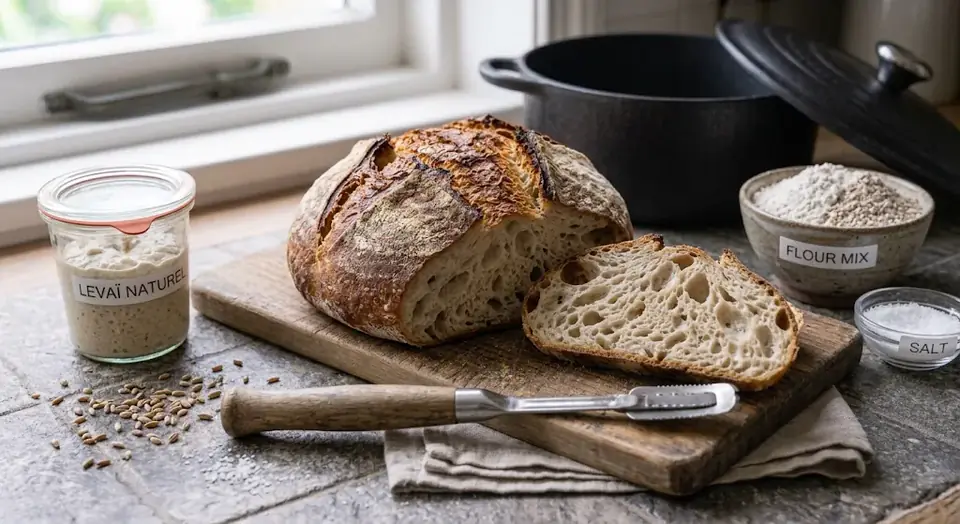
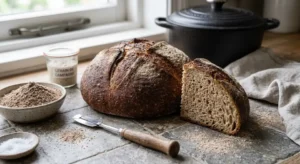
Cool 3 hours before cutting. The crumb should be cream-colored and irregularly open, the smell nutty and lactic, and the taste round rather than sour — closer to yogurt and hazelnut than to vinegar. If it tastes tangy, treat that as a fault to correct.
Cook’s notes
- To serve and keep
- The everyday bread of a French table where the baguette is the everyday bread of the street: cut in generous slices for cheese, charcuterie and soup, and rubbed with garlic and oil when stale. Store cut side down on a board and expect it to be better tomorrow.

Where it comes from
France defines this bread in law. The décret pain of 13 September 1993 states what a levain is — a dough of wheat or rye flour, water and optionally salt, carrying a spontaneous acidifying fermentation and capable of raising a dough — and sets two numbers for the bread made from it: the crumb must reach a pH of 4.3 or below, and no more than 0.2% baker's yeast may be added at the final mixing. A loaf that meets those conditions may be sold as pain au levain and one that does not may not. Behind the regulation sits an older working vocabulary. A French bakery keeps a levain chef, the mother culture, and builds it forward in stages — levain de première, levain de tout point — refreshing at each step so that the leaven going into the dough is young, vigorous and only mildly acid. The result is a bread with a great deal of aroma and comparatively little sourness, and that balance, rather than any tang, is what French bakers mean by levain.
Pain au Levain: quick answers
How long does Pain au Levain take?
About 24 hours.
How many does this Pain au Levain recipe make?
This recipe makes 1 boule.
Where does Pain au Levain come from?
France defines this bread in law. The décret pain of 13 September 1993 states what a levain is — a dough of wheat or rye flour, water and optionally salt, carrying a spontaneous acidifying fermentation and capable of raising a dough — and sets two numbers for the bread made from it: the crumb must reach a pH of 4.3 or below, and no more than 0.2% baker's yeast may be added at the final mixing. A loaf that meets those conditions may be sold as pain au levain and one that does not may not. Behind the regulation sits an older working vocabulary. A French bakery keeps a levain chef, the mother culture, and builds it forward in stages — levain de première, levain de tout point — refreshing at each step so that the leaven going into the dough is young, vigorous and only mildly acid. The result is a bread with a great deal of aroma and comparatively little sourness, and that balance, rather than any tang, is what French bakers mean by levain.
More from France






More in Artisan & Sourdough

https://www.atlasserie.com/recipes/bread/pain-au-levain/