The Bread Atlas
Classic Sourdough Boule
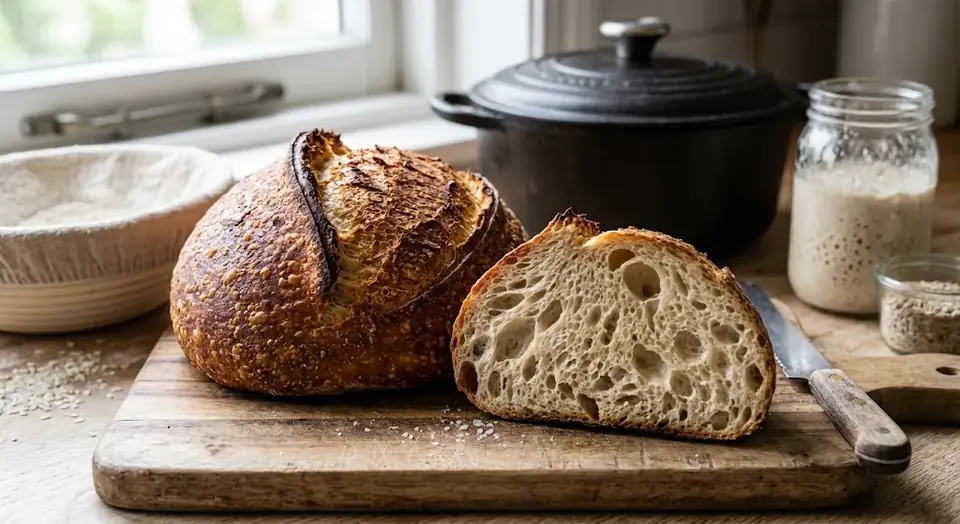
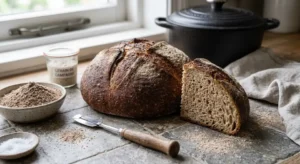
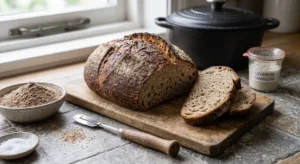
The reference loaf: white, open-crumbed, blistered, raised on a starter alone.
At a glance.
Classic Sourdough Boule is a recipe from The Bread Atlas, in the chapter Artisan & Sourdough. It makes 1 boule, takes about 26 hours, and uses 12 ingredients and 13 steps.
- Yield
- Makes 1 boule
- Method
- Oven 245°C / 475°F
- Time
- 26 hours
Ingredients
Tap an ingredient to tick it off.
- Sourdough Starter
- Liquid Levain
- The Dough
- For Shaping and Baking
Method
-
Raise the starter first. Stir 50 g whole rye or wholemeal flour into 50 g water at 28°C in a clean jar, cover loosely and leave at 22–25°C. Whole grain goes in at this stage because the bran carries most of the resident yeasts and bacteria.
-
From day two, each morning discard all but 30 g and refresh with 60 g white flour and 60 g water. Expect a brisk false rise around day three, driven by bacteria that will not survive the acidity they create, then a discouraging lull, then genuine activity from day five.
-
The starter is ready when it doubles within 6–8 hours of a refreshment, domes, then sinks, and does so three days running. It should smell of yogurt and bruised apple. Nail-polish sharpness or a gray liquid on top means it is starving — feed twice daily until it settles.
-
Eight to twelve hours before mixing, build the levain. Whisk 20 g ripe starter into 100 g water at 26°C until milky, beat in 100 g flour, and leave at 22°C. It is ready when domed, webbed with bubbles and just beginning to crater in the center.
-
Mix the dough flour with 275 g water at 30°C until no dry flour remains. Do not add levain or salt. Cover and autolyse 45 minutes: the flour hydrates fully, the proteins begin to align without any work, and the dough you return to is half-developed already.
-
Add the levain and squeeze it through the dough until no streaks remain, then the salt dissolved in its 20 g of water. Pinch, fold and slap for 4 minutes until the mass smooths and no grit of salt is left. Target a final dough temperature of 25–26°C.
-
Bulk ferment 4½–5 hours at 25°C. Give four sets of stretches and folds at half-hour intervals across the first two hours, then leave the dough undisturbed. Folding builds strength early; folding late only tightens a dough whose job by then is to relax and inflate.
-
End the bulk on three signs together, not one: the dough has grown by 50–70%, it domes where it meets the side of the tub, and it wobbles as a single mass. Volume on its own lies, particularly in a wide container.
-
Turn out onto a lightly floured bench, fold the edges in, flip and drag into a loose round. Rest 25 minutes uncovered. Then flip again, fold the near edge up and the sides in, roll it away from you and drag the ball in quarter-turns until the skin is taut.
-
Set the boule seam side up in a banneton dusted heavily with the rice and wheat flour blend, cover, and retard 12–16 hours at 4°C. Cold slows the yeast far more than the bacteria, so the loaf gains acidity and aroma while keeping its shape, and chilled dough takes a clean score.
-
Heat a cast-iron pot and its lid at 245°C / 475°F for 45 minutes. Turn the cold loaf onto parchment, score a single arc 1 cm deep with the blade at 30°, lower it in, cover and bake 20 minutes. The pot traps the dough's own steam.
-
Take off the lid — the loaf should be swollen, pale and split wide along the score — and bake 20–25 minutes more to a deep mahogany and an internal 98°C. Cool on a rack at least 2 hours; the crumb is still setting, and a boule cut warm tastes gummy and reads as a fermentation fault.
-
Feed the starter within a day of baking and keep it in the refrigerator between bakes, refreshing weekly. It will be sluggish for one build after a fortnight of cold and back to full strength after two.
Cook’s notes
- To serve and keep
- Cut thick, eaten with salted butter, or toasted under olive oil and tomato. It is at its best 4–24 hours from the oven. Store cut side down on a board, never bagged in plastic, and revive a two-day loaf with 8 minutes at 180°C to bring the crust back.
Where it comes from
A starter is flour, water and patience. Wild yeasts and lactic acid bacteria travel on the grain and in the dust of the mill, colonize a paste of flour and water, and within a week have out-competed everything else in the jar. Because a culture keeps, it also travels, and it acquires the standing of an heirloom: prospectors on the Klondike in the 1890s were said to carry theirs inside their coats against the cold, and the men themselves came to be called sourdoughs, the bread lending its name to the person. The loaf on this page is not old, though. The white, high-hydration, deeply scored boule with a burnished crust is a construction of the last forty years, assembled in American and Australian bakeries and carried home by their books — Nancy Silverton opened the La Brea Bakery in Los Angeles in 1989 and published her method in 1996 — and finished by the domestic cast-iron pot. Every other loaf in this chapter is measured against it.
Classic Sourdough Boule: quick answers
How long does Classic Sourdough Boule take?
About 26 hours.
How many does this Classic Sourdough Boule recipe make?
This recipe makes 1 boule.
Where does Classic Sourdough Boule come from?
A starter is flour, water and patience. Wild yeasts and lactic acid bacteria travel on the grain and in the dust of the mill, colonize a paste of flour and water, and within a week have out-competed everything else in the jar. Because a culture keeps, it also travels, and it acquires the standing of an heirloom: prospectors on the Klondike in the 1890s were said to carry theirs inside their coats against the cold, and the men themselves came to be called sourdoughs, the bread lending its name to the person. The loaf on this page is not old, though. The white, high-hydration, deeply scored boule with a burnished crust is a construction of the last forty years, assembled in American and Australian bakeries and carried home by their books — Nancy Silverton opened the La Brea Bakery in Los Angeles in 1989 and published her method in 1996 — and finished by the domestic cast-iron pot. Every other loaf in this chapter is measured against it.
More in Artisan & Sourdough

https://www.atlasserie.com/recipes/bread/classic-sourdough-boule/