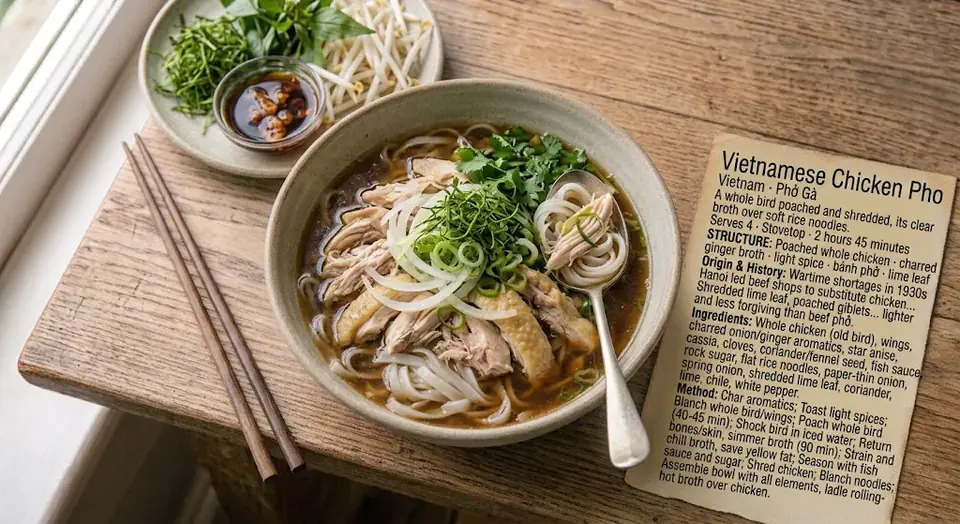
Vietnam · Phở Gà · 16.56° N, 106.33° E
Vietnamese Chicken Pho
A whole bird poached and shredded, its clear broth over soft rice noodles.
At a glance.
Vietnamese Chicken Pho comes from Vietnam · Phở Gà and appears in The Soup Atlas, in the chapter Broths & Noodle Soups. It serves 4, takes about 2 hr 45 min, and uses 20 ingredients and 10 steps.
- Yield
- Serves 4
- Method
- Stovetop
- Time
- 2 hr 45 min
Ingredients
Tap an ingredient to tick it off.
- For the chicken and broth
- For the charred aromatics and spice
- To season
- To serve
Method
-
Char the onion halves and the ginger over a gas flame or under a hot broiler, turning until the cut faces blacken in patches, about 8 minutes. Rinse off the loose ash and scrape the ginger lightly. Toast the star anise, cassia, cloves, coriander, fennel and cardamom in a dry pan for 60 seconds.
-
Note how little spice that is against a beef pot. Chicken cannot carry four star anise and a full cassia stick; the profile here shifts toward ginger and coriander seed, with the anise present as a background note rather than the leading one.
-
Blanch the whole bird and the extra wings in boiling water for 4 minutes, then lift them out, rinse away every trace of scum under the tap and wash the pot. Skipping this on a chicken pot is more visible than on a beef one, because there is nothing else in the bowl to look at.
-
Return the bird and wings to the clean pot with 3 liters of cold water, the charred aromatics, the toasted spices tied in muslin and the salt. Bring it slowly to 85°C (185°F) over 25 minutes, skimming steadily, and never let it reach a boil — a chicken broth clouds faster than a beef one.
-
Poach the whole bird at that temperature for 40–45 minutes, until the thigh reads 74°C (165°F) at the bone. Lift it out at once and lower it into a bowl of iced water for 10 minutes: the shock firms the skin, stops the carry-over cooking and keeps the meat silky rather than dry and fibrous.
-
Pull the meat off in large pieces once the bird is cool, and return every bone, along with the skin you do not want, to the pot. Simmer for another 90 minutes to draw out the rest, then remove the spice bag and strain through damp muslin.
-
Chill the strained broth for an hour if you have it, and lift off the yellow fat that sets on top. Keep it. That mỡ gà, spooned back over the finished bowl, is where a chicken pho gets its aroma and its shine, and throwing it away leaves the soup thin.
-
Season the broth with the fish sauce and rock sugar and taste it hot. It should read clean and lightly sweet with the ginger clearly present. You want about 2 liters, which is deliberately less concentrated than a beef broth would be.
-
Tear or slice the chicken along the grain into strips, keeping some skin on for texture, and warm it in a ladleful of hot broth so it does not chill the bowl. Blanch the noodles in boiling water for 20 seconds and shake them thoroughly dry.
-
Divide the noodles between four deep bowls, arrange the chicken on top, and add the shaved onion, spring onion and the shredded lime leaf, which is the accompaniment that marks this bowl out from every other. Ladle over 500 ml of boiling broth, spoon on a little reserved chicken fat, and serve with the herbs, lime and chile alongside.
Cook’s notes
- The technique
- Two temperatures do all the work. The bird is poached at 85°C rather than simmered, because chicken muscle fiber contracts and squeezes out its moisture above about 80°C, and a bird boiled for forty minutes is stringy no matter how good the broth around it turns out. Then it goes straight into ice, which arrests the carry-over heat that would otherwise carry it past the point of rescue. The broth itself asks for the same restraint the beef version does, only sooner and less forgivingly — chicken protein coagulates at a lower temperature and clouds a pot faster.
- Make ahead
- The broth is best on the day and keeps three days chilled or two months frozen, though it loses aroma faster than a beef broth. Keep the poached chicken whole and refrigerated in a little broth, then shred it as you serve; shredded in advance it dries out within hours. The reserved fat keeps a fortnight. Herbs, noodles and assembly are always last-minute.
- Troubleshooting
- Meat stringy and dry — the pot went over 85°C, or the bird was left in past 45 minutes. Broth cloudy — it boiled, or the bird was not blanched first. Watery and characterless — an industrially raised chicken with nothing to give; add the extra wings, and buy an older bird if you can. Aroma flat — the fat was skimmed off and discarded.
- Variations
- Hanoi shops add poached giblets and trứng non, the immature egg yolks from a laying hen, which are soft and rich and sold at a premium. Southern bowls come with a full herb plate, bean sprouts and hoisin. Phở gà trộn is the dry version: the same chicken and noodles tossed with fried shallots and dressing, with the broth served on the side.
- To serve and keep
- Serve in deep bowls with chopsticks and a spoon, the shredded lime leaf visible on top. A saucer of salt, pepper and lime for dipping the chicken is the Hanoi habit and better than any bottled sauce. Iced tea, or hot green tea after. Made in full within this recipe — Poached Whole Chicken, Chicken Broth, Reserved Chicken Fat. Also listed in the Component Index at the back.

Where it comes from
Phở gà exists because beef ran short. Wartime restrictions in Hanoi at the end of the 1930s limited the days on which beef could be sold, and shops that had built their trade on it turned to chicken to keep the pots going; the detail most often cited is a ban covering two days a week, which is repeated widely but rests on thinner evidence than the general shortage does. Whatever forced it, the substitute took hold. Within a generation phở gà had its own specialist shops in Hanoi, its own regulars, and a set of accompaniments no beef bowl carries — shredded lime leaf, poached giblets, and trứng non, the unlaid egg yolks taken from a laying hen, which are considered the best part by people who grew up with them. It is a lighter, faster and less forgiving soup than the beef bowl at recipe 59. There is no marrow and no long extraction to hide behind, so everything rests on the bird and the restraint of the cook.
Vietnamese Chicken Pho: quick answers
How long does Vietnamese Chicken Pho take?
About 2 hr 45 min.
How many does this Vietnamese Chicken Pho recipe make?
This recipe serves 4.
Where does Vietnamese Chicken Pho come from?
Phở gà exists because beef ran short. Wartime restrictions in Hanoi at the end of the 1930s limited the days on which beef could be sold, and shops that had built their trade on it turned to chicken to keep the pots going; the detail most often cited is a ban covering two days a week, which is repeated widely but rests on thinner evidence than the general shortage does. Whatever forced it, the substitute took hold. Within a generation phở gà had its own specialist shops in Hanoi, its own regulars, and a set of accompaniments no beef bowl carries — shredded lime leaf, poached giblets, and trứng non, the unlaid egg yolks taken from a laying hen, which are considered the best part by people who grew up with them. It is a lighter, faster and less forgiving soup than the beef bowl at recipe 59. There is no marrow and no long extraction to hide behind, so everything rests on the bird and the restraint of the cook.
More from Vietnam
More in Broths & Noodle Soups


https://www.atlasserie.com/recipes/soup/vietnamese-chicken-pho/