Vietnam · 16.56° N, 106.33° E
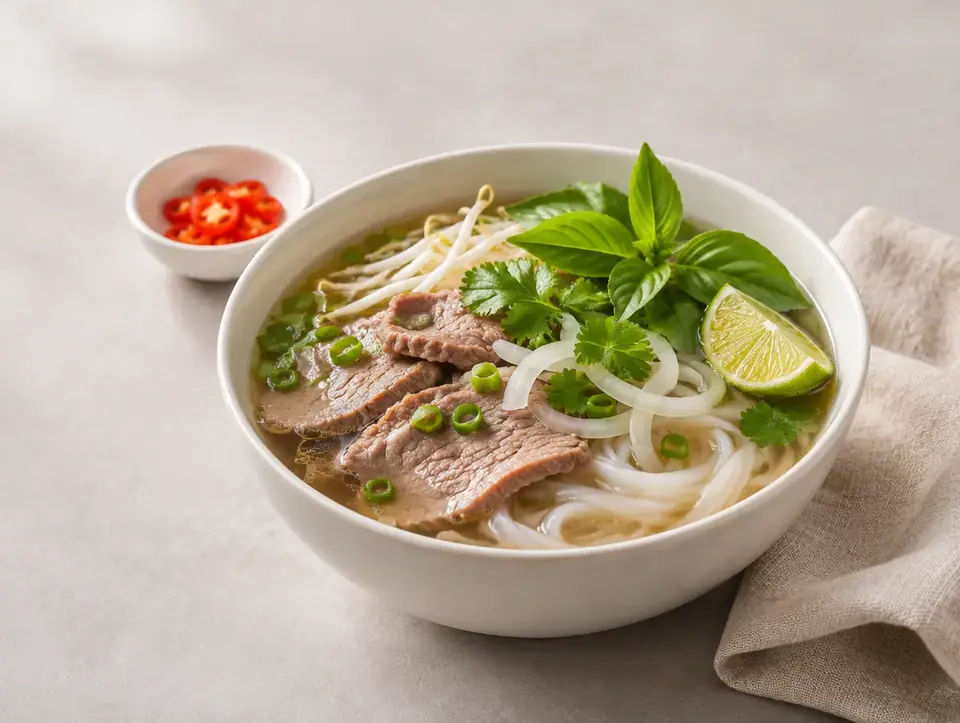
Pho
Fragrant beef noodle soup, with herbs, lime, and rice noodles.
At a glance.
Pho comes from Vietnam and appears in The Dinner Atlas, in the chapter Pasta & Noodles. It serves 4, is made on the stovetop, and uses 8 ingredients and 8 steps.
- Yield
- Serves 4
- Method
- Stovetop
Ingredients
Tap an ingredient to tick it off.
Method
-
Char the halved onion and ginger directly over a flame or under a hot broiler until blackened in patches. This is the foundation of pho's aroma.
-
Parboil the bones for 10 minutes, then dump the water and rinse them. This gives you a clear broth rather than a muddy one.
-
Toast the whole spices in a dry pan for 60 seconds until fragrant, then tie them in a cloth or put them in an infuser.
-
Cover the clean bones and brisket with fresh water, add the charred aromatics and the spice bundle, and simmer very gently for at least 3 hours.
-
Never let the broth boil. A rolling boil emulsifies the fat and turns the stock cloudy.
-
Skim the surface regularly, then strain the broth and season it with fish sauce and sugar.
-
Soften the rice noodles, drain them well, and divide them among deep bowls with the sliced raw sirloin on top.
-
Pour the furiously hot broth straight over the raw beef, which cooks it in seconds, and serve with the herb plate alongside.

Where it comes from
Pho emerged in northern Vietnam around 1900, likely influenced by both French pot-au-feu and Chinese noodle soups. Its name may even derive from the French feu, meaning fire.
Pho: quick answers
How many does this Pho recipe make?
This recipe serves 4.
Where does Pho come from?
Pho emerged in northern Vietnam around 1900, likely influenced by both French pot-au-feu and Chinese noodle soups. Its name may even derive from the French feu, meaning fire.
What is the secret to a good Pho?
Freeze the sirloin for 20 minutes before slicing. Firm meat is far easier to cut thinly.
The same dish in another volume

More from Vietnam

More in Pasta & Noodles




https://www.atlasserie.com/recipes/dinner/pho/