Ashkenazi Jewish · Passover · 31.78° N, 35.22° E
Matzo Ball Soup
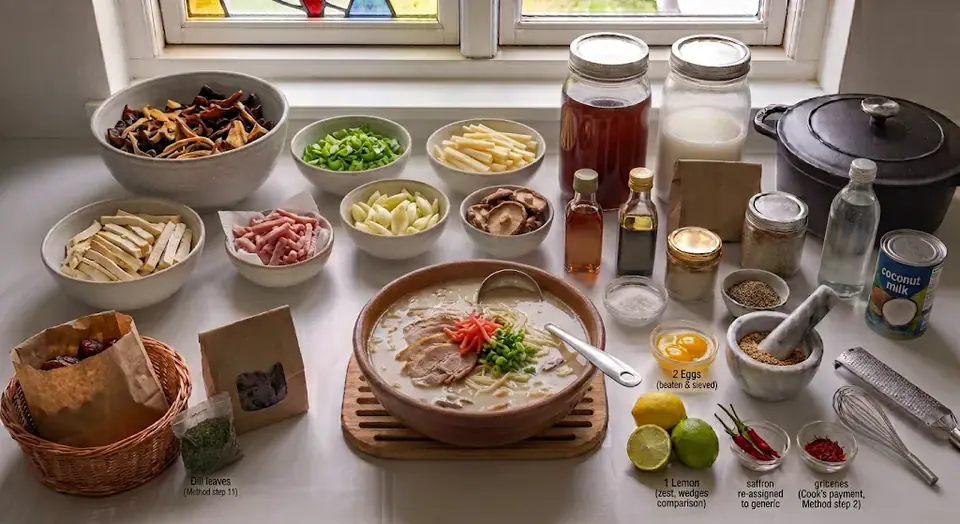
Knaidlach risen on whipped white and seltzer in a golden hen broth.
At a glance.
Matzo Ball Soup comes from Ashkenazi Jewish · Passover and appears in The Soup Atlas, in the chapter Broths & Noodle Soups. It serves 6, takes about 4 hours, and uses 20 ingredients and 11 steps.
- Yield
- Serves 6
- Method
- Stovetop
- Time
- 4 hours
Ingredients
Tap an ingredient to tick it off.
- For the golden chicken broth
- For the schmaltz and gribenes
- For the knaidlach
- To finish
Method
-
Render the schmaltz first. Put the chopped skin and fat in a small pan with the water over low heat and leave it for 30–40 minutes, until the water has gone, the fat runs clear and the solids are golden. Add the onion for the last 10 minutes and fry until both are crisp.
-
Strain the fat into a jar and drain the crisp bits — those are gribenes, and they are the cook's payment. You need 60 ml of schmaltz for the knaidlach; the rest keeps three months chilled and is worth more than it looks.
-
Sit the fowl in a tall pot, cover with 3 liters of cold water and bring it to 85°C (185°F) over 30 minutes, skimming the gray foam away as it gathers. The onion skins go in with the vegetables and give the broth its color; there is no turmeric in a good pot.
-
Add the vegetable chunks, parsnip, herb stalks, peppercorns and salt, and hold that bare simmer for 2½ hours without a lid and without stirring. An old bird has the collagen and the flavor a young one lacks, and it needs the time.
-
Ladle the broth out through damp muslin, stopping short of the sediment, and chill it if you can — the fat sets and lifts off in a sheet, and you can then decide how much to put back. A little is wanted. All of it is not.
-
Whip the egg whites to soft peaks that flop at the tip. Beat the yolks separately with the cooled schmaltz, the seltzer, salt, pepper and dill until smooth and pale.
-
Fold the matzo meal into the yolk mixture, then fold in the whites in three additions, cutting through and turning the bowl rather than stirring. You are folding air into a batter that has no gluten to hold it, so every stroke you save is a bubble kept.
-
Cover and chill for at least 1 hour, and up to overnight. The meal needs that time to absorb liquid and swell; rolled straight away, the mixture is slack, and the balls disintegrate in the water.
-
Wet your hands in cold water and roll walnut-sized balls, 3 cm across, cupping rather than squeezing — they will double in the pot. Every extra press compacts the crumb and moves you one step from a floater toward a sinker.
-
Lower them into a wide pot of well-salted simmering water, cover, and cook for 30 minutes without lifting the lid. Trapped steam cooks the tops and helps them swell; cook them in the broth instead and matzo starch would turn it cloudy.
-
Cut one in half to check: it should be the same pale color all the way through, with no dense wet core. Warm the sliced carrot coins in the broth for 5 minutes, then set one or two knaidlach in each bowl, ladle over the hot golden broth, and finish with a great deal of dill and parsley.
Cook’s notes
- The technique
- Floaters and sinkers are the same recipe with different variables, and every one is under your control. Floaters need air and softness: whipped whites, cold seltzer whose bubbles expand with heat, a generous amount of schmaltz to shorten the crumb, a slack mixture, loose rolling and a covered pot at a bare simmer. Sinkers come from whole eggs beaten in, more meal against less liquid, little or no fat, firm compression between the palms and an uncovered pot. Neither is wrong, but nothing about the outcome is luck.
- Make ahead
- The broth improves overnight and keeps five days chilled, six months frozen. Cooked knaidlach can be kept in a little broth for two days and reheated gently in it, though they soften; better to hold the raw mixture chilled overnight and roll fresh. Cooked balls freeze acceptably. Never store them submerged in the finished soup, or they will drink it and swell into pulp.
- Troubleshooting
- Dumplings dense and heavy — the mixture was overworked, over-rolled, or too dry; add a spoonful more seltzer next time. Dissolved into the water — not enough chilling, so the meal never hydrated. Broth pale and thin — a young supermarket bird was used, or the pot was topped up with water partway. Balls raw in the middle — the lid came off.
- Variations
- Sinkers, deliberately made, are traditional in many families and hold up better in a thick soup. Some cooks add a spoonful of grated onion sautéed in schmaltz, or a pinch of ground ginger, both old Ashkenazi habits. Vegetarian versions use oil and a strong root vegetable broth and are lighter, not worse. Kneidlach stuffed with a nugget of gribenes are a Galician flourish.
- To serve and keep
- Serve in wide shallow bowls, one large ball or two small, with carrot coins and a heavy hand of dill. Nothing more belongs in the bowl. A dish of gribenes on the table, and challah alongside except at Passover. Seltzer, or a light white wine. Made in full within this recipe — Golden Chicken Broth, Schmaltz and Gribenes, Knaidlach. Also listed in the Component Index at the back.

Where it comes from
Knaidlach take their name from the German Knödel, and the dumpling arrived in Ashkenazi kitchens long before matzo meal was something you could buy. The dish as most people know it depends on industry: mechanized matzo baking, established in the United States from the 1880s, made fine matzo meal cheap and consistent, and the balls moved from a Passover improvisation to a year-round fixture of the American Jewish delicatessen. Passover is still where they belong. Leavened grain, chametz, is prohibited for the eight days of the festival, and matzo is the one permitted form of wheat, which is why a dumpling made of ground matzo appears on the seder table and a flour one does not. Not every household eats them then: many Hasidic families keep gebrokts, avoiding matzo that has come into contact with water during the festival, and serve knaidlach only on the eighth day, if at all. The argument between floaters and sinkers is family folklore rather than regional fact, and it is conducted with real heat.
Matzo Ball Soup: quick answers
How long does Matzo Ball Soup take?
About 4 hours.
How many does this Matzo Ball Soup recipe make?
This recipe serves 6.
Where does Matzo Ball Soup come from?
Knaidlach take their name from the German Knödel, and the dumpling arrived in Ashkenazi kitchens long before matzo meal was something you could buy. The dish as most people know it depends on industry: mechanized matzo baking, established in the United States from the 1880s, made fine matzo meal cheap and consistent, and the balls moved from a Passover improvisation to a year-round fixture of the American Jewish delicatessen. Passover is still where they belong. Leavened grain, chametz, is prohibited for the eight days of the festival, and matzo is the one permitted form of wheat, which is why a dumpling made of ground matzo appears on the seder table and a flour one does not. Not every household eats them then: many Hasidic families keep gebrokts, avoiding matzo that has come into contact with water during the festival, and serve knaidlach only on the eighth day, if at all. The argument between floaters and sinkers is family folklore rather than regional fact, and it is conducted with real heat.
More from Jewish tradition
More in Broths & Noodle Soups






https://www.atlasserie.com/recipes/soup/matzo-ball-soup/