Ireland · Mutton, Potato, Onion · 53.17° N, 8.02° W
Irish Stew
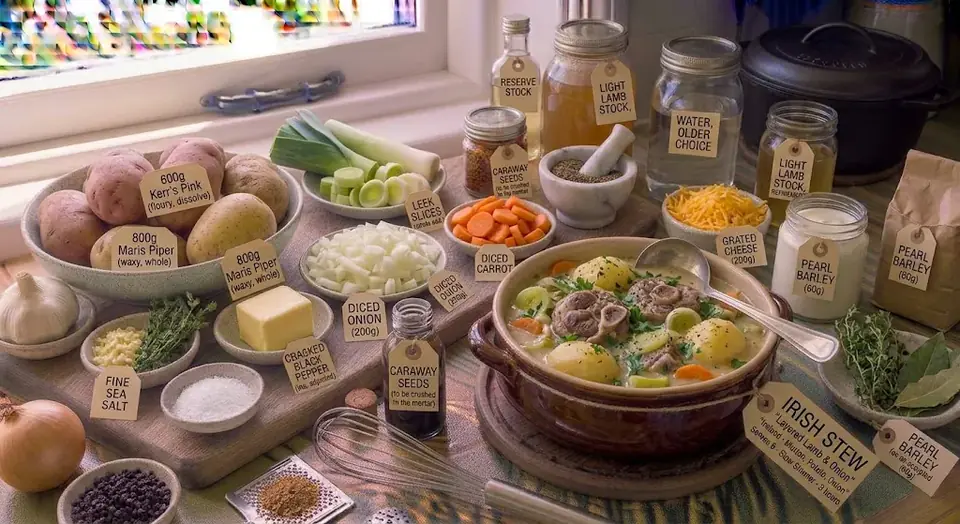
Lamb neck layered with onion and potato, cooked without a stir.
At a glance.
Irish Stew comes from Ireland · Mutton, Potato, Onion and appears in The Soup Atlas, in the chapter Hearty Stews & Chowders. It serves 6, takes about 3 hours, and uses 14 ingredients and 10 steps.
- Yield
- Serves 6
- Method
- Slow simmer
- Time
- 3 hours
Ingredients
Tap an ingredient to tick it off.
- For the meat
- For the layers
- The contested additions
- To finish
Method
-
Trim the heavy outer fat from the lamb but leave the bones, the marrow and the seams of fat running through the meat. Neck is the right cut precisely because it is full of connective tissue; a lean leg steak has nothing to give three hours of gentle heat.
-
Season the meat all over. Do not brown it. Layering raw is the traditional method and it produces a pale, clean-tasting broth rather than a dark gravy, which is the point of difference between this and every brown stew in the chapter.
-
Build the pot in strata: half the onions across the base, then the meat in a single crowded layer, then the thyme and bay, then the floury potato slices, then the rest of the onions, and the leeks and carrots if you are including them.
-
Salt and pepper each layer as you lay it down. Once the pot is assembled you cannot stir seasoning through it without wrecking the structure, so the correction has to happen now.
-
Pour in enough stock or water to come level with the top layer, not over it. The onions and potatoes will release a good deal of liquid, and a pot that starts flooded ends up as soup.
-
Bring it to the point of movement over medium heat and watch for the first bubble. The moment the surface stirs, drop the heat to its lowest setting and put the lid on. Never let it boil: a rolling pot smashes the potatoes and turns the broth cloudy and gray.
-
Cook for 1½ hours, undisturbed. Do not stir at any point, and lift the lid only to check the level. If you have to move something, push it gently with the back of a spoon.
-
Lay the waxy potatoes on top, cover again, and cook for a final 45–60 minutes, until they are tender to a skewer. They sit above the liquid line and steam rather than boil, which is how they arrive whole while the floury ones underneath have quietly disappeared.
-
Check the meat: it should come away from the neck bones under light pressure from a spoon. Tilt the pot and skim the fat that runs to one side, or blot the surface with a folded sheet of paper.
-
Taste the broth. It should be lightly thickened by dissolved potato, savory and unmistakably of lamb. Correct the salt, swirl in the cold butter if you want gloss, and scatter a great deal of parsley over the top before it goes to the table.
Cook’s notes
- The technique
- The thickening comes from starch and gravity, not from flour, and it depends on using two kinds of potato. Floury varieties are high in dry matter and their cells separate readily; at the bottom they collapse over three hours and thicken the liquid to something between broth and sauce. Waxy potatoes hold together, so they go on top late and arrive whole. Stirring destroys both jobs at once, releasing so much free starch that the pot turns to paste while the whole potatoes break into rubble. Layer it, leave it, and let the pot do its own work.
- Make ahead
- The stew is better the next day, as the fat sets in a liftable cap and the lamb draws the broth back into itself. Three days refrigerated. Reheat covered in a low oven rather than on the stove, where the base catches and the potatoes break. It does not freeze well — the whole potatoes turn granular and the broth thins.
- Troubleshooting
- Broth cloudy and gray — it boiled. Potatoes in rubble — it was stirred, or the waxy ones went in at the start. Watery and bland — too much liquid at the beginning; lift the solids out, reduce the broth hard for ten minutes, then return them. Meat tough at two hours — that is undercooking, not overcooking; give it another half hour at a lower temperature.
- Variations
- The purist pot is meat, onion, potato, water, salt and pepper, and it is worth cooking once to see how much flavor those five things generate alone. The common modern version adds carrot and leek, and a Northern Irish and Scottish habit stirs in pearl barley for the last 45 minutes. Some kitchens finish with a splash of stout, which is good and is not Irish stew.
- To serve and keep
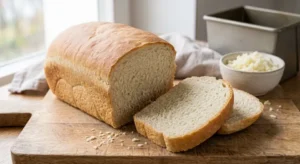
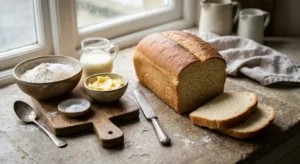
- Serve in deep bowls with plenty of broth, soda bread or wheaten bread and salted butter, and pickled red cabbage on the side. Champ — mashed potato beaten with scallions and butter — is a doubling down that Irish households commit to without embarrassment. Drink stout, or strong tea. Made in full within this recipe — Layered Lamb and Onion, Two-Potato Thickening, Light Lamb Stock. Also listed in the Component Index at the back.

Where it comes from
Irish stew is a poor household's dish in a country where meat was scarce, and the argument about its contents is really an argument about that history. The purist definition is mutton or lamb neck, potato, onion, water, salt and pepper, and nothing else — mutton because it came from ewes culled at the end of a working life in wool and milk, and water because stock implies a kitchen with bones to spare. The name is old enough to have traveled early: Byron used it in The Devil's Drive around 1814, by which time it was already shorthand for a jumbled pot. The potato had been established in Ireland since the late sixteenth century and was the staple of the rural poor by then, with catastrophic consequences when the blight arrived in 1845. Carrots, pearl barley, stock and browned meat are all later refinements, most of them from restaurant and cookbook kitchens rather than cottage ones. They make a good stew. They make a different stew, and it is worth knowing which one you are cooking.
Irish Stew: quick answers
How long does Irish Stew take?
About 3 hours.
How many does this Irish Stew recipe make?
This recipe serves 6.
Where does Irish Stew come from?
Irish stew is a poor household's dish in a country where meat was scarce, and the argument about its contents is really an argument about that history. The purist definition is mutton or lamb neck, potato, onion, water, salt and pepper, and nothing else — mutton because it came from ewes culled at the end of a working life in wool and milk, and water because stock implies a kitchen with bones to spare. The name is old enough to have traveled early: Byron used it in The Devil's Drive around 1814, by which time it was already shorthand for a jumbled pot. The potato had been established in Ireland since the late sixteenth century and was the staple of the rural poor by then, with catastrophic consequences when the blight arrived in 1845. Carrots, pearl barley, stock and browned meat are all later refinements, most of them from restaurant and cookbook kitchens rather than cottage ones. They make a good stew. They make a different stew, and it is worth knowing which one you are cooking.
More from Ireland
More in Hearty Stews & Chowders

https://www.atlasserie.com/recipes/soup/irish-stew/