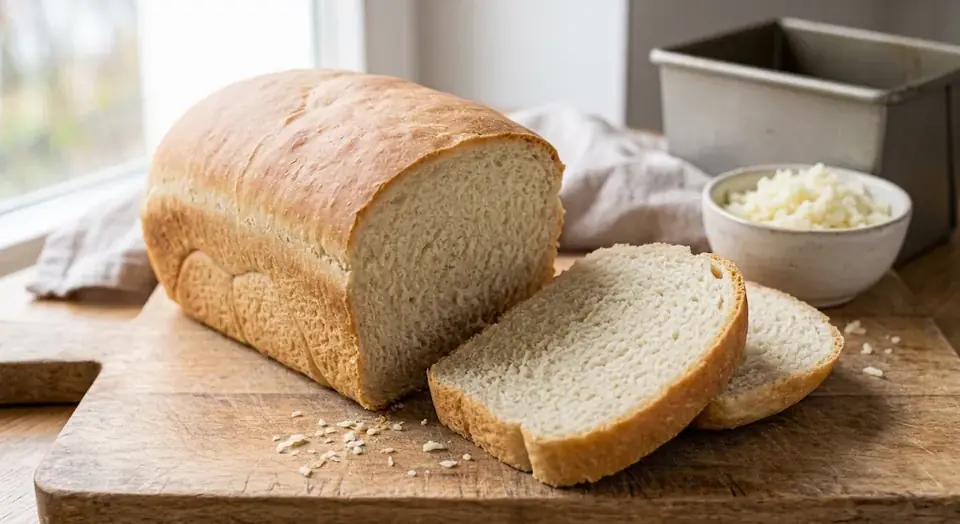
Ireland & the American Midwest · The Potato Loaf · 53.17° N, 8.02° W
Potato Bread
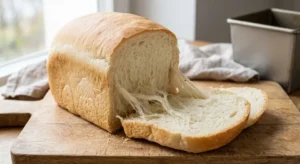
A pale, moist loaf built on riced potato and its own cooking water.
At a glance.
Potato Bread comes from Ireland & the American Midwest · The Potato Loaf and appears in The Bread Atlas, in the chapter Everyday Loaves & Sandwich Breads. It makes 1 loaf, takes about 4 hours, and uses 10 ingredients and 11 steps.
- Yield
- Makes 1 loaf
- Method
- Oven 190°C / 375°F
- Time
- 4 hours
Ingredients
Tap an ingredient to tick it off.
- Boiled Potato and Its Water
- The Dough
Method
-
Boil the potatoes in unsalted water until a knife slides through without resistance, 15–18 minutes. Lift them out and measure 220 g of the cooking water into a jug — cloudy with dissolved starch, and worth more to this loaf than plain water.
-
Push the hot potatoes through a ricer or a coarse sieve. Do not use a food processor or a stick blender, which rupture the cells and release enough free starch to turn the mash into glue and the loaf into a brick.
-
Spread the riced potato on a plate to cool to 30°C, and let the cooking water cool alongside it. Weigh 175 g of the potato; a floury variety will have lost water to the pan, so the yield is never quite what the raw weight suggests.
-
Combine the flour, salt, sugar and yeast, then add the riced potato, the potato water at 30°C and the milk. Mix to a soft, slightly sticky dough and rest 20 minutes. Knead 7 minutes, then work in the butter.
-
The dough should end up noticeably softer and more extensible than a plain white one, silky rather than bouncy. Twenty-six degrees at the end of the mix. Do not correct the softness with flour — it is the potato, and it is the point.
-
Bulk ferment 60–75 minutes at 26°C. Potato starch gives the yeast easy sugars by way of the flour's amylases, so this dough ferments briskly. It is ready when risen by three-quarters and slack enough to spread when turned out.
-
Press flat, fold in thirds, and roll into a cylinder for a greased 900 g tin. Handle it gently and confidently; potato dough is sticky against dry hands, so wet them lightly rather than dusting the bench.
-
Prove 45–55 minutes at 26°C until the crown stands 2 cm above the rim and holds a shallow dent. Heat the oven to 190°C / 375°F. Brush the top with milk for a soft, matte, evenly browned crust.
-
Bake 35–40 minutes on a middle rack. Potato bread browns readily because of the sugars carried in with the mash, so check at 25 minutes and tent with foil if the top is already chestnut.
-
Bake to an internal 95°C. The crumb holds more water than a plain loaf and needs the full temperature to set; pulled early it collapses along the sides within twenty minutes of leaving the oven.
-
Turn out immediately and cool at least 2 hours on a rack. The crust softens as it cools, which is correct for this bread, and the crumb turns from damp to properly moist over the same period.
Cook’s notes
- To serve and keep
- This is a bread for frying: cut thick and fry the slices in bacon fat, or toast them under a poached egg. It makes the gentlest of ham sandwiches. Keep it wrapped in a cloth in a bread box, cut face down.

Where it comes from
The potato reached Europe from the Andes in the late sixteenth century and took hold hardest where grain did worst. In Ireland it became the calorie the poor lived on, and Irish potato breads — fadge, boxty, the farl cooked on a griddle plate — are potato-and-flour cakes rather than yeasted loaves, a distinction worth keeping straight. The yeasted potato loaf belongs to the other side of the Atlantic. Nineteenth-century American household manuals are full of potato yeast, a home-kept leaven of mashed potato, sugar and water that fed the wild yeasts a kitchen needed before compressed yeast could be bought, and the practice left behind the habit of putting potato into bread. Idaho's russet industry, built after the railroads reached the Snake River valley in the 1880s, made a dry floury potato universally available. Depression and wartime kitchens used potato to stretch rationed flour. What began as thrift stayed for the texture, which is why the potato loaf outlived the shortages that produced it.
All 12 recipes from Ireland
All 303 recipes from United States
Potato Bread: quick answers
How long does Potato Bread take?
About 4 hours.
How many does this Potato Bread recipe make?
This recipe makes 1 loaf.
Where does Potato Bread come from?
The potato reached Europe from the Andes in the late sixteenth century and took hold hardest where grain did worst. In Ireland it became the calorie the poor lived on, and Irish potato breads — fadge, boxty, the farl cooked on a griddle plate — are potato-and-flour cakes rather than yeasted loaves, a distinction worth keeping straight. The yeasted potato loaf belongs to the other side of the Atlantic. Nineteenth-century American household manuals are full of potato yeast, a home-kept leaven of mashed potato, sugar and water that fed the wild yeasts a kitchen needed before compressed yeast could be bought, and the practice left behind the habit of putting potato into bread. Idaho's russet industry, built after the railroads reached the Snake River valley in the 1880s, made a dry floury potato universally available. Depression and wartime kitchens used potato to stretch rationed flour. What began as thrift stayed for the texture, which is why the potato loaf outlived the shortages that produced it.
More from Ireland

More in Everyday Loaves & Sandwich Breads
https://www.atlasserie.com/recipes/bread/potato-bread/