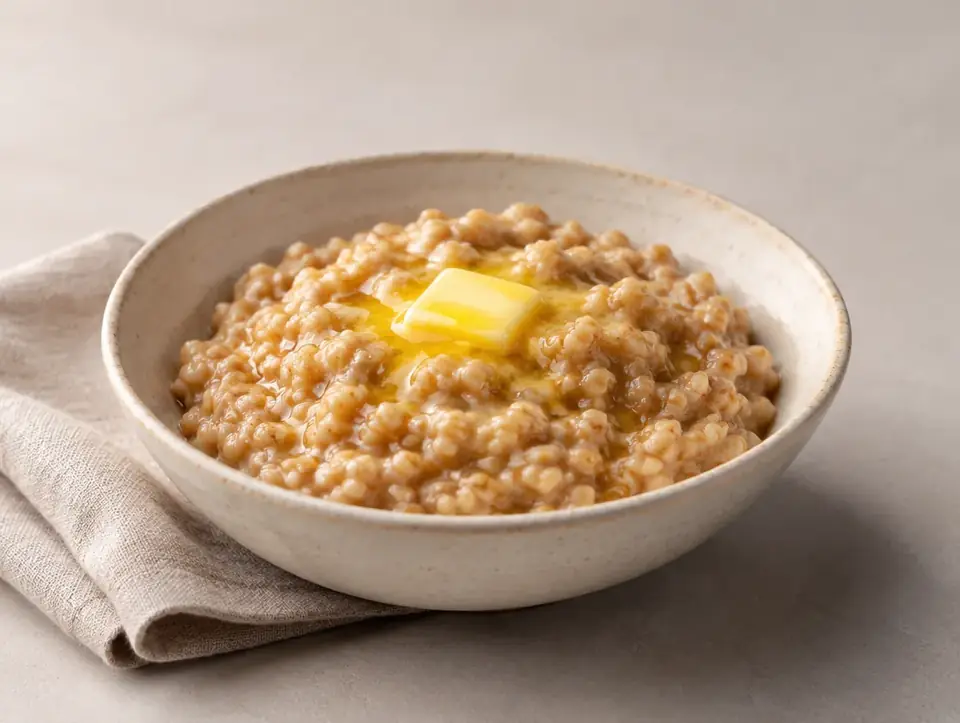
Ireland · Slow Porridge · 53.17° N, 8.02° W
Steel-Cut Oats
Irish steel-cut oats toasted in butter, simmered slow, chewy at the center.
At a glance.
Steel-Cut Oats comes from Ireland · Slow Porridge and appears in The Breakfast Atlas, in the chapter Oats, Grains & Porridge. It serves 2, takes about 45 minutes, and uses 11 ingredients and 9 steps.
- Yield
- Serves 2
- Method
- Stovetop
- Time
- 45 minutes
Ingredients
Tap an ingredient to tick it off.
- For the honeyed toasted hazelnuts
Method
-
Toast the hazelnuts in a dry frying pan over medium heat for 5–6 minutes, shaking often, until they smell warm and the cut faces turn pale toffee. Chop them coarsely.
-
Return the pan to low heat with the butter and honey. Once it bubbles, add the nuts, ginger and flaky salt, stir a minute until glossy, then cool on parchment.
-
Melt the salted butter in a heavy saucepan, add the dry oats and stir 3–4 minutes until they smell nutty and darken a shade. This is the step most cooks skip and the one carrying the flavor.
-
Pour in the water, standing back as it spits. Bring to a boil, then drop immediately to the lowest simmer that still moves the surface of the pot.
-
Cook uncovered 25 minutes, stirring every few minutes and scraping the base. Hold the salt back for now, since early salt slows the softening of the grain.
-
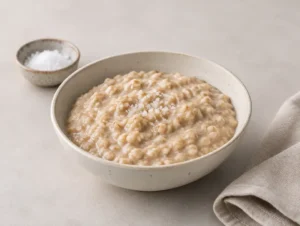
Add the milk and salt and cook 8–10 minutes more. It is ready when the liquid thickens to a loose custard but each piece of grain stays separate and gives slight resistance.
-
For the overnight route instead, boil the water, stir in the toasted oats, cover, kill the heat and leave the pan overnight. In the morning add milk and salt and simmer eight minutes.
-
Rest off the heat five minutes. Steel-cut oats keep drinking, and this is where the last of the loose starch settles into the liquid around them.
-
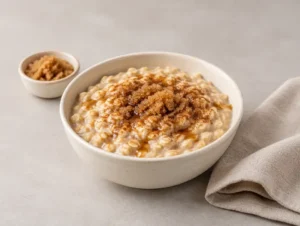
Spoon into warmed bowls, pour a spoonful of cold cream around the edge if you are using it, and pile the honeyed hazelnuts in the center.
Cook’s notes
- The technique
- Toasting in butter is the argument for this method. Dry heat on the cut faces of the groat drives Maillard browning in the surface protein and starch, producing the nutty, almost malted aroma that simmering alone never generates. The pan must be hot enough to color the grain within three minutes but never smoking; when the smell turns from raw cereal to warm biscuit, add the liquid before it tips into bitterness.
- Make ahead
- Cook a double batch and refrigerate five days, or freeze single portions three months. Reheat with 60 ml milk per portion over low heat, breaking up the set block. The honeyed hazelnuts keep two weeks in a sealed jar and soften in humid weather.
- Troubleshooting
- Still hard after 30 minutes — hard water, or a boil that drove off the liquid before it could be absorbed; add hot water and continue. Glued base — heat too high. Bitter, acrid note — the oats went past toasted into scorched at step three, and honey will not hide it.
- Variations
- Cooked Scottish-style, the same cut takes water only, with salt at the end. A savory Irish bowl swaps the milk for chicken stock and finishes with a poached egg and chives. For a slow cooker, combine 180 g oats with 900 ml water on low for seven hours, ready at six in the morning.
- Serve with
- Cold buttermilk or fresh milk poured around the bowl is traditional, with strong tea alongside. A spoonful of stewed rhubarb or a few blackberries cuts the honey and cream without turning breakfast into dessert. Made in full within this recipe — Honeyed Toasted Hazelnuts. Also listed in the Component Index at the back.

Where it comes from
Oats suited Ireland when little else did. Wheat sulks in a cool wet summer; oats ripen through it, and for centuries the Irish smallholding ran on oatcakes, oaten bread and a pot of stirabout over the fire. Milling families built on that dependence and several survive: Flahavan's has milled at Kilmacthomas in County Waterford since the late eighteenth century, Odlums since 1845, and John McCann's Dublin mill gave its name to the tins of Irish oatmeal that fixed the phrase steel-cut abroad. The cut is the point. Instead of being steamed and flattened, the groat is chopped into two or three pieces by rotating steel blades, leaving the cell walls of the endosperm largely intact. That is why it takes half an hour rather than five minutes, and why the bowl stays chewy and separate. Emigration carried the habit to Boston, New York and Liverpool, where it settled into Sunday breakfast.
Steel-Cut Oats: quick answers
How long does Steel-Cut Oats take?
About 45 minutes.
How many does this Steel-Cut Oats recipe make?
This recipe serves 2.
Where does Steel-Cut Oats come from?
Oats suited Ireland when little else did. Wheat sulks in a cool wet summer; oats ripen through it, and for centuries the Irish smallholding ran on oatcakes, oaten bread and a pot of stirabout over the fire. Milling families built on that dependence and several survive: Flahavan's has milled at Kilmacthomas in County Waterford since the late eighteenth century, Odlums since 1845, and John McCann's Dublin mill gave its name to the tins of Irish oatmeal that fixed the phrase steel-cut abroad. The cut is the point. Instead of being steamed and flattened, the groat is chopped into two or three pieces by rotating steel blades, leaving the cell walls of the endosperm largely intact. That is why it takes half an hour rather than five minutes, and why the bowl stays chewy and separate. Emigration carried the habit to Boston, New York and Liverpool, where it settled into Sunday breakfast.
More from Ireland



More in Oats, Grains & Porridge




https://www.atlasserie.com/recipes/breakfast/steel-cut-oats/