Ireland & the American South · The Churn · 33.52° N, 86.80° W
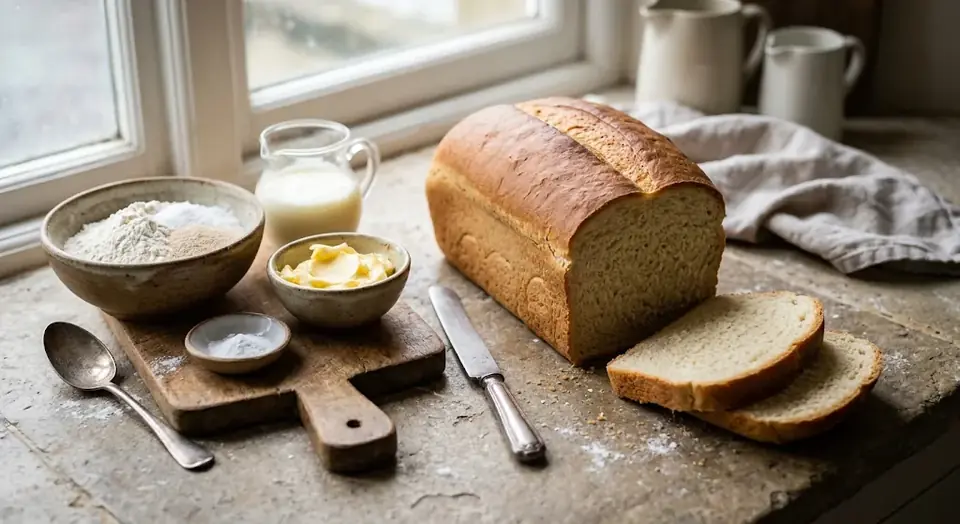
Buttermilk Bread
A tender tin loaf with the faint sour note of the dairy.
At a glance.
Buttermilk Bread comes from Ireland & the American South · The Churn and appears in The Bread Atlas, in the chapter Everyday Loaves & Sandwich Breads. It makes 1 loaf, is made by oven 190°c / 375°f, and uses 7 ingredients and 11 steps.
- Yield
- Makes 1 loaf
- Method
- Oven 190°C / 375°F, 3½ hours
Ingredients
Tap an ingredient to tick it off.
- The Dough
Method
-
Take the buttermilk out an hour ahead and bring it to 24°C. Straight from the refrigerator it will drag the dough temperature down by several degrees and add half an hour to the bulk without your noticing why.
-
Whisk the flour, sugar, salt, yeast and — if using — the bicarbonate of soda together thoroughly. The soda must be evenly dispersed before it meets the acid, or it fizzes in one place and leaves a soapy patch in the crumb.
-
Pour in the buttermilk and mix to a soft dough. It will look curdled and grainy for the first minute as the acid meets the flour proteins; this settles. Rest 15 minutes, then knead 7 minutes and work in the butter.
-
The dough finishes softer and slacker than a water dough of the same hydration, and it develops faster. Stop when it stretches to a thin membrane, and no later — acid weakens gluten, so overmixing here does real damage. Target 25°C.
-
Bulk ferment 60 minutes at 25°C. The lowered pH suits yeast, which works well in mildly acidic conditions, so this dough can outrun a plain one. Check at 45 minutes: it wants a rise of about three-quarters, no more.
-
Turn the dough out, flatten it gently, and roll it up into a snug cylinder for a greased 900 g tin. The dough will feel tender and want to tear rather than stretch, so shape it in fewer, firmer movements than usual.
-
Prove 40–50 minutes at 25°C until the crown clears the rim by 2 cm. A fingertip dent should fill back about two-thirds. Buttermilk dough over-proves quickly and its weakened gluten cannot recover from it.
-
Set the oven to 190°C / 375°F. Brush the loaf with buttermilk and slash it once down the length, 1 cm deep. The wash brings extra milk sugars and protein to the surface, which is what gives the crust its even tan.
-
Bake 35–40 minutes on a middle rack, no steam. Buttermilk browns quickly through both lactose and protein, so check at 25 minutes and tent with foil if the crust is already dark.
-
Bake to an internal 94°C. Tap the base: it should sound hollow and the loaf should feel light in the hand. Turn out at once, since a tender crumb left in a hot tin steams and settles.
-
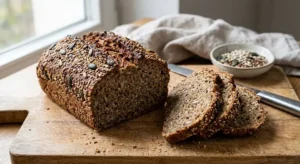
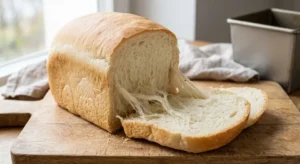
Cool 90 minutes on a rack before cutting. The tang is faint while the loaf is warm and comes forward as it cools; taste it warm and you will think the buttermilk did nothing at all.
Cook’s notes
- To serve and keep
- It makes the tenderest toast in the chapter and the best bread for a chicken sandwich. In Irish and Southern kitchens the same liquid appears in the soda bread and the biscuits beside it. Store in a bread box, wrapped in a cloth.

Where it comes from
Two different liquids answer to the name buttermilk, and the confusion is worth clearing up because it changes what you are baking with. True buttermilk is what remains in the churn after butter has been beaten out of cream: thin, barely acidic if the cream was sweet, pleasantly sour if the cream had been left to ripen for a day first, as farm practice generally required. It was a byproduct, drunk cold in the field and stirred into breads across Ireland and the American South wherever a household kept a cow. Cultured buttermilk, which is what a shop now sells, is a twentieth-century product: pasteurized skimmed milk deliberately inoculated with lactic bacteria such as Lactococcus lactis and held until it thickens and sours. It was standardized in the United States from the 1920s and 30s, as home churning disappeared and dairies looked for a reliable, uniform substitute. It is more acidic and thicker than the original, which for baking is mostly an advantage.
All 12 recipes from Ireland
All 303 recipes from United States
Buttermilk Bread: quick answers
How many does this Buttermilk Bread recipe make?
This recipe makes 1 loaf.
Where does Buttermilk Bread come from?
Two different liquids answer to the name buttermilk, and the confusion is worth clearing up because it changes what you are baking with. True buttermilk is what remains in the churn after butter has been beaten out of cream: thin, barely acidic if the cream was sweet, pleasantly sour if the cream had been left to ripen for a day first, as farm practice generally required. It was a byproduct, drunk cold in the field and stirred into breads across Ireland and the American South wherever a household kept a cow. Cultured buttermilk, which is what a shop now sells, is a twentieth-century product: pasteurized skimmed milk deliberately inoculated with lactic bacteria such as Lactococcus lactis and held until it thickens and sours. It was standardized in the United States from the 1920s and 30s, as home churning disappeared and dairies looked for a reliable, uniform substitute. It is more acidic and thicker than the original, which for baking is mostly an advantage.
More from Ireland
More in Everyday Loaves & Sandwich Breads
https://www.atlasserie.com/recipes/bread/buttermilk-bread/