American South · Lowcountry · 33.52° N, 86.80° W
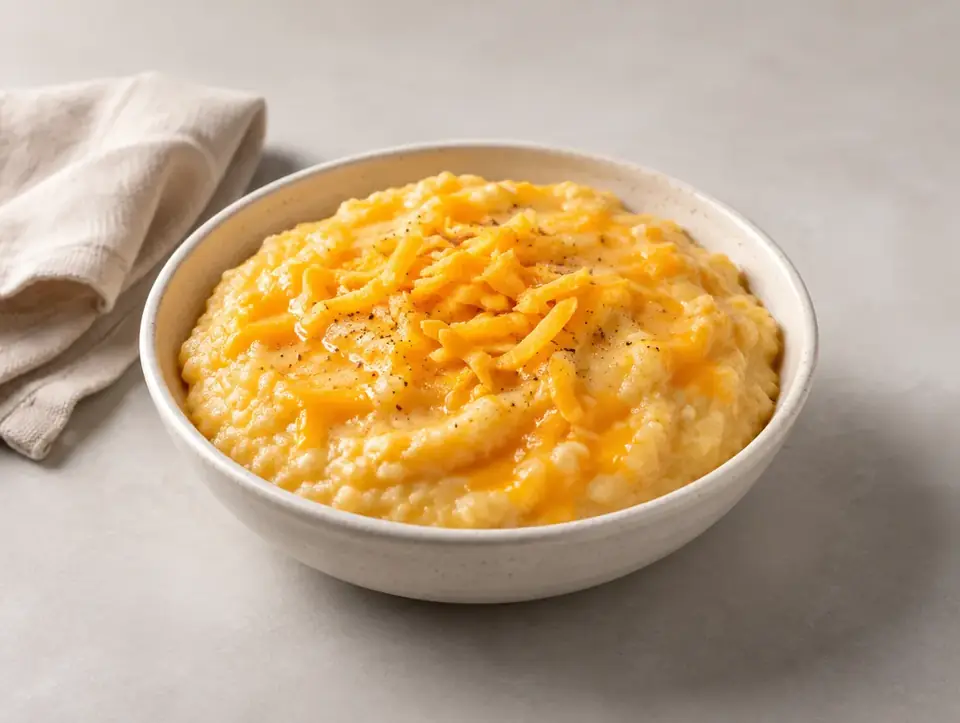
Cheese Grits
Stone-ground hominy grits cooked slow, loosened with milk, heavy with cheddar.
At a glance.
Cheese Grits comes from American South · Lowcountry and appears in The Breakfast Atlas, in the chapter Oats, Grains & Porridge. It serves 4, takes about 50 minutes, and uses 10 ingredients and 9 steps.
- Yield
- Serves 4
- Method
- Stovetop
- Time
- 50 minutes
Ingredients
Tap an ingredient to tick it off.
Method
-
Tip the grits into a bowl, cover with cold water and swirl with your hand. Skim off the chaff that floats up and drain through a fine sieve; skipping this leaves a papery note.
-
Bring the water and milk to a simmer with the salt in a pan with a thick base. Grits settle as they cook, and a thin pan will scorch them within minutes.
-
Rain the drained grits in slowly, whisking hard the whole time. Added in one dump they form lumps that never break down, however long the pot goes on cooking.
-
Whisk until the mixture thickens noticeably, about three minutes, then drop the heat as low as it goes and switch from a whisk to a wooden spoon.
-
Cook 35–40 minutes, stirring every five minutes and scraping the base and corners. One part grits to about seven parts liquid is what lets them cook this long without stiffening.
-
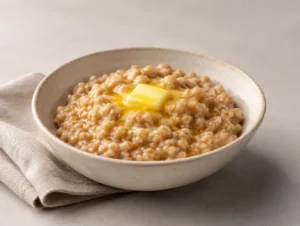
Judge by taste, not the clock. A grain pressed against the roof of the mouth should be creamy through, and the pot should fall from the spoon in slow folds.
-
If it tightens before the grains are tender, whisk in hot water or milk 100 ml at a time. Liquid added cold shocks the starch and leaves a grainy result.
-
Take the pan off the heat before the cheese goes near it. Beat in the cold butter a few cubes at a time until it disappears and the surface turns glossy.
-
Add the cheddar and Parmesan in three handfuls, stirring each in fully; residual heat melts them where direct heat would break the cheese. Season with pepper and cayenne and serve at once.
Cook’s notes
- The technique
- Cheese goes in off the heat, and the reason is structural. Cheddar's fat sits in a protein web that contracts above about 65°C, wringing out oil and leaving stringy curds; below that it melts smoothly into the starch. Roughly 170 g of cheese to 160 g of dry grits is the point at which the pot tastes of cheese without becoming fondue. Butter first, always.
- Make ahead
- Cook a day ahead through step seven, cool and refrigerate, then reheat with 120 ml milk per portion over low heat before the butter and cheese go in. Cold leftovers set firm enough to cut into squares and fry in bacon fat.
- Troubleshooting
- Lumps — the grits went in too fast or the whisking stopped. Gritty, sandy texture — undercooked; give it ten more minutes with hot liquid. Greasy orange pool on top — the cheese was added over heat and has broken; whisk in a splash of cold milk.
- Variations
- Shrimp and grits tops the bowl with shrimp sautéed in bacon fat with garlic and lemon. A Charleston breakfast adds a soft-poached egg and country ham. Pimento cheese grits fold in 100 g pimento cheese instead of cheddar, bringing mayonnaise and roasted pepper, so hold back the salt. Country ham grits fold in 60 g diced ham with the cheese.
- Serve with
- Serve with fried eggs, thick-cut bacon or a slice of country ham, and a biscuit to push it around the bowl. Black coffee or sweet iced tea, depending on the hour and the latitude.

Where it comes from
Grits begin with the Indigenous nations of the American Southeast — Muscogee, Cherokee and their neighbors — who treated dried maize with wood ash or slaked lime, a process now called nixtamalization, then pounded the softened kernels coarse. Alkali loosens the hull, changes the aroma and, as was understood only much later, frees the niacin the grain otherwise locks away. Colonists adopted the food and the English word grist, and by the eighteenth century a bowl of grits was daily eating along the Carolina and Georgia coast, in Gullah Geechee kitchens above all. The Lowcountry gave the dish its famous partner, breakfast shrimp netted at dawn and cooked over grits. Industrial degermed instant grits nearly finished off the real thing until millers such as Anson Mills in Columbia and Geechie Boy on Edisto Island revived heirloom corn from the late 1990s. Grits and polenta are cousins, not twins: polenta is untreated flint corn, evenly ground; grits are usually alkali-treated dent corn, softer and irregular.
Cheese Grits: quick answers
How long does Cheese Grits take?
About 50 minutes.
How many does this Cheese Grits recipe make?
This recipe serves 4.
Where does Cheese Grits come from?
Grits begin with the Indigenous nations of the American Southeast — Muscogee, Cherokee and their neighbors — who treated dried maize with wood ash or slaked lime, a process now called nixtamalization, then pounded the softened kernels coarse. Alkali loosens the hull, changes the aroma and, as was understood only much later, frees the niacin the grain otherwise locks away. Colonists adopted the food and the English word grist, and by the eighteenth century a bowl of grits was daily eating along the Carolina and Georgia coast, in Gullah Geechee kitchens above all. The Lowcountry gave the dish its famous partner, breakfast shrimp netted at dawn and cooked over grits. Industrial degermed instant grits nearly finished off the real thing until millers such as Anson Mills in Columbia and Geechie Boy on Edisto Island revived heirloom corn from the late 1990s. Grits and polenta are cousins, not twins: polenta is untreated flint corn, evenly ground; grits are usually alkali-treated dent corn, softer and irregular.
More from United States




More in Oats, Grains & Porridge



https://www.atlasserie.com/recipes/breakfast/cheese-grits/