
Scotland · Oatmeal & Water · 55.95° N, 3.19° W
Porridge
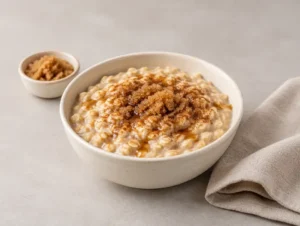
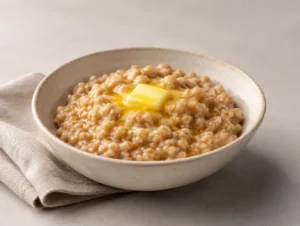
Scottish oatmeal and water, stirred with a spurtle, salted at the end.
At a glance.
Porridge comes from Scotland · Oatmeal & Water and appears in The Breakfast Atlas, in the chapter Oats, Grains & Porridge. It serves 2, takes about 20 minutes, and uses 5 ingredients and 8 steps.
- Yield
- Serves 2
- Method
- Stovetop
- Time
- 20 minutes
Ingredients
Tap an ingredient to tick it off.
Method
-
Measure the meal against the water by volume — roughly one part to five for a pouring porridge, one to four if you want it stiff enough to stand a spoon in.
-
Bring the water to a rolling boil in a heavy pan. Unlike rolled oats, coarse meal goes into boiling water rather than cold, so the grains separate instead of clumping.
-
Rain the oatmeal in from your fist in a thin stream, stirring continuously with a spurtle. The narrow round stick moves through thickening meal without dragging or mashing it.
-
Once all the meal is in, drop the heat until the surface barely moves. A vigorous boil at this stage throws scalding gouts of porridge out of the pan.
-
Cook 12–15 minutes, stirring every minute or two and reaching the base and corners. It is ready when the raw cereal smell has gone and the mixture pulls cleanly from the pan side.
-
Add the salt now, stir it through and cook two minutes more. Salt at the start firms the outside of each grain and slows hydration; added late, it seasons without toughening.
-
Rest the pan off the heat, covered, three minutes, then pour into warmed bowls — traditionally shallow wooden or earthenware ones, which cool the surface quickly.
-
Serve with a separate bowl of very cold milk. Load the spoon with hot porridge, dip it into the cold milk and eat both together rather than drowning the whole bowl.
Cook’s notes
- The technique
- Late salt is the technique that decides the pot. Sodium ions compete with starch for water and stiffen the outer layer of each grain, so meal salted from the start hydrates unevenly and can stay chalky at the core after twenty minutes. Add it in the final two minutes and the grains have already softened, so the seasoning dissolves straight through. The rest is heat — a bare simmer, stirred, never a boil.
- Make ahead
- Soak pinhead oatmeal in the measured water overnight to cut cooking to about eight minutes. Cooked porridge sets solid when cold; refrigerate three days, then either reheat with water or do as Highland households did and fry the sliced cold slab until crisp.
- Troubleshooting
- Lumps — the meal went in too fast or the stirring stopped; add it in a thin stream and keep the spurtle moving. Chalky grains — salted too early, or not cooked long enough. Skin on top — the surface dried in a warm pan; stir it back while soft, or cover during the rest.
- Variations
- Brose is the uncooked ancestor: boiling water poured over oatmeal in a bowl, covered and left three minutes. Cranachan turns the same meal into a dessert with toasted oatmeal, cream, whisky and raspberries. Sowans, the fermented husk gruel, tastes closer to a sour dairy drink than to breakfast and is now very rare.
- Serve with
- Cold milk in a separate bowl is the tradition, with a mug of strong tea alongside. Some households allow heather honey or whisky-laced cream on New Year's morning, which purists tolerate on that one day only.

Where it comes from
Scots porridge is a two-ingredient argument. Oatmeal and water go into the pan, salt goes in near the end, and sugar does not go in at all. Stone-ground Scottish oatmeal comes in grades — pinhead, coarse, medium and fine — and the floury dust that stone milling throws off alongside the grain is what gives the pot its silkiness, a real difference from steel-cut oats. The spurtle, a slim wooden stirring rod, is a working utensil rather than a tourist invention; a golden one is the trophy at the World Porridge Making Championships, held at Carrbridge in the Cairngorms since 1994. Older habits cling to the dish. Cooled porridge was poured into a dresser drawer to set, then cut into slabs a laborer carried to the fields. Sowans, a sharp gruel fermented from the husks and meal dust left after milling, was a Highland winter staple now nearly extinct. Samuel Johnson's 1755 dictionary sneered that oats fed horses in England and men in Scotland; the retort, usually credited to Lord Elibank, has outlived the insult.
Porridge: quick answers
How long does Porridge take?
About 20 minutes.
How many does this Porridge recipe make?
This recipe serves 2.
Where does Porridge come from?
Scots porridge is a two-ingredient argument. Oatmeal and water go into the pan, salt goes in near the end, and sugar does not go in at all. Stone-ground Scottish oatmeal comes in grades — pinhead, coarse, medium and fine — and the floury dust that stone milling throws off alongside the grain is what gives the pot its silkiness, a real difference from steel-cut oats. The spurtle, a slim wooden stirring rod, is a working utensil rather than a tourist invention; a golden one is the trophy at the World Porridge Making Championships, held at Carrbridge in the Cairngorms since 1994. Older habits cling to the dish. Cooled porridge was poured into a dresser drawer to set, then cut into slabs a laborer carried to the fields. Sowans, a sharp gruel fermented from the husks and meal dust left after milling, was a Highland winter staple now nearly extinct. Samuel Johnson's 1755 dictionary sneered that oats fed horses in England and men in Scotland; the retort, usually credited to Lord Elibank, has outlived the insult.
More from United Kingdom


More in Oats, Grains & Porridge



https://www.atlasserie.com/recipes/breakfast/porridge/