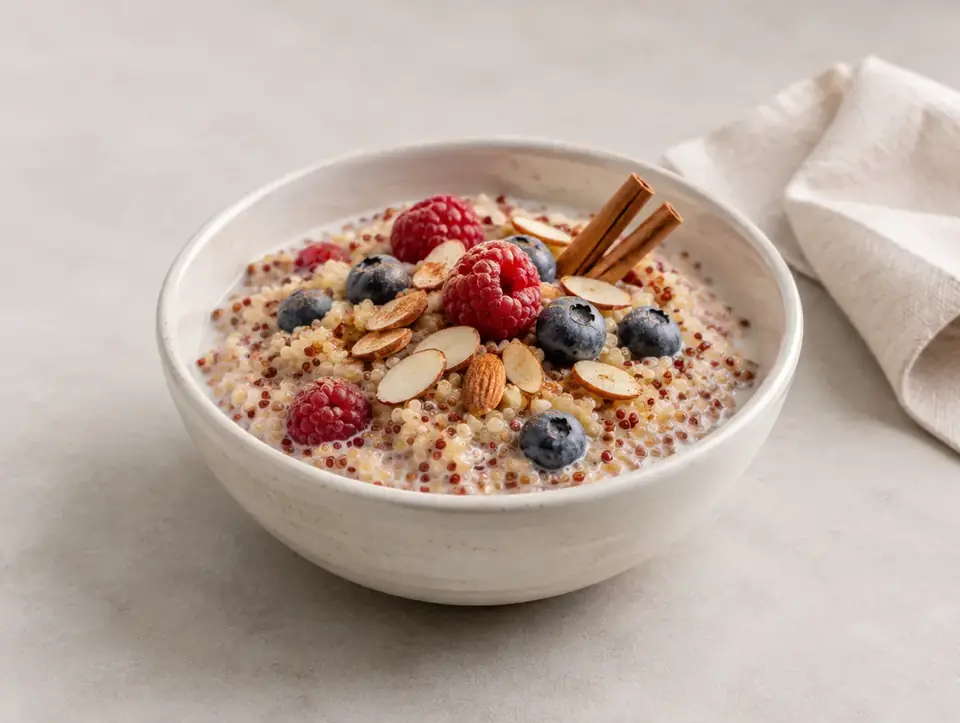
Andes · Toasted Quinoa · 15.00° S, 60.00° W
Quinoa Breakfast Bowl
Toasted Andean quinoa simmered in milk with cinnamon, almonds and berries.
At a glance.
Quinoa Breakfast Bowl comes from Andes · Toasted Quinoa and appears in The Breakfast Atlas, in the chapter Oats, Grains & Porridge. It serves 2, takes about 30 minutes, and uses 12 ingredients and 9 steps.
- Yield
- Serves 2
- Method
- Stovetop
- Time
- 30 minutes
Ingredients
Tap an ingredient to tick it off.
- To finish
Method
-
Rinse the quinoa in a fine sieve under cold running water for a full 90 seconds, working it with your fingers, until the water runs clear and stops foaming. That foam is saponin.
-
Shake the sieve hard and spread the quinoa on a clean towel for a few minutes. Wet seed steams instead of toasting, and the next step depends on it being dry.
-
Melt the butter in a heavy saucepan over medium heat, add the quinoa and stir 4–5 minutes until the seeds dry out, tick against the pan and smell like toasted hazelnut.
-
Pour in the milk and water, add the cinnamon stick and salt and bring to a simmer. One part quinoa to about three parts liquid is looser than a pilaf, as a breakfast bowl should be.
-
Lower the heat until the surface barely moves, cover the pan tightly, and cook for 15 minutes without lifting the lid or stirring at any point.
-
Uncover and check. The germ should have unwound from each seed into a visible white spiral and the liquid should be thickened but not gone; if the pan looks dry, add 60 ml hot milk.
-
Stir in the maple syrup and vanilla and cook uncovered for two minutes, stirring gently, until the bowl has the consistency of a loose rice pudding.
-
Take out the cinnamon stick, cover and rest five minutes off the heat, so the seeds absorb the last of the liquid and firm up very slightly.
-
Spoon into bowls, add the yogurt, scatter over the almonds and berries and finish with lime zest, which lifts the whole thing and stops the milk tasting flat.
Cook’s notes
- The technique
- Rinsing and toasting are two halves of one technique. Saponins sit in the outer seed coat and are water-soluble but stubborn; ninety seconds of agitation under running water removes what commercial pre-washing missed, and the visual cue is the end of the foam. Toasting then drives off surface water and browns the seed's own proteins, which is the difference between quinoa that tastes of nothing and quinoa that tastes nutty.
- Make ahead
- Cook and cool the base up to four days ahead; it reheats with 60 ml milk per portion and freezes two months in single portions. Rinse and thoroughly dry raw quinoa on a tray in advance, toasting the almonds at the same time, so a weekday bowl takes twenty minutes.
- Troubleshooting
- Soapy or bitter — the saponins were not fully rinsed away. Mushy and collapsed — too much liquid or too long over heat. Crunchy centers — the lid was lifted and steam escaped, or the seeds were old; add 60 ml hot liquid and give it five minutes more.
- Variations
- A Peruvian-leaning bowl uses evaporated milk, panela and a strip of orange peel. A savory version drops the sweetener entirely and finishes with avocado, a fried egg and aji amarillo paste. For a dairy-free bowl, cook in coconut milk cut with water and finish with toasted coconut and diced mango.
- Serve with
- Serve warm rather than hot, with strong coffee or an Andean-style herbal tea. A small jug of cold milk lets each person loosen the bowl, and a wedge of lime does more for it than extra sugar.

Where it comes from
Chenopodium quinoa was domesticated around the Lake Titicaca basin of present-day Peru and Bolivia several thousand years ago, and it is not a cereal at all but the seed of a plant related to spinach and beet. Inca agriculture treated it as a staple of the high, cold altiplano where maize will not set; Spanish colonial administration discouraged it in favor of European grains, and it survived largely on indigenous smallholdings. Its reappearance was rapid. The United Nations declared 2013 the International Year of Quinoa, and demand pushed prices to roughly three times their mid-2000s level. A widely repeated story followed — that Andean farmers could no longer afford to eat what they grew. Later research, notably work published by Marc Bellemare and colleagues in 2016, found the opposite for producing households, whose welfare rose with prices. Real pressure on fragile altiplano soils from monoculture did follow. The seed carries bitter saponins in its coat, a defense against birds, which is why every recipe begins the same way.
Quinoa Breakfast Bowl: quick answers
How long does Quinoa Breakfast Bowl take?
About 30 minutes.
How many does this Quinoa Breakfast Bowl recipe make?
This recipe serves 2.
Where does Quinoa Breakfast Bowl come from?
Chenopodium quinoa was domesticated around the Lake Titicaca basin of present-day Peru and Bolivia several thousand years ago, and it is not a cereal at all but the seed of a plant related to spinach and beet. Inca agriculture treated it as a staple of the high, cold altiplano where maize will not set; Spanish colonial administration discouraged it in favor of European grains, and it survived largely on indigenous smallholdings. Its reappearance was rapid. The United Nations declared 2013 the International Year of Quinoa, and demand pushed prices to roughly three times their mid-2000s level. A widely repeated story followed — that Andean farmers could no longer afford to eat what they grew. Later research, notably work published by Marc Bellemare and colleagues in 2016, found the opposite for producing households, whose welfare rose with prices. Real pressure on fragile altiplano soils from monoculture did follow. The seed carries bitter saponins in its coat, a defense against birds, which is why every recipe begins the same way.
More from South America
More in Oats, Grains & Porridge
https://www.atlasserie.com/recipes/breakfast/quinoa-breakfast-bowl/