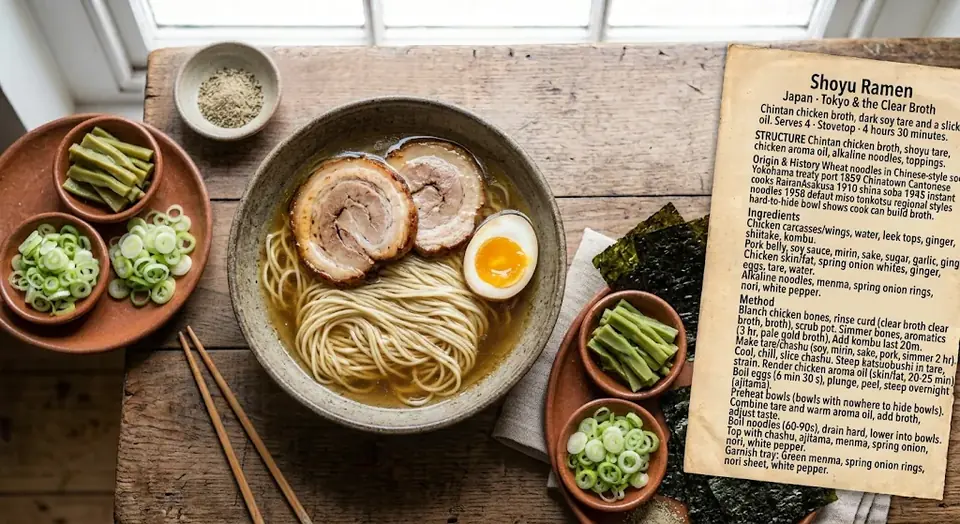
Japan · Tokyo & the Clear Broth · 36.01° N, 136.71° E
Shoyu Ramen
Clear chicken broth, dark soy tare and a slick of aroma oil.
At a glance.
Shoyu Ramen comes from Japan · Tokyo & the Clear Broth and appears in The Soup Atlas, in the chapter Soups Around the World. It serves 4, takes about 4 hr 30 min, and uses 26 ingredients and 11 steps.
- Yield
- Serves 4
- Method
- Stovetop
- Time
- 4 hr 30 min
Ingredients
Tap an ingredient to tick it off.
- For the chintan broth
- For the shoyu tare and chashu
- For the chicken aroma oil
- For the ajitama
- To assemble
Method
-
Cover the chicken bones with cold water in a stockpot, bring to a rolling boil and hold it for 5 minutes. Tip the lot into the sink, rinse every piece under the tap, rubbing off the gray curd, and scrub the pot clean. This blanching is what buys you a clear broth.
-
Return the bones to the clean pot with 4 liters cold water, the leek tops, ginger and dried shiitake. Bring it up to about 90°C (195°F), where the surface shivers and throws an occasional bubble, and hold it uncovered for 3 hours. A rolling boil emulsifies the fat and clouds it for good.
-
Add the kombu for the last 20 minutes only, then lift it out; held longer it goes slick and faintly bitter. Strain through a fine sieve lined with damp muslin, letting it drip rather than pressing the solids. You want about 2.5 liters of pale gold broth.
-
Make the tare and the chashu together. Put the soy, mirin, sake, water, sugar, garlic and ginger in a snug saucepan, settle in the rolled pork belly, and bring to a bare simmer. Cook covered for 2 hours, turning the roll every 30 minutes so it colors evenly.
-
Lift out the pork and cool it, then chill until firm enough to slice cleanly. Add the katsuobushi to the hot braising liquid, leave it 5 minutes off the heat, then strain. That liquid is now your tare: dark, salty, faintly sweet, and far too strong to drink.
-
For the aroma oil, put the chopped chicken skin and fat in a small pan over low heat with the spring onion whites and ginger. Render for 20–25 minutes, until the skin is golden and crisp and the fat runs clear. Strain into a jar and keep it warm.
-
Boil the eggs for exactly 6 minutes 30 seconds from cold storage into already-boiling water, then plunge them into iced water. Peel under a running tap and steep overnight in the reserved tare slackened with an equal volume of water. Longer than a day turns the yolks rubbery.
-
Fill four deep bowls with boiling water and let them stand while you finish. Cold bowls drop the soup below the temperature at which the fat stays glossy, and this is a bowl with nowhere to hide. Empty and dry them at the last moment.
-
Into each hot bowl put 30 ml (2 tbsp) tare and 1 tablespoon of the warm aroma oil. Ladle over 400 ml very hot broth and stir once. Taste now and adjust bowl by bowl, which is the structural logic of ramen: soup, seasoning and fat are three separate decisions.
-
Boil the noodles in a large pot of unsalted water for 60–90 seconds, until they still push back against the tooth. Drain them hard, shaking the basket several times, and lower them into the bowls. Water clinging to noodles will thin everything you spent the afternoon building.
-
Top each bowl with two slices of chashu warmed briefly under a hot broiler, a halved ajitama, a small heap of menma, spring onion rings and a sheet of nori set against the rim. Grind over white pepper and carry them to the table at once.
Cook’s notes
- The technique
- Learn the ramen trinity and the bowl stops being mysterious. The soup is body and mouthfeel, and it is deliberately underseasoned. The tare is the salt, the glutamate and most of the character, measured into each bowl separately so a shop can serve shoyu, shio and miso from one stockpot. The aroma oil sits on top, seals in heat and carries the fat-soluble aromatics into your nose as you lean over. Season the pot instead of the bowl and you have collapsed three adjustable variables into one you can no longer move.
- Make ahead
- The broth keeps four days refrigerated and three months frozen; the tare keeps a month in a jar and improves. Chashu slices better on day two. Aroma oil holds a fortnight. Marinate the eggs the night before and no longer. Noodles are the exception — they are cooked to order, always, and nothing about them can be prepared in advance.
- Troubleshooting
- Cloudy and gray — the bones were not blanched, or the pot rolled instead of shivering; strain through muslin and accept a rustic bowl. Flat despite salt — you seasoned the stock rather than the bowl, so pull back and rebuild with tare. Noodles gone slack by the fourth mouthful — they were overcooked, over-drained too slowly, or the bowls were cold.
- Variations
- Shio ramen swaps the soy tare for a paler salt-and-kombu one, giving a bowl that tastes clearer and more marine. Niboshi ramen loads the broth with dried sardines for a bitter, oceanic edge that Tokyo drinkers favor late at night. Vegan versions build the chintan on kombu, dried shiitake and roasted soybeans, with a tare sharpened by fermented black garlic.
- To serve and keep
- Serve in preheated deep bowls with renge spoons and chopsticks, and eat immediately — ramen has a working life of about four minutes. A small dish of pickled ginger or takana on the side resets the palate. Cold barley tea or a crisp lager, never anything sweet. Made in full within this recipe — Chintan Chicken Broth, Shoyu Tare, Chashu Pork Belly, Chicken Aroma Oil, Ajitama. Also listed in the Component Index at the back.

Where it comes from
Wheat noodles in Chinese-style soup reached Japan through the treaty port of Yokohama, whose Chinatown dates from 1859. The shop most often credited with the first Japanese version is Rairaiken, which opened in Asakusa in 1910 with Cantonese cooks in the kitchen and sold what was then called shina soba — a clear chicken broth seasoned with dark soy. That attribution is repeated everywhere and is plausibly documented, though the trail is thinner than the confidence around it suggests. What followed is better recorded: after 1945, American wheat aid and the black-market yatai carts pushed noodles into the everyday Japanese diet, and the word ramen displaced the older names once instant noodles arrived in 1958. Tokyo's version became the default against which the rest is measured, and the regional styles that made ramen famous abroad — the miso of Sapporo, the tonkotsu of Hakata — are later departures from it. Shoyu ramen is the plain, clear, hard-to-hide bowl that shows whether a cook can build a broth.
Shoyu Ramen: quick answers
How long does Shoyu Ramen take?
About 4 hr 30 min.
How many does this Shoyu Ramen recipe make?
This recipe serves 4.
Where does Shoyu Ramen come from?
Wheat noodles in Chinese-style soup reached Japan through the treaty port of Yokohama, whose Chinatown dates from 1859. The shop most often credited with the first Japanese version is Rairaiken, which opened in Asakusa in 1910 with Cantonese cooks in the kitchen and sold what was then called shina soba — a clear chicken broth seasoned with dark soy. That attribution is repeated everywhere and is plausibly documented, though the trail is thinner than the confidence around it suggests. What followed is better recorded: after 1945, American wheat aid and the black-market yatai carts pushed noodles into the everyday Japanese diet, and the word ramen displaced the older names once instant noodles arrived in 1958. Tokyo's version became the default against which the rest is measured, and the regional styles that made ramen famous abroad — the miso of Sapporo, the tonkotsu of Hakata — are later departures from it. Shoyu ramen is the plain, clear, hard-to-hide bowl that shows whether a cook can build a broth.
More from Japan
More in Soups Around the World
https://www.atlasserie.com/recipes/soup/shoyu-ramen/