Korea · The Kitchen Stew · 36.42° N, 127.82° E
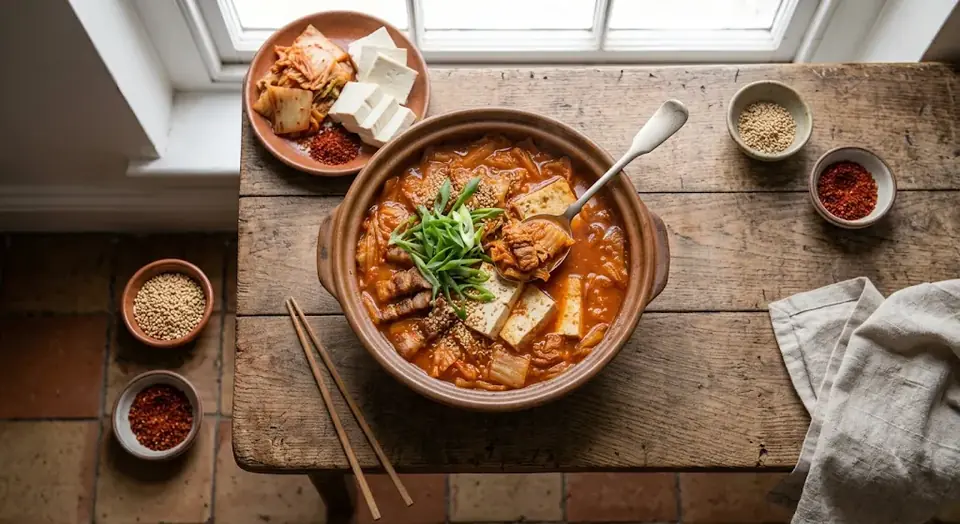
Kimchi Jjigae
Sour aged kimchi, pork belly and tofu, cooked hard in one pot.
At a glance.
Kimchi Jjigae comes from Korea · The Kitchen Stew and appears in The Soup Atlas, in the chapter Soups Around the World. It serves 4, takes about 50 minutes, and uses 18 ingredients and 10 steps.
- Yield
- Serves 4
- Method
- Stovetop
- Time
- 50 minutes
Ingredients
Tap an ingredient to tick it off.
- For the anchovy-kelp stock
- For the stew
- To serve
Method
-
Build the stock first. Put the water, anchovies, shiitake and daikon in a saucepan and bring to a bare simmer. Add the kelp for the last 10 minutes only, then lift it out before it turns slippery, and strain. You want 1.2 liters of pale, savory broth.
-
Squeeze the kimchi gently over a bowl and reserve every drop of brine that comes out, then cut it into rough 4 cm pieces. Do not rinse it. That brine is a working ingredient: sour, salty, alive with lactic acid, and the fastest route to depth in the finished pot.
-
Set a heavy pot or earthenware ttukbaegi over medium heat with the sesame oil. Add the pork belly strips and cook for 6–8 minutes, until the fat has rendered out and the edges have caught and gone brown. Do not drain the fat away.
-
Add the cut kimchi and the grated garlic to the rendered fat. Stir-fry hard for a full 6 minutes, until the kimchi darkens from bright red to brick, softens at the edges and smells sweet rather than raw. This frying stage is the whole difference between a good jjigae and a sour one.
-
Sprinkle in the gochugaru and cook for 30 seconds, stirring constantly, until the fat turns deep red. Chile flakes bloom in fat and go bitter in a hot dry pan, so keep everything moving and do not let the pot run dry.
-
Stir in the gochujang, doenjang and sugar and cook another minute. Keep the gochujang restrained — it is thick with rice syrup and glutinous starch, and too much muddies the broth into something dull and sticky rather than sharp.
-
Pour in the reserved kimchi brine and the anchovy stock. Bring it up to a proper rolling simmer and cook, uncovered, for 20 minutes. Unlike most soups in this book, this one wants to be pushed — a hard simmer softens the cabbage and marries the pastes.
-
Lay the tofu slabs on the surface and press them under the liquid. Simmer 5 minutes more without stirring; tofu handled roughly at this stage collapses into curd and clouds a broth you have spent twenty minutes clarifying by reduction.
-
Taste. It should be sour first, then salty, then hot, with the pork fat rounding it underneath. Correct with a splash more brine for sourness or a teaspoon of doenjang for salt, and add a pinch of sugar only if the kimchi was aggressively acidic.
-
Scatter the spring onion over the top, let it wilt for 30 seconds, and take the pot straight to the table still bubbling. Set it on a trivet in the middle with a bowl of rice for each person and let everyone spoon from the communal pot.
Cook’s notes
- The technique
- Fresh kimchi will not work here and no amount of extra chile will rescue it. Young kimchi is crisp, sweet and mildly acidic — right as banchan, wrong in a pot, where it stays crunchy and tastes like cooked cabbage. Kimchi that has fermented three weeks or more has broken down its own cell walls, converted sugars into lactic acid and turned soft and pungent, so it collapses into the broth and gives back sourness instead of resisting it. Mugeunji, kimchi aged six months or longer, makes the best jjigae in Korea.
- Make ahead
- This is one of the few stews genuinely better reheated, so make it a day ahead if you can. It keeps five days refrigerated and reheats over medium heat without any care. Add the tofu on the day of eating rather than reheating it twice, since it turns spongy. It freezes acceptably, though the tofu will be a loss.
- Troubleshooting
- Tastes raw and one-note sour — the kimchi was not fried long enough in the pork fat. Dull, thick and slightly sticky — too much gochujang. Cabbage still crunchy after twenty minutes — the kimchi was too young to break down. Broth cloudy and full of curd — the tofu was stirred once it went in.
- Variations
- Chamchi kimchi jjigae swaps pork for two cans of oil-packed tuna, drained and added in the last five minutes; it became a household standard in the 1980s and remains one. A version with canned Spam and sausage runs into budae jjigae, the army-base stew of the post-war years. Vegetarian pots use kelp and shiitake stock, extra sesame oil and firm tofu, and need a longer fry to build depth.
- To serve and keep
- It arrives in the pot it was cooked in, still boiling, and everyone eats from it with their own bowl of short-grain rice. A few plain banchan alongside — seasoned spinach, braised potato, a rolled omelette — are enough. Drink cold barley tea, or soju if the mood is that. Made in full within this recipe — Anchovy-Kelp Stock, Fried Kimchi Base. Also listed in the Component Index at the back.

Where it comes from
Chile reached Korea late — the first written mention is in Yi Sugwang's Jibong yuseol of 1614, which describes it as a foreign import — and the red kimchi now taken as ancestral is only documented from the eighteenth century onward, in texts such as the 1766 farming manual Jeungbo sallim gyeongje. Before that, kimchi was a white, brined preserve. What has not changed is the rhythm around it. Kimjang, the communal late-autumn making of a winter's worth of kimchi, was inscribed by UNESCO on its intangible heritage list in 2013, and it produces far more kimchi than anyone can eat while it is young. Kimchi jjigae is the answer to that surplus. It is not a restaurant invention or a chef's dish; it is what a Korean household cooks when the jar at the back of the refrigerator has gone past the point of being pleasant as a side dish. Jjigae itself sits between soup and stew: thicker than guk, served bubbling in its own pot, eaten straight from the middle of the table with rice.
Kimchi Jjigae: quick answers
How long does Kimchi Jjigae take?
About 50 minutes.
How many does this Kimchi Jjigae recipe make?
This recipe serves 4.
Where does Kimchi Jjigae come from?
Chile reached Korea late — the first written mention is in Yi Sugwang's Jibong yuseol of 1614, which describes it as a foreign import — and the red kimchi now taken as ancestral is only documented from the eighteenth century onward, in texts such as the 1766 farming manual Jeungbo sallim gyeongje. Before that, kimchi was a white, brined preserve. What has not changed is the rhythm around it. Kimjang, the communal late-autumn making of a winter's worth of kimchi, was inscribed by UNESCO on its intangible heritage list in 2013, and it produces far more kimchi than anyone can eat while it is young. Kimchi jjigae is the answer to that surplus. It is not a restaurant invention or a chef's dish; it is what a Korean household cooks when the jar at the back of the refrigerator has gone past the point of being pleasant as a side dish. Jjigae itself sits between soup and stew: thicker than guk, served bubbling in its own pot, eaten straight from the middle of the table with rice.
More from Korea
More in Soups Around the World
https://www.atlasserie.com/recipes/soup/kimchi-jjigae/