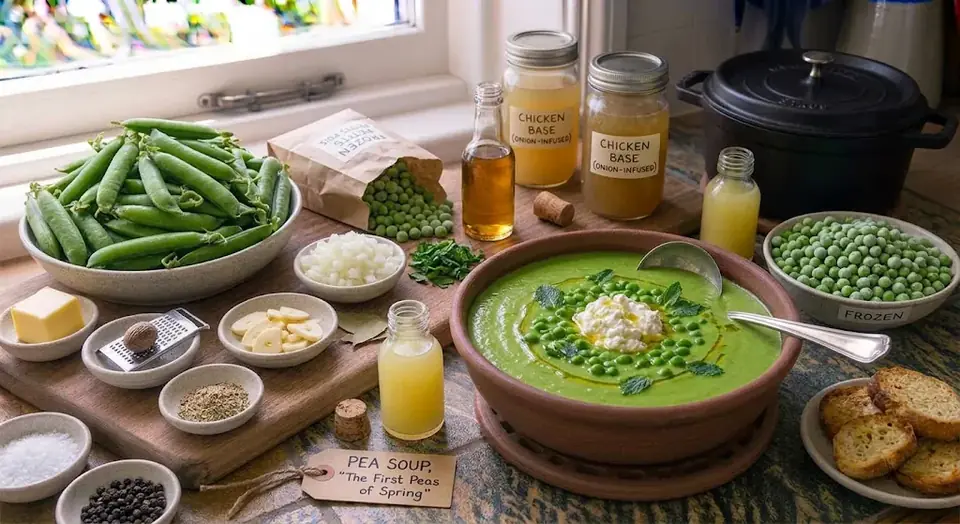
France & England · The First Peas of Spring · 51.51° N, 0.13° W
Pea Soup
Green peas blanched, shocked and blended late, with mint and lemon.
At a glance.
Pea Soup comes from France & England · The First Peas of Spring and appears in The Soup Atlas, in the chapter Creamy & Pureed Soups. It serves 4, takes about 35 minutes, and uses 15 ingredients and 11 steps.
- Yield
- Serves 4
- Method
- Stovetop
- Time
- 35 minutes
Ingredients
Tap an ingredient to tick it off.
- For the base
- For the peas
- To finish
Method
-
Set up the shocking bath before you cook anything: a large bowl of cold water with the ice tipped in, sitting beside the stove where you can reach it without turning around. The whole method depends on it being ready.
-
Melt the butter in a pot over low heat, add the onion, garlic and the teaspoon of salt and sweat for 10 minutes with a lid ajar, until soft and translucent with no color. Add the stock, bring it to a simmer and take it off the heat. That is the base, and it can wait.
-
Bring the 2 liters of water to a hard rolling boil in a wide pan and add the 2 tablespoons of salt. It should taste frankly of the sea. Under-salted blanching water leaches sugar out of the peas and gives nothing back.
-
Tip in the peas. Frozen ones need 90 seconds from the moment the water returns to the boil; fresh ones need 2–3 minutes, and you should eat one to check. They are ready the instant they turn a shade brighter and squash to sweetness rather than starch.
-
Drain them and plunge them straight into the ice bath, stirring so the cold reaches every pea. Leave them 2 minutes, no longer, then lift them out with a slotted spoon and drain hard. This shock is what fixes the color.
-
Set aside 3 tablespoons of the blanched peas for the garnish. Keep them cold and away from the pot.
-
Bring the stock base back to a simmer and pour it into the blender jug — no more than a third full at a time, lid vented, folded towel over the top. Add the drained peas and the mint leaves to the hot liquid in the jug.
-
Blend at full speed for a full minute per batch. Working peas into hot liquid in the jug rather than boiling them in the pot is the whole trick: they take the heat for seconds instead of minutes.
-
Pour each finished batch straight into a clean pan and, if the kitchen is warm, set that pan in a sink of cold water while you do the rest. Green soups lose their color sitting hot on a stove as surely as they do boiling.
-
Push it through a medium sieve to catch the pea skins, pressing with a ladle. Frozen peas leave more skin behind than fresh ones do, and it is the difference between a purée and a paste.
-
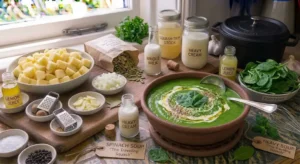
Warm it to serving temperature only — hot enough to steam, never bubbling — and stir in the cream, lemon juice and zest and the white pepper off the heat. Taste and correct the salt. Serve with the reserved peas, a spoon of ricotta, olive oil and a torn mint leaf.
Cook’s notes
- The technique
- A pea is a seed caught mid-career. From the moment it leaves the pod, its enzymes convert sucrose into starch, and within a day at room temperature a sweet pea has become a mealy one — which is why commercially frozen peas, blanched and frozen within hours of picking, are genuinely better than most fresh ones on sale. That same enzyme activity is halted by the blanch, and the ice bath then stops the cooking dead at the pea's brightest point. Cook fast, chill fast, blend fast. Every extra minute of heat costs both color and sugar.
- Make ahead
- Blanch and shock the peas up to a day ahead and keep them covered in the refrigerator; the base can be made two days ahead. Blended, it holds 24 hours but dulls visibly by the second day, so this is not a soup for the freezer if color matters to you. If you do freeze it, do so the hour it is made and reheat only to steaming. Add lemon and cream after reheating, never before.
- Troubleshooting
- Olive-drab — it was boiled after blending, or left standing hot; nothing brings the green back. Grainy and starchy — the peas were old or over-blanched. Bitter — mint stalks went in with the leaves. Thin — too much stock at the base stage; blend in a handful more peas rather than reducing it, which would cost you the color.
- Variations
- The English pairing is pea and ham, made by blanching the peas as above and using a light ham broth as the base. Pea and watercress adds a peppery bunch to the blender at the last second. A Provençal version drops the mint for basil and finishes with a spoonful of pistou. For a chilled first course, cool it over ice and season noticeably harder.
- To serve and keep
- Serve it warm rather than scalding, in shallow white bowls that flatter the color, with the garnishes placed rather than scattered. Thin toast or a cheese-and-chive scone alongside. Drink a Sancerre, a Grüner Veltliner or anything else grassy enough to meet the mint halfway. Made in full within this recipe — Blanched Peas, Mint and Lemon Finish. Also listed in the Component Index at the back.

Where it comes from
Peas are among the oldest domesticated crops of the Near East, and for most of their history they were eaten dry — split, boiled to a pudding, stored through winter. Eating them green and immature was a luxury with a datable vogue. At Versailles in 1696 Madame de Maintenon wrote of the court's obsession with petits pois, describing ladies who had dined with the king going home to eat peas before bed, and called the impatience to eat them a fashion and a fury. English gardeners were chasing early crops in the same decades, and the pursuit of the first pea of the season is stitched through eighteenth-century kitchen writing. The second turning point is industrial: Clarence Birdseye's fast-freezing patents of the late 1920s reached peas early, and because a pea starts converting its sugar to starch within hours of picking, freezing within that window preserves a sweetness the market stall cannot match. Frozen peas beat market-stall fresh ones outright in this soup, unless you shelled the pods yourself this morning.
All 105 recipes from France
All 69 recipes from United Kingdom
Pea Soup: quick answers
How long does Pea Soup take?
About 35 minutes.
How many does this Pea Soup recipe make?
This recipe serves 4.
Where does Pea Soup come from?
Peas are among the oldest domesticated crops of the Near East, and for most of their history they were eaten dry — split, boiled to a pudding, stored through winter. Eating them green and immature was a luxury with a datable vogue. At Versailles in 1696 Madame de Maintenon wrote of the court's obsession with petits pois, describing ladies who had dined with the king going home to eat peas before bed, and called the impatience to eat them a fashion and a fury. English gardeners were chasing early crops in the same decades, and the pursuit of the first pea of the season is stitched through eighteenth-century kitchen writing. The second turning point is industrial: Clarence Birdseye's fast-freezing patents of the late 1920s reached peas early, and because a pea starts converting its sugar to starch within hours of picking, freezing within that window preserves a sweetness the market stall cannot match. Frozen peas beat market-stall fresh ones outright in this soup, unless you shelled the pods yourself this morning.
More from France


More in Creamy & Pureed Soups
https://www.atlasserie.com/recipes/soup/pea-soup/