Korea · 36.42° N, 127.82° E
Bibimbap
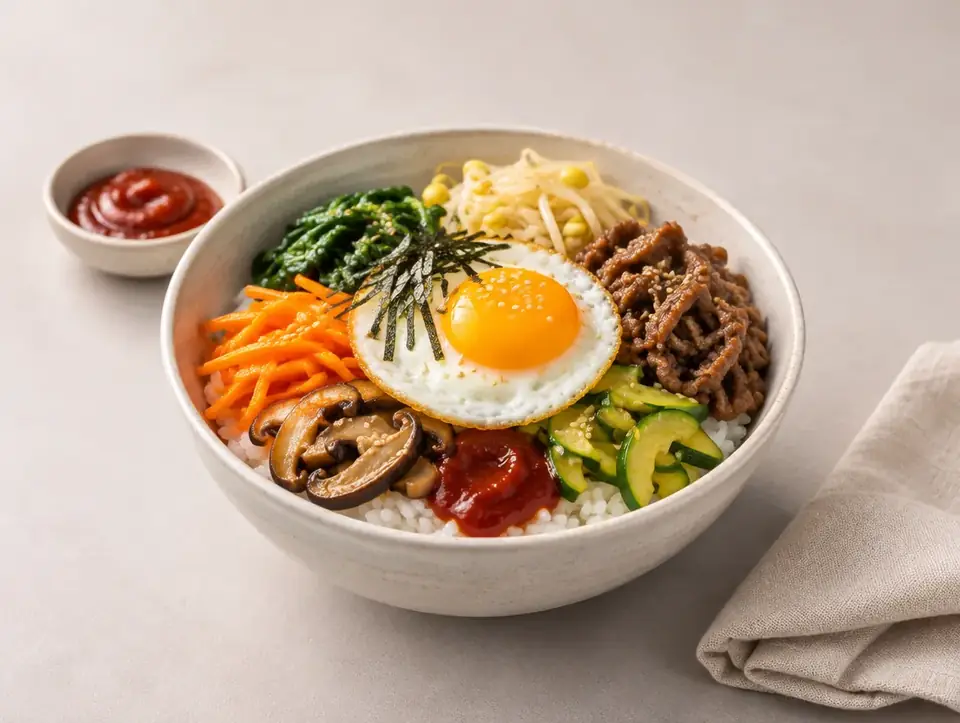
A rice bowl topped with seasoned vegetables, beef, and a fried egg.
At a glance.
Bibimbap comes from Korea and appears in The Dinner Atlas, in the chapter Dinner Around the World. It serves 4, is made on the stovetop, and uses 9 ingredients and 8 steps.
- Yield
- Serves 4
- Method
- Stovetop
Ingredients
Tap an ingredient to tick it off.
Method
-
Prepare each vegetable separately, and this is the point of the dish: each one is seasoned in its own way.
-
Blanch the spinach, squeeze it bone dry, and dress it with sesame oil, garlic, and salt.
-
Blanch the bean sprouts briefly and dress them the same way.
-
Saute the carrot and the mushrooms separately, seasoning each with a little soy and sesame.
-
Marinate the beef in soy, garlic, sugar, and sesame oil, then sear it hard and fast.
-
Mix the gochujang with sesame oil and sugar into a smooth sauce.
-
If you have a stone bowl, oil it and heat it until it is scorching, then press the rice in so a crisp golden crust forms on the bottom.
-
Arrange each component in its own section over the rice, top with a fried egg, and serve with the gochujang sauce, to be mixed in vigorously at the table.

Where it comes from
Bibimbap means mixed rice. It may have originated as a way of using up leftover banchan side dishes, or from ritual offerings eaten communally afterward. Either way, its essence is variety in one bowl.
Bibimbap: quick answers
How many does this Bibimbap recipe make?
This recipe serves 4.
Where does Bibimbap come from?
Bibimbap means mixed rice. It may have originated as a way of using up leftover banchan side dishes, or from ritual offerings eaten communally afterward. Either way, its essence is variety in one bowl.
What is the secret to a good Bibimbap?
Squeeze the blanched spinach until it is genuinely dry. Wet spinach makes the whole bowl watery.
More from Korea
More in Dinner Around the World



https://www.atlasserie.com/recipes/dinner/bibimbap/