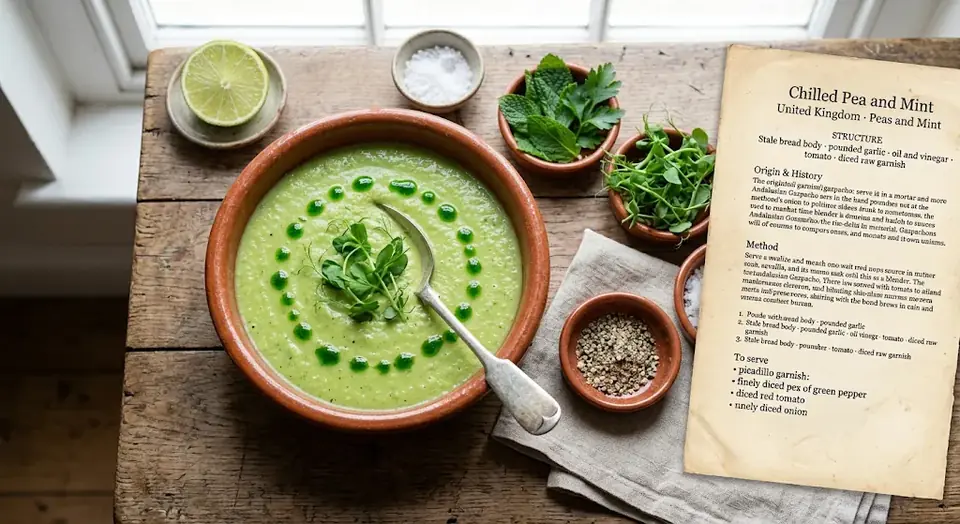
United Kingdom · Peas and Mint · 53.77° N, 2.57° W
Chilled Pea and Mint
Peas cooked three minutes, chilled hard, then forced through a sieve.
At a glance.
Chilled Pea and Mint comes from United Kingdom · Peas and Mint and appears in The Soup Atlas, in the chapter Chilled & Light Soups. It serves 4, takes about 3 hr 35 min, and uses 21 ingredients and 10 steps.
- Yield
- Serves 4
- Method
- Chilled
- Time
- 3 hr 35 min
Ingredients
Tap an ingredient to tick it off.
- For the quick stock
- For the soup
- For the mint oil
- To finish
Method
-
Build the stock first: put the quartered onion, leek green, herb stalks, peppercorns, bay and salt in a pan with the cold water, simmer for 25 minutes and strain. A light stock like this is worth more here than a heavy shop-bought chicken stock, which muddies both color and flavor.
-
Blanch the mint for the oil in boiling water for 15 seconds, refresh it in iced water, squeeze it dry and blend it with the oil and salt for 90 seconds. Strain through a coffee filter or a cloth, unpressed. It will drip through slowly and finish an intense green.
-
Set a large bowl of iced water in the sink now, before you cook anything, and stand a second bowl inside it. The chilling stage happens in seconds, and hunting for ice while the pot cools on the counter is how the color is lost.
-
Soften the chopped onion and garlic in the butter over medium-low heat for 8 minutes, without letting them take color. Sweetness is what you want from them, not browning; a caramelized onion pushes the finished soup toward brown-green.
-
Pour in the stock and the salt and bring it to a hard, rolling boil. The peas need to go into liquid violent enough to return to the boil almost at once, because their time in the pot is measured in single minutes.
-
Tip in the frozen peas and cook for 3 minutes exactly, from the moment they go in. They are done when a pea crushes easily between finger and thumb and tastes sweet rather than starchy. At five minutes the color begins to slide toward olive and no blending will retrieve it.
-
Take the pan off the heat, add the mint and parsley leaves, and blend at once, in batches no more than a third full, with the lid vented and a towel over the top. Hot liquid in a sealed blender will lift the lid off and burn you.
-
Pour each blended batch straight into the bowl sitting in the iced water and stir until the whole quantity is cool to the touch, which should take under ten minutes. Then refrigerate. A pot left to cool on its own goes on cooking the peas for an hour.
-
Push the cold purée through a fine sieve with a ladle, or through a drum sieve with a plastic scraper. You will leave behind 100 g or so of pea skin, and that residue is the difference between a soup that coats the spoon and one that feels sandy on the palate.
-
Chill for 3 hours, then season cold: another teaspoon of salt, the lemon juice and the white pepper, tasting after each. Stir in the cream, ladle into chilled bowls, and finish with the mint oil dropped in beads across the surface and a few pea shoots.
Cook’s notes
- The technique
- The sieve is what separates a good chilled pea soup from a grainy one, and the reason is anatomical. A pea is wrapped in a seed coat of cellulose and pectin, and no domestic blender breaks it down — it shreds it into fragments the size of a grain of sand, which pass unnoticed in a hot soup and are glaring in a cold one, where the thicker liquid holds them against the tongue. Pressing the purée through a fine mesh removes the hulls and leaves the starch and sugar behind. Expect to discard around a tenth of the volume.
- Make ahead
- The sieved base holds two days refrigerated and freezes well for three months, which is unusual in this chapter — the color survives freezing better than it survives slow cooling. Thaw in the refrigerator and blend for ten seconds to bring it back together. Add the cream, lemon and mint oil on the day. The mint oil keeps a week refrigerated and dulls after that.
- Troubleshooting
- Khaki instead of green — the peas cooked past four minutes, or the pot cooled slowly. Sandy on the tongue — it was blended but not sieved. Sweet and cloying — it needs the lemon, which is doing the same work here that vinegar does in a gazpacho. Separated in the fridge — the purée was too thin to hold; whisk and serve at once.
- Variations
- A dairy-free version replaces the cream with 100 ml of coconut milk or a spoonful of tahini. Watercress blended in with the mint gives a peppery edge. Fresh podded peas work if they are very young, though they need four minutes rather than three. Some cooks add a spoonful of crème fraîche and a shred of smoked ham to each bowl.
- To serve and keep
- Serve very cold in shallow bowls, or in small glasses as something to hand round before dinner. A spoonful of crab, a curl of prosciutto or a soft-boiled quail's egg all sit well on top. Drink an English sparkling wine, or a cold, dry Sauvignon. Made in full within this recipe — Quick Aromatic Stock, Sieved Pea Purée, Mint Oil. Also listed in the Component Index at the back.

Where it comes from
Peas with mint is one of the few genuinely old English pairings still in daily use. Boiled peas dressed with butter and mint appear in English domestic cookery through the eighteenth and nineteenth centuries, and mint sauce for lamb comes from the same instinct: menthol reads as cooling on the tongue and cuts through sweetness and fat. The soup version is more recent, and it owes its modern form to industrial freezing. Clarence Birdseye's plate-freezing patents of the 1920s made it possible to freeze peas within hours of picking, before their sugars convert to starch, and by the 1960s British households were buying more frozen peas per head than almost anywhere in Europe. Chilled pea soup then became a fixture of summer restaurant menus in Britain from the 1980s onward, often served in small glasses before the meal proper. The result is one of the rare dishes where the frozen ingredient genuinely beats the fresh one, since a pea picked in the morning and podded that evening has already begun to turn floury.
Chilled Pea and Mint: quick answers
How long does Chilled Pea and Mint take?
About 3 hr 35 min.
How many does this Chilled Pea and Mint recipe make?
This recipe serves 4.
Where does Chilled Pea and Mint come from?
Peas with mint is one of the few genuinely old English pairings still in daily use. Boiled peas dressed with butter and mint appear in English domestic cookery through the eighteenth and nineteenth centuries, and mint sauce for lamb comes from the same instinct: menthol reads as cooling on the tongue and cuts through sweetness and fat. The soup version is more recent, and it owes its modern form to industrial freezing. Clarence Birdseye's plate-freezing patents of the 1920s made it possible to freeze peas within hours of picking, before their sugars convert to starch, and by the 1960s British households were buying more frozen peas per head than almost anywhere in Europe. Chilled pea soup then became a fixture of summer restaurant menus in Britain from the 1980s onward, often served in small glasses before the meal proper. The result is one of the rare dishes where the frozen ingredient genuinely beats the fresh one, since a pea picked in the morning and podded that evening has already begun to turn floury.
More from United Kingdom




More in Chilled & Light Soups






https://www.atlasserie.com/recipes/soup/chilled-pea-and-mint/