Britain · The Banger · 53.77° N, 2.57° W
Herbed Breakfast Sausage
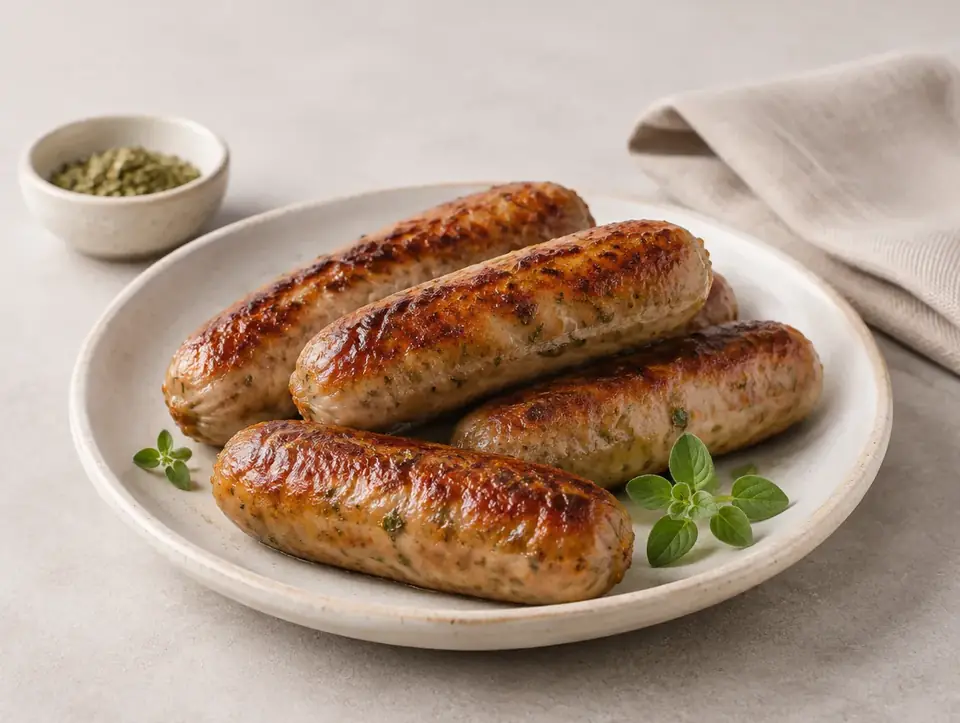
A proper banger: rusk-bound, scented with mace and marjoram, browned slowly.
At a glance.
Herbed Breakfast Sausage comes from Britain · The Banger and appears in The Breakfast Atlas, in the chapter Bacon, Sausage & Hash. It serves 4, takes about 50 minutes, and uses 13 ingredients and 9 steps.
- Yield
- Serves 4
- Method
- Stovetop
- Time
- 50 minutes
Ingredients
Tap an ingredient to tick it off.
- For the sausage meat
- For the banger seasoning
- To cook
Method
-
Stir the rusk into the ice-cold water and leave 10 minutes. It will swell into a damp, crumbly mass and take up nearly all the liquid.
-
Grind the chilled pork through the 8 mm plate of a mincer into a cold bowl. Coarser than an American patty, and deliberately so — the rusk supplies fineness, the meat supplies bite.
-
Rub the seasoning ingredients together and scatter them over the meat, mixing for 30 seconds before the rusk goes in, so the salt reaches the meat directly.
-
Add the hydrated rusk and mix for a further 60–90 seconds, until the mixture turns sticky and holds a print when pressed. This bind is what stops the sausage crumbling.
-
Thread a casing onto the stuffing horn and fill loosely, leaving slack. A tightly packed casing has nowhere to go when the filling expands and will split every time.
-
Twist into 10 cm links, alternating the direction of each twist so that neighboring links hold one another closed, and prick nothing at any stage.
-
Rest the links uncovered on a rack in the fridge for at least 4 hours, ideally overnight. The casings dry to a tacky skin that takes color far better than a wet one.
-
Heat the oil in a heavy pan over low-medium heat and lay the sausages in with space between them. Cook 15–18 minutes, turning every 3–4 minutes — slower than a slim American link, because a rusk-bound sausage carries more water and needs time for the interior to set.
-
Check for 71°C (160°F) at the center of the thickest sausage, then rest them 3 minutes off the heat so the juices settle back through the filling before serving.
Cook’s notes
- The technique
- Low and long, and never a fork. Rusk holds water, and water inside a sausage turns to steam that pushes outward against a casing being simultaneously tightened by heat — race that process over a high flame and the skin ruptures. Kept over low-medium heat, the filling sets progressively and the casing stretches with it. The temptation to prick the sausage releases the very moisture the rusk was added to hold.
- Make ahead
- The seasoned meat is better made a day before stuffing. Stuffed links keep three days refrigerated and freeze for three months, laid flat on a tray until solid. Thaw fully before cooking; a frozen center will still be raw when the skin has burnt.
- Troubleshooting
- Split skins — heat too high, or casings overstuffed at filling. Dry and crumbly — not enough fat in the shoulder, or the rusk was added dry. Gray rather than browned — the links went into the pan wet from the fridge; the overnight drying rest fixes this.
- Variations
- Lincolnshire drops the mace and doubles the sage, ground coarse. Cumberland omits links entirely, coils the length into a spiral, and pushes the white pepper to 3 tsp. A Glamorgan sausage, the Welsh vegetarian original, replaces the meat with Caerphilly cheese, leek and breadcrumb. Skinless sausage meat from this mix makes excellent stuffing.
- Serve with
- The centerpiece of a full English, with fried eggs, grilled tomato and baked beans; or in a soft white roll with brown sauce. Bangers and mash with onion gravy for supper. Strong tea. Made in full within this recipe — Banger Seasoning and Rusk Binder. Also listed in the Component Index at the back.

Where it comes from
The British sausage keeps a cereal binder, and that single fact separates it from almost every continental sausage. Rusk is an unleavened bread, baked hard and milled, that absorbs around three times its weight in water; mixed into sausage meat it holds moisture through cooking and gives the soft, yielding bite the British recognize as correct. It entered the recipe as economy during the shortages of the First World War, when meat was stretched with cereal, and it stayed because the resulting texture became the national preference rather than a compromise. The slang name is usually traced to the same period — the Oxford English Dictionary records banger from around 1919 — and it became general during the Second World War, when sausages carried so much water that they burst audibly in the pan. Regional styles survived all of it: Lincolnshire sausage is coarse and sage-forward, Cumberland is peppery and sold in a continuous coil rather than links. British law sets a minimum meat content for a sausage sold as pork, which is why a butcher's 85% sausage and a value-range one are effectively different foods.
Herbed Breakfast Sausage: quick answers
How long does Herbed Breakfast Sausage take?
About 50 minutes.
How many does this Herbed Breakfast Sausage recipe make?
This recipe serves 4.
Where does Herbed Breakfast Sausage come from?
The British sausage keeps a cereal binder, and that single fact separates it from almost every continental sausage. Rusk is an unleavened bread, baked hard and milled, that absorbs around three times its weight in water; mixed into sausage meat it holds moisture through cooking and gives the soft, yielding bite the British recognize as correct. It entered the recipe as economy during the shortages of the First World War, when meat was stretched with cereal, and it stayed because the resulting texture became the national preference rather than a compromise. The slang name is usually traced to the same period — the Oxford English Dictionary records banger from around 1919 — and it became general during the Second World War, when sausages carried so much water that they burst audibly in the pan. Regional styles survived all of it: Lincolnshire sausage is coarse and sage-forward, Cumberland is peppery and sold in a continuous coil rather than links. British law sets a minimum meat content for a sausage sold as pork, which is why a butcher's 85% sausage and a value-range one are effectively different foods.
More from United Kingdom



More in Bacon, Sausage & Hash
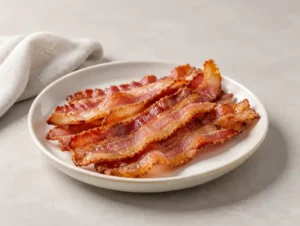 Crispy BaconBritain & United States · Cured Pork
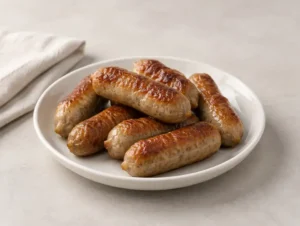 Breakfast Sausage LinksUnited States · Fresh Cased Sausage
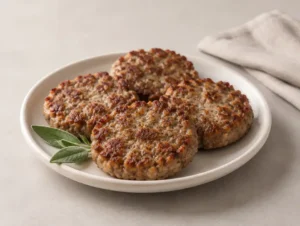 Sausage PattiesAmerican South & Midwest · Country Sausage
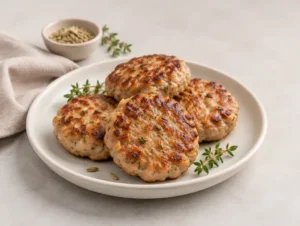 Turkey Sausage PattiesUnited States · Lean Breakfast Meats
 Hash BrownsUnited States · Diner Cooking
 Home FriesUnited States · Diner Griddle
https://www.atlasserie.com/recipes/breakfast/herbed-breakfast-sausage/