The Bread Atlas
Seeded Sourdough
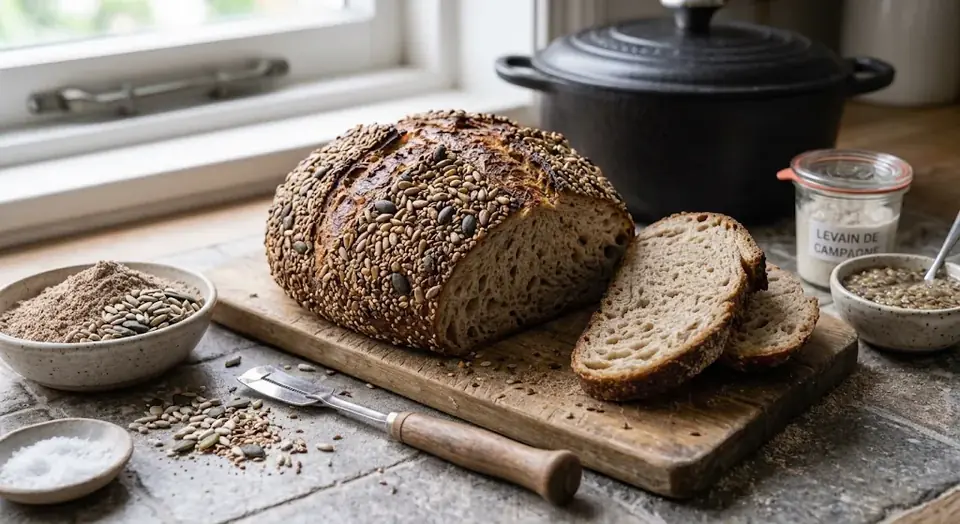
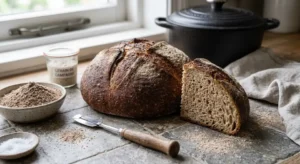
Toasted seeds soaked, folded in late, and pressed over the whole crust.
At a glance.
Seeded Sourdough is a recipe from The Bread Atlas, in the chapter Artisan & Sourdough. It makes 1 boule, takes about 26 hours, and uses 15 ingredients and 11 steps.
- Yield
- Makes 1 boule
- Method
- Oven 245°C / 475°F
- Time
- 26 hours
Ingredients
Tap an ingredient to tick it off.
- Seed Soaker
- Liquid Levain
- The Dough
- Seed Crust
Method
-
The night before, toast the sunflower, pumpkin and sesame seeds in a dry pan until they smell nutty and the sesame begins to hop. Tip them into a bowl with the raw flaxseed, pour on the boiling water, stir in the salt, cover and leave overnight.
-
Toast before soaking, never after. Toasting drives off the raw grassiness and stabilizes the oils that would otherwise turn in a week; soaking then loads the seeds with water so they arrive in the dough saturated. Flax is left raw because its coat releases a gel that binds the whole soaker.
-
Build the levain the same evening and use it in the morning, domed and cratered. Mix both dough flours with the water at 30°C and autolyse 45 minutes, then add the levain and the salt and work the dough 4 minutes to 25–26°C. Keep the soaker out for now.
-
Bulk ferment 4½ hours at 25°C. Fold at 30 and 60 minutes with nothing added. The gluten needs to be built before the seeds go in, because seed fragments are hard and edged and will sever a network that has not yet formed.
-
At 90 minutes, laminate the soaker in. Wet the bench, stretch the dough out to a thin rectangle, scatter the drained soaker across it, then fold the sheet into thirds and thirds again. Any residual soaking liquid goes in too; it belongs to the dough.
-
Fold twice more at 30-minute intervals to distribute the seeds evenly, then leave the dough alone for the last hour. Expect a rise of about 50% — seeds displace flour and dilute the gluten, so this loaf will not climb like the boule of recipe 16 and should not be pushed to try.
-
Preshape into a round, rest 25 minutes, then shape a tight boule. Seeded dough tears more readily than plain, so shape in fewer, more deliberate movements and stop the moment the skin is taut.
-
Spread the crust seeds on a tray. Roll the shaped boule across the damp tea towel to wet the surface, then roll it through the seeds, pressing to embed them all over. Set it seam up in a floured banneton and retard 12–14 hours at 4°C.
-
Give a lidded cast-iron pot 45 minutes in an oven set to 245°C / 475°F. Turn the loaf onto parchment and score a plain cross 1 cm deep — an elaborate pattern is wasted under a seed coat and only breaks the crust into shards.
-
Bake covered 22 minutes, then uncovered at 225°C / 435°F for 20–22 minutes to 98°C inside. The lower second temperature matters: the seeds on the crust are full of oil and will scorch bitter at the heat that a bare crust needs to color.
-
Cool at least 3 hours. The seeds go on releasing moisture into the crumb as it sets, which is why a seeded loaf tastes moister on day two than on the afternoon it was baked, and why cutting it early is a double waste.
Cook’s notes
- To serve and keep
- Cut thick for cheese, smoked fish or a fried egg, or thin and toasted under avocado and lemon. The crust is the best part, so cut across the loaf rather than shaving the top. Store cut side down under a cloth.
Where it comes from
Seeds on bread are old and seeds in bread are comparatively new. Sesame and poppy have been scattered over the surface of loaves around the eastern Mediterranean and the Near East for as long as there is evidence of leavened baking, where they served as flavor, as decoration and as a way of making a plain loaf legible on a market stall. Seeds worked through the crumb in quantity belong to the last century and to northern Europe, where oilseed crops were plentiful and the extra fat and protein were worth having. What turned the two habits into one loaf was the artisan bakery of the 1980s and 90s, which had a naturally leavened white boule as its centerpiece and needed variants to fill a shelf. The technical lesson arrived with the commercial version. Bakers found that seeds mixed in dry gave a dry, low loaf, and the soaker — seeds toasted, then hydrated overnight before they meet the dough — moved from an optional refinement to the step that defines the bread.
Seeded Sourdough: quick answers
How long does Seeded Sourdough take?
About 26 hours.
How many does this Seeded Sourdough recipe make?
This recipe makes 1 boule.
Where does Seeded Sourdough come from?
Seeds on bread are old and seeds in bread are comparatively new. Sesame and poppy have been scattered over the surface of loaves around the eastern Mediterranean and the Near East for as long as there is evidence of leavened baking, where they served as flavor, as decoration and as a way of making a plain loaf legible on a market stall. Seeds worked through the crumb in quantity belong to the last century and to northern Europe, where oilseed crops were plentiful and the extra fat and protein were worth having. What turned the two habits into one loaf was the artisan bakery of the 1980s and 90s, which had a naturally leavened white boule as its centerpiece and needed variants to fill a shelf. The technical lesson arrived with the commercial version. Bakers found that seeds mixed in dry gave a dry, low loaf, and the soaker — seeds toasted, then hydrated overnight before they meet the dough — moved from an optional refinement to the step that defines the bread.
More in Artisan & Sourdough

https://www.atlasserie.com/recipes/bread/seeded-sourdough/