Japan & Korea · Okayu and Juk · 36.01° N, 136.71° E
Savory Rice Porridge
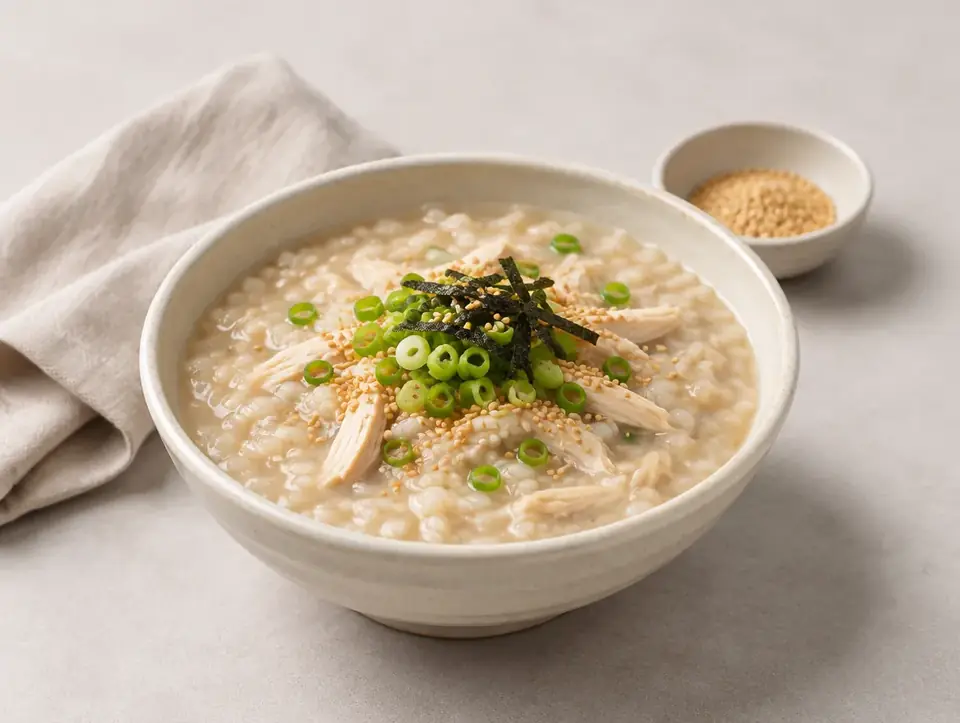
Korean sesame chicken juk, grains still whole, in the okayu tradition.
At a glance.
Savory Rice Porridge comes from Japan & Korea · Okayu and Juk and appears in The Breakfast Atlas, in the chapter Oats, Grains & Porridge. It serves 4, takes about 1 hr 15 min, and uses 20 ingredients and 9 steps.
- Yield
- Serves 4
- Method
- Stovetop
- Time
- 1 hr 15 min
Ingredients
Tap an ingredient to tick it off.
- For the ginger chicken broth
- For the juk
- To serve
Method
-
Rinse the rice twice, cover with cold water and soak 30 minutes, then drain thoroughly. Soaked short-grain rice swells evenly and cooks in half the time without dissolving, which is the point here.
-
Meanwhile put the chicken, water, ginger, garlic, onion and scallion tops in a pot, bring to a boil and skim the gray foam carefully. Skimming is what keeps the finished juk clean-tasting.
-
Simmer uncovered for 35 minutes. Lift out the chicken, add the salt to the broth and strain it; you want about 1.4 liters, so top up with water if it has reduced further.
-
When the chicken is cool enough to handle, pull the meat from the bones and shred it coarsely with two forks, discarding the skin and bones as you go.
-
Wipe the pot dry and warm the sesame oil over medium heat. Add the drained rice, carrot, onion and garlic and stir 4–5 minutes until the grains turn chalky white and the oil smells toasted.
-
Pour in the hot broth. One part rice to about seven parts liquid is thick enough to hold a spoon upright at the end, far short of the ten-to-one that makes Cantonese congee collapse.
-
Simmer uncovered 25–30 minutes, stirring every three or four minutes. Stop while each grain is still whole but split open and soft, its white heart gone translucent.
-
Stir the shredded chicken back in with the soy sauce and cook two minutes more. Season carefully; juk is meant to be gentle, since the toppings supply most of the salt.
-
Rest off the heat five minutes, loosening with hot broth if it has thickened past double cream. Ladle into deep bowls, set half a soft egg on each and scatter gim, scallion and sesame over the top.
Cook’s notes
- The technique
- Everything depends on stopping early. Frying the soaked rice in sesame oil coats each grain in fat, which slows water uptake and holds the grain together, so the porridge thickens without dissolving; the toasted oil also carries an aroma a plain simmer cannot produce. Combined with a seven-to-one ratio and half an hour of cooking, that gives rice that is soft, split and still visible.
- Make ahead
- The broth can be made three days ahead or frozen three months, and the chicken shredded and refrigerated under a spoonful of broth so it does not dry. Finished juk keeps two days but thickens to a solid; reheat with hot broth, stirring gently so the grains stay intact.
- Troubleshooting
- Grains dissolved into paste — cooked too long or stirred too hard; use a folding motion rather than a beating one. Sticking and scorching — the pot was thin or the heat stayed high once it thickened. Flat and dull — the broth was under-seasoned; correct it before the rice goes in, not afterwards.
- Variations
- For plain Japanese okayu, leave out the chicken and sesame oil entirely and top with umeboshi and shio-kombu. Hobakjuk swaps the chicken for 400 g steamed kabocha purée. Jeonbokjuk uses sliced Jeju abalone and its green liver. Nanakusa-gayu adds seven blanched spring herbs on 7 January. All of them keep the same seven-to-one ratio and the same short cooking time.
- Serve with
- Kimchi is the standard Korean partner, with small dishes of soy sauce and sesame oil for adjusting each bowl. In Japan, umeboshi, shio-kombu and a pot of hojicha. Serve very hot in deep bowls, with a flat spoon rather than chopsticks. Made in full within this recipe — Ginger Chicken Broth. Also listed in the Component Index at the back.

Where it comes from
Japanese okayu and Korean juk share a starting point with Chinese congee and arrive somewhere else. Both are cooked shorter and thicker, and both keep the grain visible — Japanese cooks name the grades by ratio, from zengayu at one part rice to five parts water down to the thin shibugayu given to the very ill. Okayu is food of the sickbed and the temple, plain and lightly salted, eaten with an umeboshi plum pressed into the center or a pinch of shio-kombu. It also holds a fixed place in the calendar: nanakusa-gayu, the seven-herb porridge eaten on 7 January, is one of Japan's oldest surviving seasonal observances, meant to settle the stomach after the New Year. Korean juk runs warmer and richer. Rice is soaked, often broken, then fried in toasted sesame oil before liquid goes in — dakjuk with chicken, hobakjuk with pumpkin, jeonbokjuk with Jeju abalone, sold in dedicated juk restaurants since chains opened in the early 2000s. It is what a Korean household cooks for someone recovering.
Savory Rice Porridge: quick answers
How long does Savory Rice Porridge take?
About 1 hr 15 min.
How many does this Savory Rice Porridge recipe make?
This recipe serves 4.
Where does Savory Rice Porridge come from?
Japanese okayu and Korean juk share a starting point with Chinese congee and arrive somewhere else. Both are cooked shorter and thicker, and both keep the grain visible — Japanese cooks name the grades by ratio, from zengayu at one part rice to five parts water down to the thin shibugayu given to the very ill. Okayu is food of the sickbed and the temple, plain and lightly salted, eaten with an umeboshi plum pressed into the center or a pinch of shio-kombu. It also holds a fixed place in the calendar: nanakusa-gayu, the seven-herb porridge eaten on 7 January, is one of Japan's oldest surviving seasonal observances, meant to settle the stomach after the New Year. Korean juk runs warmer and richer. Rice is soaked, often broken, then fried in toasted sesame oil before liquid goes in — dakjuk with chicken, hobakjuk with pumpkin, jeonbokjuk with Jeju abalone, sold in dedicated juk restaurants since chains opened in the early 2000s. It is what a Korean household cooks for someone recovering.
More from Japan

More in Oats, Grains & Porridge

https://www.atlasserie.com/recipes/breakfast/savory-rice-porridge/