Nordic & Beyond · Semolina · 62.00° N, 15.00° E
Farina Porridge
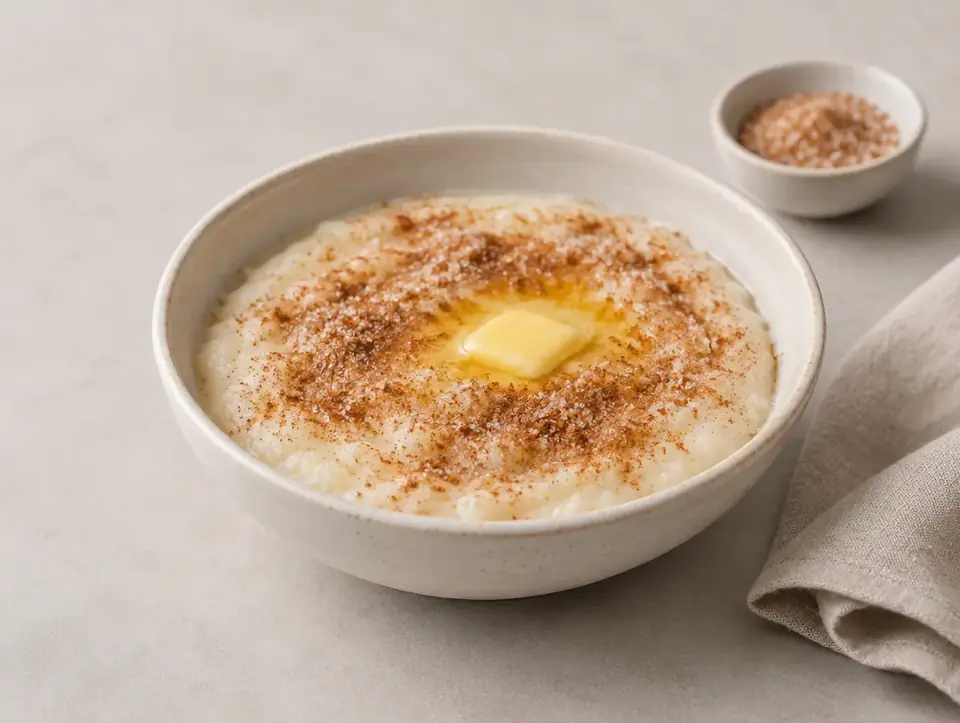
Loose Nordic mannagrøt with cardamom, an eye of butter, cinnamon sugar.
At a glance.
Farina Porridge comes from Nordic & Beyond · Semolina and appears in The Breakfast Atlas, in the chapter Oats, Grains & Porridge. It serves 2, takes about 25 minutes, and uses 11 ingredients and 9 steps.
- Yield
- Serves 2
- Method
- Stovetop
- Time
- 25 minutes
Ingredients
Tap an ingredient to tick it off.
- For the butter eye and cinnamon sugar
- To serve
Method
-
Mix the granulated sugar and cinnamon in a small dish and set it on the table. In Nordic households this sits out permanently and is added by the eater rather than the cook.
-
Warm the milk in a heavy saucepan with the salt, crushed cardamom and lemon zest over medium-low heat until it steams, then take it off and infuse for ten minutes.
-
Strain out the husks and zest and return the milk to the pan. Infusing rather than stirring in ground spice keeps the porridge pale and smooth instead of speckled and gritty.
-
Bring the milk back to a bare simmer and rain the semolina in from your fist in a thin stream, whisking hard. One part semolina to about ten parts milk is deliberately loose.
-
Whisk for two minutes as the pan thickens, then drop the heat to its lowest setting and swap from the whisk to a wooden spoon for the rest of the cooking.
-
Cook 8–10 minutes, stirring often and scraping the base. Semolina thickens long before it is cooked, and the pasty taste of under-cooked wheat is the commonest fault in this dish.
-
Stir in the caster sugar and check the texture. It should pour from the spoon in a slow unbroken stream; if it mounds in the bowl, whisk in hot milk 60 ml at a time.
-
Cook two minutes more after the sugar goes in, which slackens the porridge slightly, then rest it covered off the heat for three minutes before pouring.
-
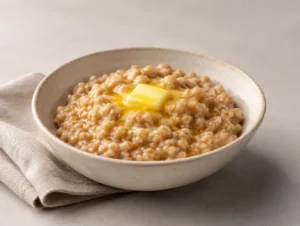
Pour into two wide shallow bowls, press a well into the center of each and drop in a piece of cold butter to melt into a golden eye. Bring the cinnamon sugar, cold milk and lingonberry to the table.
Cook’s notes
- The technique
- Cook it far longer than it looks as though it needs. Semolina reaches its final viscosity in about two minutes, but the starch granules at the center of each particle are still raw, and that is what gives the chalky aftertaste people blame on the grain itself. Eight to ten minutes at a bare simmer, stirring, hydrates them fully. The loose ratio is what buys that time.
- Make ahead
- Infuse the cardamom milk the night before and refrigerate it. The porridge itself is best fresh, since semolina sets very firm when cold. If you do have leftovers, chill them in a wetted tin, cut into squares and fry in butter until crisp, a Finnish and Baltic habit.
- Troubleshooting
- Chalky, raw-flour taste — under-cooked; give it five more minutes. Lumps — the semolina went in too fast or the milk was at a full boil. Skin across the top — cover the pan during the rest. Scorched base — a thin pan, or the heat was never dropped after thickening.
- Variations
- Mamounia, from Aleppo, toasts the semolina in butter and cooks it in sugar syrup rather than milk, then goes to the table with cinnamon and clotted cream. Klappgröt, or Finnish vispipuuro, uses lingonberry juice instead of milk and is whipped cold until pink and foamy. Sooji halwa uses ghee, cardamom and cashews.
- Serve with
- Cold milk poured around the bowl is the Nordic rule and it matters, since the temperature contrast is most of the pleasure. Serve with coffee and a spoonful of sharp lingonberry. Rye crispbread and cheese alongside make it a full meal.

Where it comes from
Semolina porridge is among the most widely eaten breakfasts in the world and almost never travels under a single name. Across Scandinavia it is mannagrøt in Norway, mannagrynsgröt in Sweden and mannapuuro in Finland, cooked loose in milk and served with a hollow of melting butter in the middle — the smørøye, the butter eye — under a heavy dusting of cinnamon sugar, with cold milk poured around the rim. It is nursery food and hospital food, and its rice-based cousins run through the winter holidays. In Aleppo, mamounia is a breakfast of semolina toasted in butter and cooked in sugar syrup, finished with cinnamon and clotted cream, eaten in cafés and at home during Ramadan; related preparations run across the Levant, and Egyptian kitchens use the same flour for sweet milk puddings. In India, coarse sooji becomes sheera and sooji halwa when cooked sweet in ghee with cardamom, and upma when cooked savory with mustard seed and curry leaf. One flour, three continents, three different breakfasts. One point of confusion is worth clearing up: the grain here is the same one sold across America as Cream of Wheat. Farina, fine semolina, mannagryn and fine sooji are all milled wheat endosperm, ground finer than couscous and coarser than flour. What separates this bowl from the American one in Recipe 54 is not the grain but the treatment — a looser ratio, cardamom and cinnamon in place of brown sugar, and a pool of butter rather than a stirred-through richness.
Farina Porridge: quick answers
How long does Farina Porridge take?
About 25 minutes.
How many does this Farina Porridge recipe make?
This recipe serves 2.
Where does Farina Porridge come from?
Semolina porridge is among the most widely eaten breakfasts in the world and almost never travels under a single name. Across Scandinavia it is mannagrøt in Norway, mannagrynsgröt in Sweden and mannapuuro in Finland, cooked loose in milk and served with a hollow of melting butter in the middle — the smørøye, the butter eye — under a heavy dusting of cinnamon sugar, with cold milk poured around the rim. It is nursery food and hospital food, and its rice-based cousins run through the winter holidays. In Aleppo, mamounia is a breakfast of semolina toasted in butter and cooked in sugar syrup, finished with cinnamon and clotted cream, eaten in cafés and at home during Ramadan; related preparations run across the Levant, and Egyptian kitchens use the same flour for sweet milk puddings. In India, coarse sooji becomes sheera and sooji halwa when cooked sweet in ghee with cardamom, and upma when cooked savory with mustard seed and curry leaf. One flour, three continents, three different breakfasts. One point of confusion is worth clearing up: the grain here is the same one sold across America as Cream of Wheat. Farina, fine semolina, mannagryn and fine sooji are all milled wheat endosperm, ground finer than couscous and coarser than flour. What separates this bowl from the American one in Recipe 54 is not the grain but the treatment — a looser ratio, cardamom and cinnamon in place of brown sugar, and a pool of butter rather than a stirred-through richness.
More from Scandinavia

More in Oats, Grains & Porridge

https://www.atlasserie.com/recipes/breakfast/farina-porridge/