Indonesia · Java · 0.25° S, 114.02° E
Soto Ayam
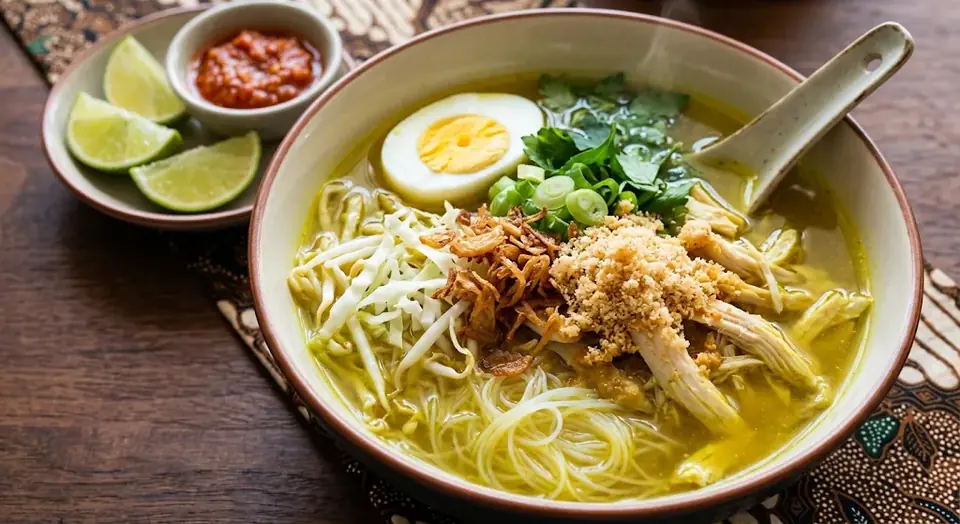
Turmeric chicken broth over vermicelli, finished with savory koya crumb.
At a glance.
Soto Ayam comes from Indonesia · Java and appears in The Soup Atlas, in the chapter Soups Around the World. It serves 6, takes about 1 hr 30 min, and uses 25 ingredients and 10 steps.
- Yield
- Serves 6
- Method
- Stovetop
- Time
- 1 hr 30 min
Ingredients
Tap an ingredient to tick it off.
- For the bumbu halus
- For the broth
- For the koya
- To assemble
Method
-
Grind the bumbu. Pound the shallots, garlic, turmeric, ginger, candlenuts, toasted coriander and peppercorns with the salt in a stone mortar until you have a smooth, wet, bright yellow paste. A blender works with a splash of water, though the texture will be coarser.
-
Fry the paste in the oil over medium heat for 8–10 minutes, stirring often. It will loosen, then tighten, then darken from raw yellow to deep gold as the water cooks out and the oil separates around the edges. That separation is the signal that it is done.
-
While it fries, put the chicken in a large pot with the cold water. Bring it slowly to a boil, skimming the surface until it stays clear, then lower to a bare simmer. Rushing this stage leaves you with a cloudy broth you cannot correct.
-
Scrape the fried bumbu into the pot along with the lemongrass, daun salam, lime leaves, galangal and salt. Simmer, uncovered, for 45 minutes, until the chicken is cooked through to 74°C (165°F) and the broth has taken on a strong, even yellow.
-
Lift the chicken out and let it cool enough to handle. Pull the meat off in shreds along the grain, discarding skin and bone, and set it aside. Traditionally the meat is fried briefly before shredding, which firms it and adds a toasted edge worth the extra pan.
-
Strain the broth, return it to the pot and add the kecap manis if you want a deeper amber color and a faint molasses sweetness. Taste and season: it should be savory and aromatic but not so salty that the sambal and lime have nowhere to go.
-
Make the koya. Crush the fried prawn crackers and the fried garlic together in a mortar or blitz them briefly, to a coarse, sandy powder — fine enough to dissolve on the tongue, coarse enough that a spoonful still reads as texture. Keep it in a dry jar.
-
Soak the vermicelli in hot water for 5 minutes until pliable, then drain hard. It goes into the bowl soft but not fully cooked, because the hot broth poured over it will finish the job in the thirty seconds before anyone starts eating.
-
Build each bowl in order: a nest of vermicelli, a handful of shredded cabbage, bean sprouts, shredded chicken, half an egg. Keeping the raw vegetables under the broth rather than on top means they wilt without going limp.
-
Ladle the very hot broth over and finish with spring onion, celery leaf, fried shallots and a generous spoonful of koya. Serve with lime wedges and sambal on the side, so each person adjusts heat and acid in their own bowl at the table.
Cook’s notes
- The technique
- Everything here rests on frying the bumbu. A ground paste of shallot, garlic, turmeric, ginger and candlenut is, uncooked, sharp and vegetal — sulfurous from the alliums, chalky from the turmeric, raw from the nuts. Eight to ten minutes in hot oil drives off the water, breaks down those compounds and releases the fat-soluble aromatics that then dissolve into the broth. The candlenuts matter too: they are high in oil and, once ground and fried, emulsify into the broth to give it a faint richness without any dairy.
- Make ahead
- The broth is better the next day and keeps four days refrigerated or three months frozen. Fried bumbu keeps a week under oil and can be made in bulk. Koya keeps a fortnight in a sealed jar and should be stored dry, away from steam. Everything in the bowl — vermicelli, sprouts, cabbage, garnishes — is assembled to order.
- Troubleshooting
- Broth cloudy and gray — it was boiled instead of simmered, or never skimmed. Tastes raw and slightly bitter — the bumbu was underfried. Thin and yellow but hollow — the candlenuts were left out; they carry the body. Vermicelli gone to paste — it was fully boiled rather than soaked and finished by the hot broth in the bowl.
- Variations
- Soto Lamongan is the one described here, defined by its koya. Soto Madura is sharper, heavier on white pepper, and skips the crumb. Soto Betawi departs furthest: beef and offal in a broth enriched with coconut milk, served with tomato and emping. Soto Kudus arrives in small bowls with a separate plate of rice. Coto Makassar, despite the name, is a different Sulawesi dish entirely.
- To serve and keep
- Serve with steamed rice or lontong, compressed rice cakes, either alongside or spooned into the bowl. Sambal, kecap manis, lime and extra fried shallots go on the table for people to help themselves. Emping or prawn crackers to crumble over. Es teh manis, sweet iced tea, is the standard drink. Made in full within this recipe — Bumbu Halus, Turmeric Chicken Broth, Koya Crumb. Also listed in the Component Index at the back.

Where it comes from
Soto is a family rather than a single dish, and its name is generally traced to Chinese immigrant cooking in the Javanese port towns — most often to caudo, a term for an offal soup, carried into Semarang by traders and settlers in the early nineteenth century. That derivation is widely repeated in Indonesian food scholarship and is plausible, though the documentary chain is thinner than the confidence suggests. What is certain is that soto localized fast and comprehensively. Almost every Indonesian city has its own, and the variations are substantive rather than cosmetic. Soto Lamongan, from East Java, is the version with koya, a powder of crushed prawn crackers and fried garlic stirred in at the table. Soto Madura runs sharper and more peppery. Soto Betawi, from Jakarta, is a different animal altogether — beef, offal, and a broth enriched with coconut milk or fresh milk. Soto Kudus is served in small bowls and was historically made with buffalo out of respect for Hindu neighbors. Soto ayam, the turmeric-yellow chicken version, is the one that travels.
Soto Ayam: quick answers
How long does Soto Ayam take?
About 1 hr 30 min.
How many does this Soto Ayam recipe make?
This recipe serves 6.
Where does Soto Ayam come from?
Soto is a family rather than a single dish, and its name is generally traced to Chinese immigrant cooking in the Javanese port towns — most often to caudo, a term for an offal soup, carried into Semarang by traders and settlers in the early nineteenth century. That derivation is widely repeated in Indonesian food scholarship and is plausible, though the documentary chain is thinner than the confidence suggests. What is certain is that soto localized fast and comprehensively. Almost every Indonesian city has its own, and the variations are substantive rather than cosmetic. Soto Lamongan, from East Java, is the version with koya, a powder of crushed prawn crackers and fried garlic stirred in at the table. Soto Madura runs sharper and more peppery. Soto Betawi, from Jakarta, is a different animal altogether — beef, offal, and a broth enriched with coconut milk or fresh milk. Soto Kudus is served in small bowls and was historically made with buffalo out of respect for Hindu neighbors. Soto ayam, the turmeric-yellow chicken version, is the one that travels.
More from Indonesia
More in Soups Around the World
https://www.atlasserie.com/recipes/soup/soto-ayam/