Italy · Whey Cheeses · 43.43° N, 12.37° E
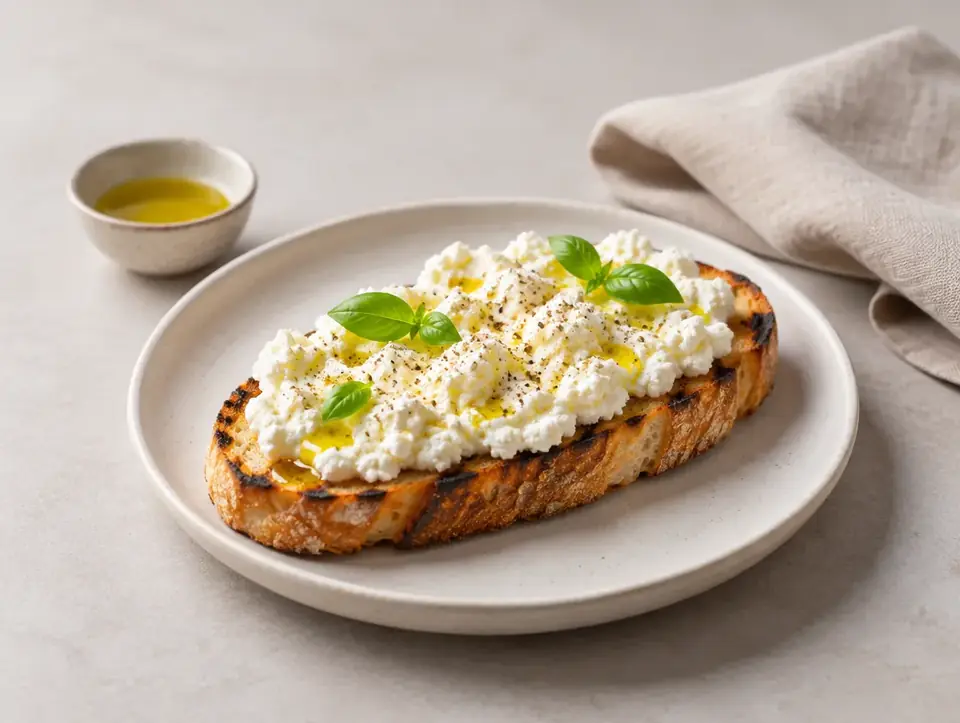
Ricotta Toast
Warm curds made in twenty minutes, spread thick on charred bread.
At a glance.
Ricotta Toast comes from Italy · Whey Cheeses and appears in The Breakfast Atlas, in the chapter Toast & Breakfast Breads. It serves 2, takes about 45 minutes, and uses 10 ingredients and 10 steps.
- Yield
- Serves 2
- Method
- Stovetop
- Time
- 45 minutes
Ingredients
Tap an ingredient to tick it off.
- For the fresh ricotta (makes about 300 g)
- For the toast
Method
-
Line a sieve with two layers of damp muslin or a thin clean tea towel and set it over a deep bowl. Damp cloth lets whey through where dry cloth absorbs the curd you are trying to keep.
-
Pour the milk and cream into a heavy pan with the salt and set it over medium heat. Stir occasionally with a spatula, reaching the base of the pan, so nothing scorches and taints the whole batch.
-
Bring the milk to 85–90°C (185–195°F). Without a thermometer, watch for a rim of small bubbles around the edge and steady steam; the surface should shiver but never break into a boil.
-
Take the pan off the heat, pour in the lemon juice and stir slowly twice — no more. Overstirring shears the curds into grains and you lose the soft, cloudlike texture that is the reason to make this at home.
-
Leave it undisturbed 10 minutes. The curd separates into pale glossy clouds floating in whey that has turned translucent and faintly greenish-yellow. If the whey still looks milky, add another tablespoon of lemon juice and wait 5 minutes.
-
Ladle the curds gently into the lined sieve and drain at room temperature: 15 minutes for a loose, spoonable ricotta, 30 for a firm spreadable one, an hour for something close to sliceable.
-
Keep the whey. It makes a better bread dough liquid than water and stands in for buttermilk in pancakes for about a week in the fridge.
-
Grill or griddle the sourdough over high heat until it carries dark bars and the edges turn brittle, about 2 minutes a side. Rub the hot surface once with the cut garlic and brush with olive oil.
-
Spoon the ricotta on in rough heaps and spread it lightly with the back of the spoon, keeping it about 1 cm thick. Leave the surface ridged rather than smooth; the ridges are where honey pools.
-
Finish one way or the other: honey and cracked pepper for sweet, or lemon zest, herbs, olive oil and flaky salt for savory. Serve within minutes, while the bread is still warm under the cool cheese.
Cook’s notes
- The technique
- Temperature and stillness make the curd. Below 80°C the proteins never coagulate properly and the yield is thin and grainy; taken to a boil they tighten and squeeze out fat, leaving something chalky. Hit 85–90°C (185–195°F), add the acid, then leave the pan entirely alone — every stir after the first two breaks the curd into smaller pieces that drain harder and eat drier.
- Make ahead
- Fresh ricotta keeps four days covered in the fridge and does not freeze well; it turns grainy on thawing. Make it the night before and drain it in the fridge overnight for a firmer cheese. Beat in a spoonful of cream before serving if it has stiffened past spreading.
- Troubleshooting
- No curds at all — the milk was ultra-pasteurized and cannot be persuaded to set; check the carton. Grainy, tight curd — the milk boiled, or you stirred after adding acid. Cheese weeping on the toast — under-drained; give it another 15 minutes in the sieve.
- Variations
- Whipped ricotta beaten with a tablespoon of olive oil until glossy makes a smoother spread. The Sicilian sweet version carries candied peel and shaved dark chocolate. For a spring savory plate, add broad beans, mint and shaved pecorino; in autumn, roasted grapes and thyme.
- Serve with
- Espresso for the sweet version; a glass of dry white or a Negroni sbagliato for the savory one at aperitivo hour. Prosciutto, a ripe fig or a slice of peach alongside. Keep the plate to two or three elements and no more. Made in full within this recipe — Twenty-Minute Fresh Ricotta. Also listed in the Component Index at the back.

Where it comes from
Ricotta is a by-product turned into a cheese. The name means recooked, and the traditional method reheats the whey left over from making pecorino or mozzarella until the remaining albumin proteins gather into soft white curds — an economy that made sense in every cheesemaking region of Italy and produced something arguably better than the cheese it salvaged. Sheep's-milk ricotta from Lazio and buffalo-milk ricotta from Campania both hold protected status, and Sicilian bakers have built an entire pastry tradition on the fresh sweetened curd, cannoli and cassata among it. Italians eat it with bread as a matter of course, sweetened with honey or salted and peppered, at colazione or as merenda in the afternoon. One honest caveat applies to the recipe below: curdling whole milk with lemon juice makes a fresh curd cheese, not true whey ricotta. It is quicker, richer and considerably better than anything sold in a tub, but a Roman cheesemaker would insist on calling it something else.
Ricotta Toast: quick answers
How long does Ricotta Toast take?
About 45 minutes.
How many does this Ricotta Toast recipe make?
This recipe serves 2.
Where does Ricotta Toast come from?
Ricotta is a by-product turned into a cheese. The name means recooked, and the traditional method reheats the whey left over from making pecorino or mozzarella until the remaining albumin proteins gather into soft white curds — an economy that made sense in every cheesemaking region of Italy and produced something arguably better than the cheese it salvaged. Sheep's-milk ricotta from Lazio and buffalo-milk ricotta from Campania both hold protected status, and Sicilian bakers have built an entire pastry tradition on the fresh sweetened curd, cannoli and cassata among it. Italians eat it with bread as a matter of course, sweetened with honey or salted and peppered, at colazione or as merenda in the afternoon. One honest caveat applies to the recipe below: curdling whole milk with lemon juice makes a fresh curd cheese, not true whey ricotta. It is quicker, richer and considerably better than anything sold in a tub, but a Roman cheesemaker would insist on calling it something else.
The same dish in another volume
More from Italy



More in Toast & Breakfast Breads
https://www.atlasserie.com/recipes/breakfast/ricotta-toast/