Britain · Wartime Store Cupboard · 53.77° N, 2.57° W
Beans on Toast
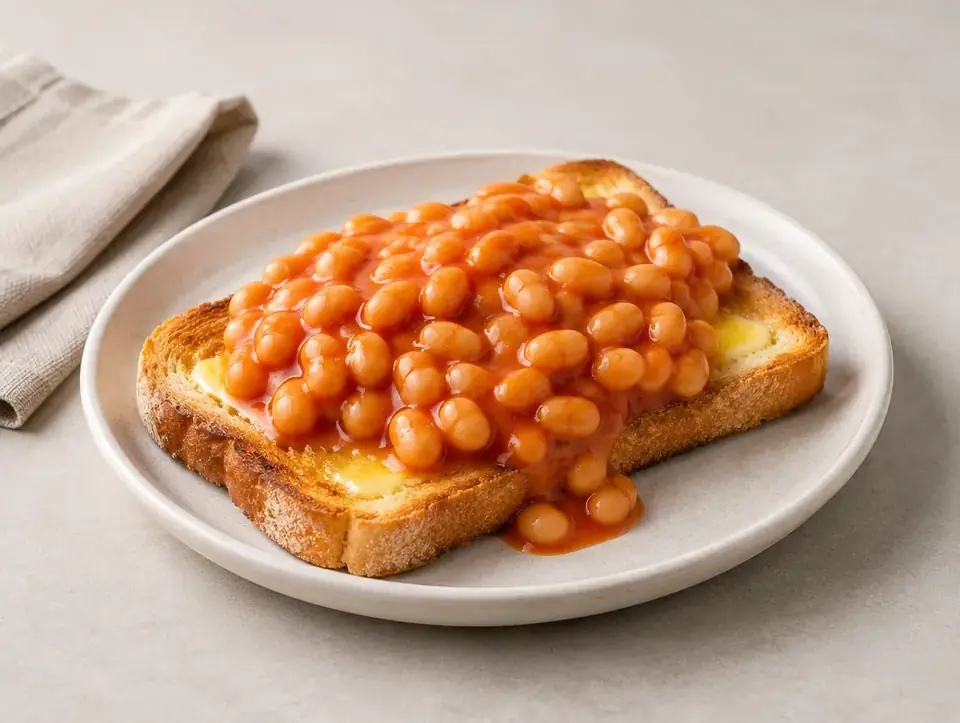
Haricots in treacle tomato sauce, piled on heavily buttered toast.
At a glance.
Beans on Toast comes from Britain · Wartime Store Cupboard and appears in The Breakfast Atlas, in the chapter Toast & Breakfast Breads. It serves 4, takes about 1 hr 45 min, and uses 17 ingredients and 10 steps.
- Yield
- Serves 4
- Method
- Stovetop
- Time
- 1 hr 45 min
Ingredients
Tap an ingredient to tick it off.
- For the baked beans (makes about 1 kg, serves 4–6)
- For the toast
Method
-
Drain the soaked beans, cover with fresh unsalted water and simmer 40–50 minutes, until the skins are tender but the beans still hold their shape. Salt now would toughen the skins; it goes in with the sauce.
-
Meanwhile warm the oil in a heavy pan and cook the onion over medium-low heat for 8 minutes, until soft and translucent rather than colored. Add the garlic and mustard powder for the final minute.
-
Stir in the tomato purée and cook 2 minutes, until it darkens from bright red to brick. This drives off the raw, faintly metallic edge that untreated purée otherwise carries into the sauce.
-
Add the chopped tomatoes, treacle, sugar, vinegar, paprika, salt and water. Bring to a simmer and cook uncovered 10 minutes so the flavors settle before the beans arrive.
-
Drain the beans and tip them into the sauce. Simmer very gently, uncovered, for 30–40 minutes, stirring every 10 minutes and scraping the base so nothing catches and turns bitter.
-
Judge the sauce by how it moves: it should coat a spoon and settle slowly around the beans, neither watery nor claggy. Loosen with a little bean cooking water if it tightens too far.
-
Taste and balance at the end. Treacle brings bitterness as well as sweetness, so you may want another teaspoon of vinegar for lift, or a further pinch of salt to pull the tomato forward.
-
Toast the bread until firm right through — a soft slice will be defeated within a minute. Butter it heavily and to the corners while it is still hot.
-
Spoon the beans over each slice, letting some spill onto the plate. Scatter the cheese over the hot beans if you are using it and give it 30 seconds to melt.
-
Finish with a heavy crack of pepper and a scatter of herbs. Eat at once, with a knife and fork, before the underside of the toast gives up and surrenders to the sauce.
Cook’s notes
- The technique
- Butter is structural here, not seasoning. A generous layer over hot toast sets into a water-resistant film that buys the bread three or four minutes against a wet sauce; skip it and the slice collapses before you sit down. Second, keep the beans at a bare simmer once they are in the sauce. A rolling boil splits the skins and turns the pan to purée, and the whole argument for a homemade version is beans that stay whole.
- Make ahead
- The beans are better on day two, once treacle and mustard have settled into each other. Cool quickly, refrigerate up to five days and reheat gently with a splash of water. They freeze three months in portions. Toast is the only element that must be made to order.
- Troubleshooting
- Beans still hard after an hour — old stock or hard water; add ¼ teaspoon bicarbonate of soda to the cooking water and keep going. Thin, sharp sauce — reduce further uncovered. Bitter, tarry taste — too much treacle; balance with sugar and vinegar rather than diluting.
- Variations
- The American ancestor bakes the beans for hours with salt pork and molasses in a covered pot. Add chopped chorizo or two smoked bacon rashers with the onion for a heartier pan. Beans on toast with a fried egg and a shake of Worcestershire sauce is the standard British upgrade.
- Serve with
- Strong tea, or instant coffee if the hour is honest. Grated Cheddar is close to compulsory in Britain, and brown sauce on the side is a real habit rather than a joke. A fried egg on top turns the plate into supper. Made in full within this recipe — Home-Baked Haricot Beans. Also listed in the Component Index at the back.

Where it comes from
Baked beans arrived in Britain as a luxury. Fortnum & Mason began selling H. J. Heinz's tinned beans in 1886 at a price that put them alongside imported delicacies, and for decades they were an American curiosity rather than a staple. Heinz opened British production in 1928, the price fell, and the beans took up permanent residence in the national store cupboard. The Second World War fixed them there: pork was dropped from the recipe under rationing, the tin was treated as an essential food, and beans supplied cheap protein when very little else did. Beans on toast as a named meal belongs to that period and to the austerity years after it, and it has stayed — student food, hangover food, the thing eaten standing up at ten at night. The recipe below reaches back past the tin to the dish's ancestor: haricot beans cooked slowly with tomato, molasses and mustard, a descendant of the Boston baked beans that Heinz was imitating in the first place.
Beans on Toast: quick answers
How long does Beans on Toast take?
About 1 hr 45 min.
How many does this Beans on Toast recipe make?
This recipe serves 4.
Where does Beans on Toast come from?
Baked beans arrived in Britain as a luxury. Fortnum & Mason began selling H. J. Heinz's tinned beans in 1886 at a price that put them alongside imported delicacies, and for decades they were an American curiosity rather than a staple. Heinz opened British production in 1928, the price fell, and the beans took up permanent residence in the national store cupboard. The Second World War fixed them there: pork was dropped from the recipe under rationing, the tin was treated as an essential food, and beans supplied cheap protein when very little else did. Beans on toast as a named meal belongs to that period and to the austerity years after it, and it has stayed — student food, hangover food, the thing eaten standing up at ten at night. The recipe below reaches back past the tin to the dish's ancestor: haricot beans cooked slowly with tomato, molasses and mustard, a descendant of the Boston baked beans that Heinz was imitating in the first place.
More from United Kingdom



More in Toast & Breakfast Breads


https://www.atlasserie.com/recipes/breakfast/beans-on-toast/