United States · From Soda Fountain to Kiosk · 39.87° N, 98.73° W
Yogurt Parfait
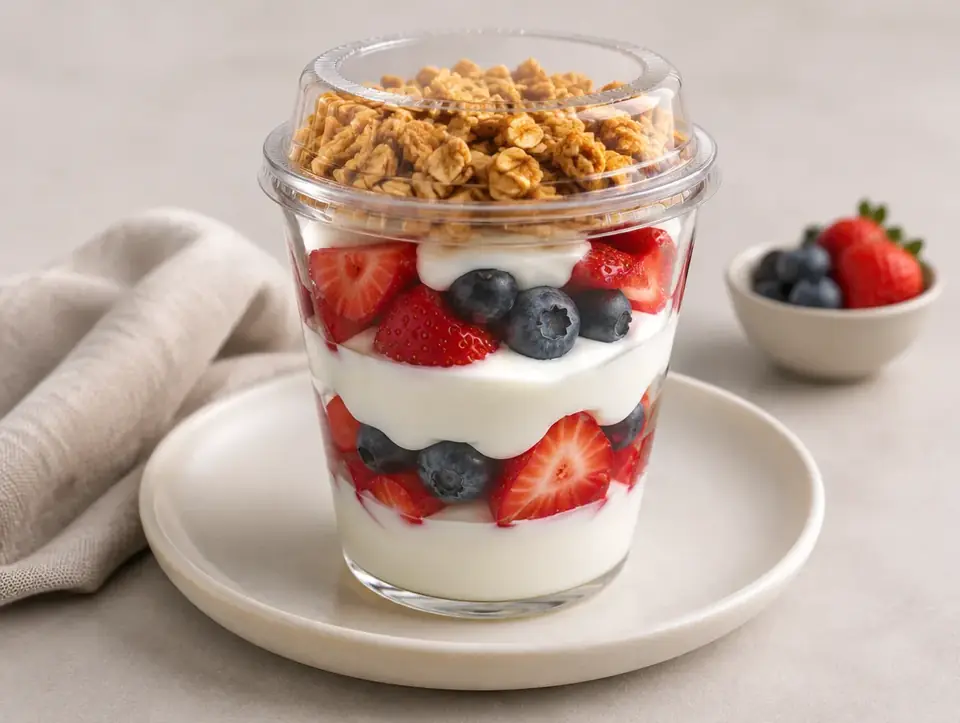
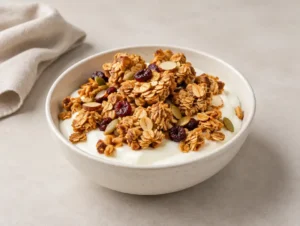
Layered yogurt and berries, with granola sealed to stay crisp.
At a glance.
Yogurt Parfait comes from United States · From Soda Fountain to Kiosk and appears in The Breakfast Atlas, in the chapter Yogurt, Fruit & Cold Bowls. It serves 2, takes about 50 minutes, and uses 9 ingredients and 10 steps.
- Yield
- Serves 2
- Method
- Stovetop
- Time
- 50 minutes
Ingredients
Tap an ingredient to tick it off.
- For the sealed granola crunch (makes about 125 g)
Method
-
Set a heatproof bowl over a pan holding 3 cm of barely simmering water. Add the white chocolate and take the bowl off while a third of it is still lumpy, stirring until the residual heat carries it smooth. Overheated white chocolate seizes into a grainy paste.
-
Tip in the granola and the flaky salt and turn it over with a spatula until every cluster looks dulled rather than glossy. You are aiming for a thin film, not a coating that welds the pieces together.
-
Spread it in a single layer on baking parchment and leave 20 minutes somewhere cool and dry. Do not use the refrigerator: condensation on a cold surface is the exact thing you are guarding against.
-
Meanwhile, whisk the yogurt with the honey, vanilla and fine salt for no more than 30 seconds. It slackens, then tightens again as the honey disperses. Whisk longer and the gel network shears and the layers will bleed.
-
Crush 75 g of the berries roughly with a fork and the caster sugar, and leave them 5 minutes to give up juice. Keep the remaining berries whole and dry.
-
Chill two straight-sided glasses for 10 minutes. Cold glass keeps the yogurt firm enough to hold a clean horizontal line rather than slumping down the sides.
-
Spoon a quarter of the yogurt into each glass and tap the base once on the worktop to level it. Yogurt goes first so the wettest layer sits at the bottom, farthest from the crunch you will add last.
-
Scatter half the sealed crunch over, pressing very lightly with the back of a teaspoon so it beds in without sinking, then spoon the crushed berries on top.
-
Add the remaining yogurt, smooth the surface, and stop here if the parfaits are going into the refrigerator. Built this far they hold an hour without softening.
-
At the table, pile on the whole berries and the reserved crunch and thread a little more honey over. Eat within ten minutes, while the top layer still cracks under the spoon.
Cook’s notes
- The technique
- Crispness is a humidity problem. Granola sits at a water activity of roughly 0.3, yogurt at almost 0.99, and moisture moves down that gradient until the two equalize — which takes about twenty minutes for bare oats, at which point they turn leathery. Fat is hydrophobic and slows the crossing, so a thin set film of cocoa butter or coconut oil buys an hour. Layer order and last-minute topping buy the rest.
- Make ahead
- The sweetened yogurt base keeps three days refrigerated. The sealed crunch keeps two weeks in an airtight jar at room temperature — never chilled, since condensation defeats the seal. Crushed berries hold two days. Assemble no more than an hour ahead, and add the top crunch at the table.
- Troubleshooting
- Soggy granola — it went in naked or too early; seal it and top at the last moment. Layers bleeding into a pink smear — the yogurt was over-whisked or too thin, so strain it 30 minutes in muslin. A single granola slab — the chocolate was too warm, so cool it slightly and spread the clusters apart.
- Variations
- A coffee parfait folds 1 tsp instant espresso powder into the honey and swaps the berries for chopped dates. A Turkish version uses sour cherry preserve in place of the crushed fruit and pistachios in the crunch. For a nod to the French original, freeze the assembled glasses 40 minutes for something close to a semifreddo.
- Serve with
- Serve with long-handled spoons that reach the base, and strong black coffee. A slice of buttered brioche alongside turns it from a snack into a proper sit-down breakfast. Made in full within this recipe — Sealed Granola Crunch. Also listed in the Component Index at the back.

Where it comes from
The word arrived from France meaning something else entirely. A French parfait is frozen: a syrup-and-yolk base whipped with cream and set still in a tall mold, no churning, a dessert Escoffier and his contemporaries recorded in coffee, praline and vanilla. Parfait translates as flawless, and the name referred to the smoothness a still-frozen custard achieves. Crossing the Atlantic, it attached itself to the soda fountain instead. By the early twentieth century an American parfait meant ice cream, syrup and whipped cream built in a narrow footed glass designed to display the strata — the glass outlived the recipe. Diners filled it with pudding, and through the low-fat decades of the 1970s and 1980s it filled with yogurt. Fast-food counters and airport kiosks made that version universal in the 1990s, sold in a lidded cup with the granola bagged separately or perched on top, dry until the moment of opening. That separation is not packaging convenience. It is the entire technical problem of the dish, solved.
Yogurt Parfait: quick answers
How long does Yogurt Parfait take?
About 50 minutes.
How many does this Yogurt Parfait recipe make?
This recipe serves 2.
Where does Yogurt Parfait come from?
The word arrived from France meaning something else entirely. A French parfait is frozen: a syrup-and-yolk base whipped with cream and set still in a tall mold, no churning, a dessert Escoffier and his contemporaries recorded in coffee, praline and vanilla. Parfait translates as flawless, and the name referred to the smoothness a still-frozen custard achieves. Crossing the Atlantic, it attached itself to the soda fountain instead. By the early twentieth century an American parfait meant ice cream, syrup and whipped cream built in a narrow footed glass designed to display the strata — the glass outlived the recipe. Diners filled it with pudding, and through the low-fat decades of the 1970s and 1980s it filled with yogurt. Fast-food counters and airport kiosks made that version universal in the 1990s, sold in a lidded cup with the granola bagged separately or perched on top, dry until the moment of opening. That separation is not packaging convenience. It is the entire technical problem of the dish, solved.
More from United States
More in Yogurt, Fruit & Cold Bowls
https://www.atlasserie.com/recipes/breakfast/yogurt-parfait/