United States · Grand Forks, 1893 · 39.87° N, 98.73° W
Cream of Wheat
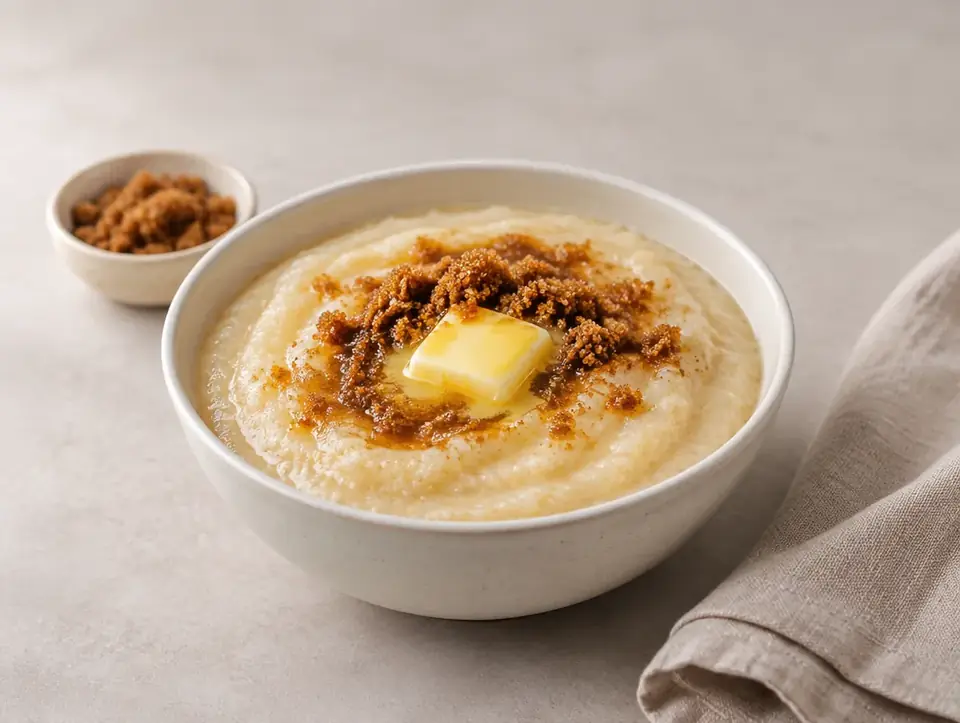
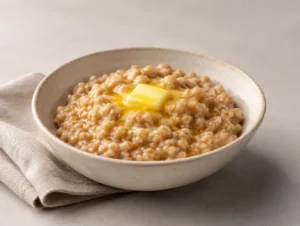
The American box-brand bowl: silky farina, melting butter, dark brown sugar.
At a glance.
Cream of Wheat comes from United States · Grand Forks, 1893 and appears in The Breakfast Atlas, in the chapter Oats, Grains & Porridge. It serves 2, takes about 15 minutes, and uses 8 ingredients and 9 steps.
- Yield
- Serves 2
- Method
- Stovetop
- Time
- 15 minutes
Ingredients
Tap an ingredient to tick it off.
Method
-
Measure the farina into a jug and have a balloon whisk in your hand before the pan goes on the heat. The whole technique happens inside thirty seconds, with no time to fetch anything.
-
Combine the milk, water and salt in a heavy saucepan over medium heat. Cutting the milk with a third water raises the scorching point and gives a cleaner flavor than milk alone.
-
Heat until the surface trembles and small bubbles ring the edge, about 80°C. Do not let it boil, since milk climbs the sides of a pan without warning.
-
Rain the farina in from the jug in the thinnest possible stream, whisking continuously in one direction. A dumped spoonful hydrates on the outside and stays dry and floury within.
-
If you are nervous, use the slurry route instead: whisk the farina into 120 ml of the cold milk first, then pour that in. It is foolproof and costs one extra bowl.
-
Keep whisking as the pan thickens, which happens fast, then drop the heat to low and switch from the whisk to a wooden spoon for the rest of the cooking.
-
Cook three to four minutes at a bare simmer, stirring constantly and scraping the corners. It is ready when a channel drawn across the pan base holds for a second before closing.
-
Off the heat, beat in half the butter until it vanishes and the surface turns glossy. Rest two minutes, then loosen with the cold milk to a texture that pours slowly rather than mounds.
-
Spoon into warmed bowls, press a shallow well into each, drop in the remaining butter and pile the brown sugar on top so it half melts into a dark syrup. Grate over nutmeg.
Cook’s notes
- The technique
- Lumps form for one reason: farina particles that touch while wetting bond into a shell of gelatinized starch around a dry core, and no later whisking will open it. Two methods prevent it. Rain the grain into hot liquid in a stream thin enough that particles never meet, whisking hard; or disperse it in cold liquid first, where starch cannot gelatinize. The second is more reliable.
- Make ahead
- Farina is fast enough that little is saved by making it ahead, but it can be cooked, cooled and refrigerated three days. It sets very firm; reheat with 80 ml milk per portion over low heat, whisking. Cold set farina can also be sliced and fried in butter.
- Troubleshooting
- Lumps — the grain went in too fast; push the finished porridge through a sieve to rescue it and use the slurry method next time. Thin and soupy — under-cooked, or the instant grade was used. Skin on top — cover the pan during the rest, or stir the skin back while soft.
- Variations
- A Southern bowl swaps the brown sugar for a spoonful of sorghum syrup. Cream of Wheat with a beaten egg whisked in during the last minute makes the richer, custard-textured version once common in American diners. For chocolate farina, whisk 2 tbsp cocoa into the dry grain first. Any of these still wants the well of butter pressed into the center.
- Serve with
- Serve with buttered toast cut into fingers for dipping, and coffee or a glass of cold milk. In the South the butter dish and a bowl of extra brown sugar stay on the table so each bowl can be adjusted.

Where it comes from
The dish began as a by-product nobody wanted. At the Diamond Milling Company in Grand Forks, North Dakota, the middlings left after wheat was milled for white flour were usually sold as animal feed. In 1893 the head miller, Tom Amidon, who had been cooking those middlings at home for his own family, persuaded the owners to package and sell them. The company sent ten cases along with a carload of flour to a broker in New York and, by the account the brand has always given, the broker wired back at once for more. Cream of Wheat outgrew the mill within a few years and production moved to Minneapolis. The box carried a Black chef from the turn of the century onward, a caricature at first; from 1925 the image drew on a photograph of Frank L. White, a Chicago waiter whose grave went unmarked until 2007. B&G Foods retired the figure in 2020. In the American South the bowl is nursery and convalescent food, eaten with butter melting into a well of dark brown sugar. The same grain travels under other names — farina, fine semolina, mannagryn, fine sooji — and Recipe 57 cooks it the way northern Europe and the Levant do, looser and spiced rather than sweetened.
Cream of Wheat: quick answers
How long does Cream of Wheat take?
About 15 minutes.
How many does this Cream of Wheat recipe make?
This recipe serves 2.
Where does Cream of Wheat come from?
The dish began as a by-product nobody wanted. At the Diamond Milling Company in Grand Forks, North Dakota, the middlings left after wheat was milled for white flour were usually sold as animal feed. In 1893 the head miller, Tom Amidon, who had been cooking those middlings at home for his own family, persuaded the owners to package and sell them. The company sent ten cases along with a carload of flour to a broker in New York and, by the account the brand has always given, the broker wired back at once for more. Cream of Wheat outgrew the mill within a few years and production moved to Minneapolis. The box carried a Black chef from the turn of the century onward, a caricature at first; from 1925 the image drew on a photograph of Frank L. White, a Chicago waiter whose grave went unmarked until 2007. B&G Foods retired the figure in 2020. In the American South the bowl is nursery and convalescent food, eaten with butter melting into a well of dark brown sugar. The same grain travels under other names — farina, fine semolina, mannagryn, fine sooji — and Recipe 57 cooks it the way northern Europe and the Levant do, looser and spiced rather than sweetened.
More from United States




More in Oats, Grains & Porridge


https://www.atlasserie.com/recipes/breakfast/cream-of-wheat/