Mexico · Fresh Chile Sausage · 23.91° N, 102.22° W
Chorizo
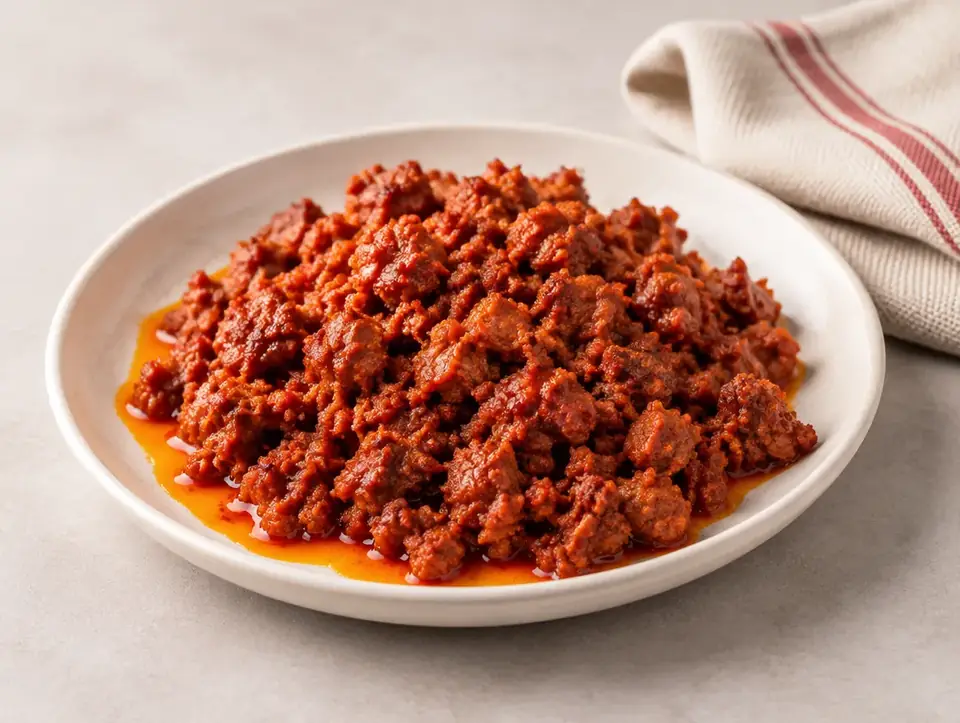
Fresh Mexican chorizo, vinegary and brick-red, fried until the fat runs orange.
At a glance.
Chorizo comes from Mexico · Fresh Chile Sausage and appears in The Breakfast Atlas, in the chapter Bacon, Sausage & Hash. It serves 4, takes about 45 minutes, and uses 20 ingredients and 10 steps.
- Yield
- Serves 4
- Method
- Stovetop
- Time
- 45 minutes
Ingredients
Tap an ingredient to tick it off.
- For the chile seasoning paste
- For the sausage
- To cook and serve
Method
-
Toast the dried chillies on a dry comal or heavy pan over medium heat, 20–30 seconds a side, pressing them flat, until they smell sweet and turn pliable. Any blackening makes the whole batch bitter.
-
Cover the toasted chillies with just-boiled water and soak 20 minutes, weighted under a saucer so they stay submerged and soften evenly right through to the stem end.
-
Lift out the chillies, reserving 120 ml of the soaking water, and blend them with that water, the vinegar, garlic and every remaining paste ingredient until completely smooth — 2 minutes at least. Pass through a sieve if your blender is not powerful.
-
Grind the chilled pork through the 6 mm plate of a mincer into a cold bowl. Without a mincer, pulse in small batches in a processor to a coarse chop, never a paste.
-
Add the salt, the sugar and all of the chile paste to the ground pork and mix with a gloved hand for 60 seconds, until the meat is uniformly brick-red and beginning to cling to itself.
-
Cover and refrigerate 12–24 hours. The vinegar and salt firm the texture and the chillies lose their raw edge; chorizo cooked immediately tastes thin and sharp.
-
Fry a teaspoon of the mixture, taste it cooled and adjust for salt and acid. Handle the raw pork on a dedicated board and wash hands and surfaces afterwards.
-
To cook, set a heavy pan over medium-high heat, crumble in the chorizo in loose clumps and leave it 3 minutes without touching it, so a browned face forms.
-
Break it up with a wooden spoon and continue frying 6–8 minutes, until the fat runs orange, the meat is crumbly and the edges are crisp, to an internal 71°C (160°F).
-
Tilt the pan and spoon off all but 1 tbsp of the fat. Either serve as it is in warm tortillas with onion, coriander and lime, or pour in the beaten eggs and fold them through the meat off the heat.
Cook’s notes
- The technique
- The paste is the recipe. Toasting the chillies converts starch and sugar in the flesh into the toasted, raisiny notes that define good chorizo, but the window is narrow — thirty seconds too long and the pod scorches, releasing bitter compounds that no amount of sugar or vinegar will mask. Toast until the chile flexes rather than snaps and smells faintly of dried fruit, then get it straight into the water.
- Make ahead
- The mixture is better on day two and holds four days refrigerated; it freezes for three months in 200 g portions. The chile paste alone keeps a week in the fridge and freezes in an ice-cube tray, ready for beans, stews and marinades.
- Troubleshooting
- Bitter and harsh — the chillies scorched during toasting; start over, it cannot be corrected. Watery in the pan — cooked from a mix that had not chilled and set. Greasy rather than crisp — the fat was not poured off before serving.
- Variations
- Chorizo verde from Toluca replaces the dried chillies with tomatillos, serrano, coriander and pumpkin seed. Longaniza is the same seasoning in longer, thinner links. For a poultry version, use chicken thigh with 15% added pork fat or olive oil, cooked to 74°C (165°F). Soy chorizo, made with textured soy protein, takes the same paste.
- Serve with
- With scrambled eggs and refried beans, or spooned over crisp tortilla for chilaquiles. Queso fresco, salsa verde and lime. Café de olla, or a cold Mexican lager. Sliced avocado and pickled red onion round out the plate. Made in full within this recipe — Mexican Chorizo Seasoning Paste. Also listed in the Component Index at the back.

Where it comes from
Two sausages share one name and are not interchangeable. Both descend from Iberian pork sausage and both turned red for the same reason — capsicum crossing the Atlantic after 1492, drying and grinding into pimentón, and being adopted through Extremadura and La Vera by the seventeenth century. Spanish chorizo took the curing route: coarse pork and back fat, pimentón dulce or picante, garlic and salt, stuffed into casings and hung in cool air for weeks until firm. It is a finished food, sliced and eaten as it is, or added to stews where it perfumes the pot. Mexican chorizo went the opposite way. Colonists brought the sausage; Mexican cooks rebuilt its seasoning around native dried chillies — guajillo, ancho, chipotle — and around vinegar, and kept it fresh rather than dried. It is sold raw, squeezed from its casing and cooked until it renders. Toluca, in the State of Mexico, is its acknowledged capital, known both for the red and for chorizo verde, colored with tomatillo, coriander and pumpkin seed. What follows is the Mexican fresh version, built from whole dried chillies.
Chorizo: quick answers
How long does Chorizo take?
About 45 minutes.
How many does this Chorizo recipe make?
This recipe serves 4.
Where does Chorizo come from?
Two sausages share one name and are not interchangeable. Both descend from Iberian pork sausage and both turned red for the same reason — capsicum crossing the Atlantic after 1492, drying and grinding into pimentón, and being adopted through Extremadura and La Vera by the seventeenth century. Spanish chorizo took the curing route: coarse pork and back fat, pimentón dulce or picante, garlic and salt, stuffed into casings and hung in cool air for weeks until firm. It is a finished food, sliced and eaten as it is, or added to stews where it perfumes the pot. Mexican chorizo went the opposite way. Colonists brought the sausage; Mexican cooks rebuilt its seasoning around native dried chillies — guajillo, ancho, chipotle — and around vinegar, and kept it fresh rather than dried. It is sold raw, squeezed from its casing and cooked until it renders. Toluca, in the State of Mexico, is its acknowledged capital, known both for the red and for chorizo verde, colored with tomatillo, coriander and pumpkin seed. What follows is the Mexican fresh version, built from whole dried chillies.
More from Mexico

More in Bacon, Sausage & Hash
 Crispy BaconBritain & United States · Cured Pork
 Breakfast Sausage LinksUnited States · Fresh Cased Sausage
 Sausage PattiesAmerican South & Midwest · Country Sausage
 Turkey Sausage PattiesUnited States · Lean Breakfast Meats
 Hash BrownsUnited States · Diner Cooking
 Home FriesUnited States · Diner Griddle
https://www.atlasserie.com/recipes/breakfast/chorizo/