Iceland · Skyr and the Nordic Cultured Milks · 65.08° N, 18.77° W
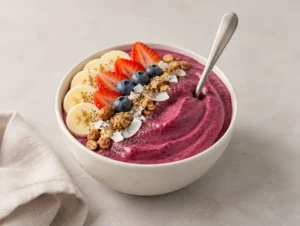
Berry Yogurt Bowl
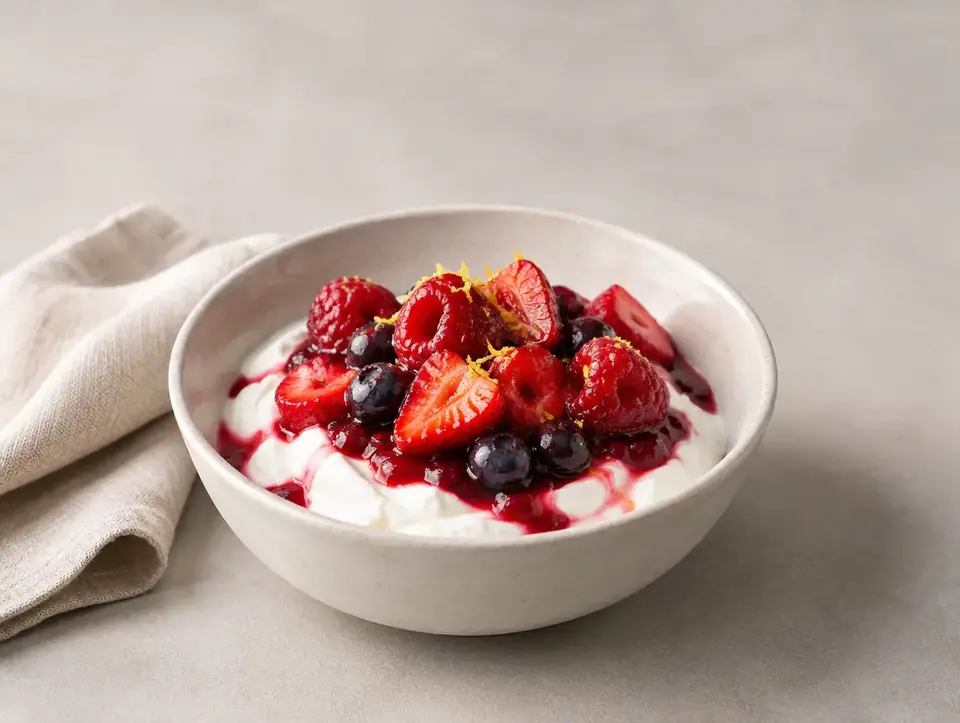
Icelandic skyr under berries macerated with sugar and lemon.
At a glance.
Berry Yogurt Bowl comes from Iceland · Skyr and the Nordic Cultured Milks and appears in The Breakfast Atlas, in the chapter Yogurt, Fruit & Cold Bowls. It serves 2, takes about 50 minutes, and uses 9 ingredients and 10 steps.
- Yield
- Serves 2
- Method
- No-cook
- Time
- 50 minutes
Ingredients
Tap an ingredient to tick it off.
- For the quick-macerated berries
Method
-
Tip the berries into a bowl, keeping a third of them back whole. Add the sugar, lemon juice, zest and salt to the larger portion and turn them over twice with a spoon.
-
Crush about a quarter of the sugared berries against the side of the bowl with a fork, just enough to release juice and give the syrup its color. Do not mash the rest.
-
Leave 20 minutes at room temperature. Sugar draws juice out through the skins by osmosis and dissolves into it, so the fruit makes its own thin syrup without a pan ever being used.
-
Do not let them stand past 45 minutes. Beyond that the cell walls collapse, the berries go slack and pale, and what you gain in juice you lose in bite.
-
Meanwhile, turn the skyr into a bowl and beat in the milk a tablespoon at a time with a spatula, folding rather than whisking, until it drops heavily from the spoon.
-
Judge it by the spoon test: it should fall in a thick ribbon that holds for a second before sinking. Skyr is stiff enough straight from the tub to drag rather than pool, and undiluted it fights the fruit.
-
Add the vanilla if you are using it, and taste. Skyr is sharper than Greek yogurt; if it reads too lean, a further tablespoon of cream rounds it without making it sweet.
-
Spoon the skyr into two wide, shallow bowls and push it out to the rim with the back of the spoon, leaving a shallow well in the middle.
-
Spoon the macerated berries and all their syrup into the well, then scatter the reserved whole berries over so there are two textures in every mouthful.
-
Finish with the toasted rye flakes and a thread of honey, and serve cold. Add the rye at the last moment, or it softens in the syrup within a couple of minutes.
Cook’s notes
- The technique
- Skyr behaves differently from Greek yogurt and the difference is fat. Greek yogurt is usually strained from whole milk, so butterfat coats the protein network and it stays glossy and slick on the spoon. Skyr is strained from skimmed milk to a similar dryness, so the same protein is there with nothing to lubricate it: it eats stiff, clean and slightly chalky, and it breaks into short curds when stirred hard. Loosen it with a little milk, fold rather than whisk, and let acid rather than sugar carry the flavor.
- Make ahead
- Macerate the berries up to two hours ahead and refrigerate; they hold their shape better cold. Loosening the skyr can be done the night before and kept covered, and toasted rye flakes keep a fortnight airtight. Do not assemble in advance — the syrup weeps into the skyr and turns it gray-pink within the hour.
- Troubleshooting
- Berries pale and collapsed — macerated too long, so keep to twenty minutes. A dry, pasty bowl — the skyr was not loosened; add milk a spoon at a time. Grainy skyr — beaten too hard with a whisk, which shears the curd. Frozen berries, if you use them, must be macerated from frozen or they will slump.
- Variations
- In Iceland skyr is often served plain with cold milk poured over and a spoon of sugar, which is worth trying once. A Finnish bowl uses viili and cloudberry jam. A Norwegian version leans on tettemelk with lingonberries, which are tart enough to need more sugar than these berries do.
- Serve with
- Serve with a slice of dense rye bread and butter, and strong black coffee — the Nordic breakfast in full. A boiled egg alongside makes it a working breakfast rather than a light one. Made in full within this recipe — Quick-Macerated Berries. Also listed in the Component Index at the back.

Where it comes from
Skyr arrived in Iceland with Norse settlers in the ninth and tenth centuries and stayed, long after it faded from mainland Scandinavia; it appears in the medieval sagas as ordinary farm food, kept in barrels and carried on journeys. Technically it is not a yogurt at all but a fresh acid-set cheese: skimmed milk soured with an heirloom culture and a trace of rennet, then strained hard, roughly four liters of milk to a kilo of skyr. The sour whey drained off, mysa, was itself valuable — Icelandic households stored meat and blood sausage in it through the winter, a preservation method that survives in the pickled dishes of Þorrablót. Because it begins skimmed, skyr is close to fat-free and carries around eleven grams of protein per hundred. Its Nordic relatives take other forms: Norwegian kulturmelk and the older tettemelk, and Finnish viili, ropy and stretching under a fine surface mold. The berries are the other half of the tradition — bilberry, lingonberry and cloudberry, picked wild under a right to roam.
Berry Yogurt Bowl: quick answers
How long does Berry Yogurt Bowl take?
About 50 minutes.
How many does this Berry Yogurt Bowl recipe make?
This recipe serves 2.
Where does Berry Yogurt Bowl come from?
Skyr arrived in Iceland with Norse settlers in the ninth and tenth centuries and stayed, long after it faded from mainland Scandinavia; it appears in the medieval sagas as ordinary farm food, kept in barrels and carried on journeys. Technically it is not a yogurt at all but a fresh acid-set cheese: skimmed milk soured with an heirloom culture and a trace of rennet, then strained hard, roughly four liters of milk to a kilo of skyr. The sour whey drained off, mysa, was itself valuable — Icelandic households stored meat and blood sausage in it through the winter, a preservation method that survives in the pickled dishes of Þorrablót. Because it begins skimmed, skyr is close to fat-free and carries around eleven grams of protein per hundred. Its Nordic relatives take other forms: Norwegian kulturmelk and the older tettemelk, and Finnish viili, ropy and stretching under a fine surface mold. The berries are the other half of the tradition — bilberry, lingonberry and cloudberry, picked wild under a right to roam.
More in Yogurt, Fruit & Cold Bowls
https://www.atlasserie.com/recipes/breakfast/berry-yogurt-bowl/