Central Europe · The Domestic Rye · 50.00° N, 10.00° E
Light Rye Bread
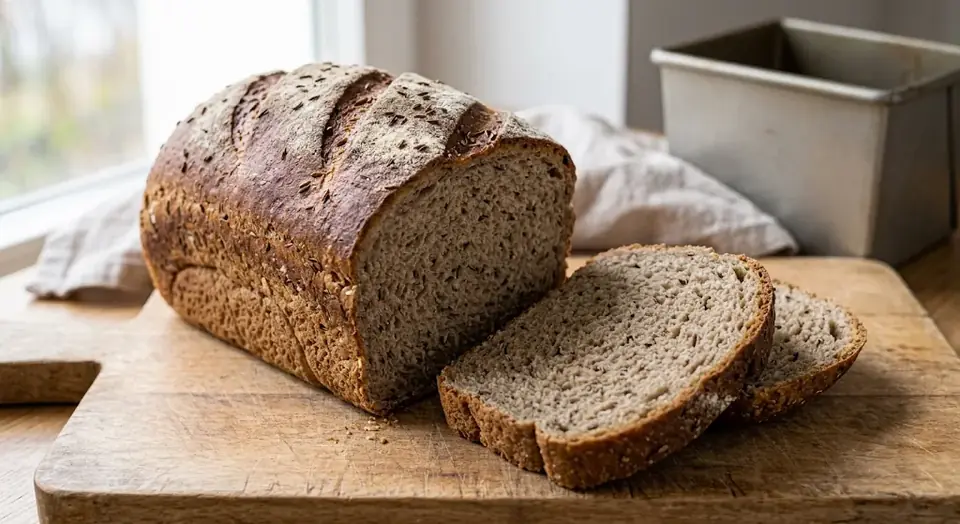
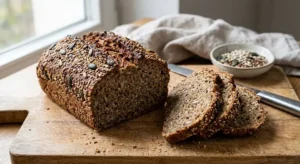
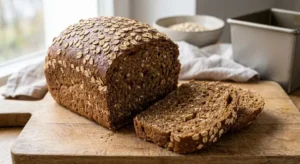
A quarter rye, soft-crumbed and caraway-scented, cut for cold meat.
At a glance.
Light Rye Bread comes from Central Europe · The Domestic Rye and appears in The Bread Atlas, in the chapter Everyday Loaves & Sandwich Breads. It makes 1 loaf, takes about 16 hours, and uses 11 ingredients and 11 steps.
- Yield
- Makes 1 loaf
- Method
- Oven 210°C / 410°F
- Time
- 16 hours
Ingredients
Tap an ingredient to tick it off.
- Pâte Fermentée (Old Dough)
- The Dough
Method
-
Make the old dough 12–16 hours ahead: mix its flour, water, salt and the trace of yeast into a stiff little ball, knead 2 minutes, and leave covered at 18–20°C. It is ready when domed, honeycombed inside and smelling of beer and apples.
-
Tear the old dough into a dozen pieces and drop them into the water at 30°C. Leave 5 minutes to soften, then whisk to break it up. Cold, undispersed old dough leaves gray streaks through the finished crumb.
-
Add both flours and mix to a shaggy dough. Rest 20 minutes, then add the oil, salt, caraway and yeast and knead 6 minutes. Rye needs less mixing than wheat, not more. Finish the mix at 26°C.
-
Stop when the dough is smooth and cohesive but still tacky to the fingertip. It will feel slack and slightly gluey and will never reach the bouncy resilience of a white dough — that is the rye, not a fault in your kneading.
-
Bulk ferment 75 minutes at 26°C, folding once at 40 minutes. Wet hands rather than floured ones for the fold; rye sticks to dry skin and to a floured bench, and every gram of extra flour tightens the crumb.
-
Turn out onto a lightly floured surface, press flat, and rest 10 minutes. Roll into a firm cylinder, sealing the seam hard, and set it in a greased 900 g tin. Rye dough has little elastic memory, so shape it in one confident movement rather than several corrections.
-
Prove 45–55 minutes at 26°C. Rye ferments faster than wheat and gives less warning, so test early: the dough should clear the rim by 1.5 cm and take a fingertip dent that fills back only halfway.
-
Heat the oven to 210°C / 410°F with a stone or heavy tray and a steam pan. Brush the loaf with water and slash it three times across the top on the diagonal, 8 mm deep, cutting decisively.
-
Load, add a cup of boiling water to the steam pan, and bake 15 minutes with steam. Vent the oven, drop to 195°C / 380°F, and bake 25–30 minutes more, until the crust is a deep russet.
-
Bake to an internal 96°C. Rye starch gelatinizes at a higher temperature than wheat starch and sets later, so an underbaked rye stays sticky in the middle no matter how long it cools afterward.
-
Cool on a rack for at least 4 hours, and preferably overnight. Rye continues to firm and stabilize long after wheat has finished; cut at an hour, the crumb will smear on the blade and taste raw.
Cook’s notes
- To serve and keep
- Cut 8 mm thick for cold cuts, smoked fish, sharp mustard and dill pickles, or spread thickly with salted butter alongside soup. It is a poor bread for sweet toppings. Store cut-side down in paper and never refrigerate it.

Where it comes from
Rye is the grain of the cold margins. It germinates at lower temperatures than wheat, tolerates acid and sandy soils, and survives winters that would kill a wheat crop, which is why it fed the plains of Poland, the Baltic, eastern Germany and Russia for centuries while southern Europe ate wheat. Where wheat could be afforded, rye retreated: as nineteenth-century transport and cheap American and Russian grain reached western markets, rye slid down the scale from staple to specialty. What survived in the middle of the continent, and traveled with emigrants to Ohio and Wisconsin and the Canadian prairies, was the light rye — a wheat-dominated dough carrying a quarter or so of rye for flavor, caraway when the household liked it, and enough gluten to bake tall and slice for a sandwich. It occupies a useful position. Pure rye is a different craft, needing acid and long bakes; a light rye teaches the grain's character without demanding the discipline that a hundred percent loaf imposes.
Light Rye Bread: quick answers
How long does Light Rye Bread take?
About 16 hours.
How many does this Light Rye Bread recipe make?
This recipe makes 1 loaf.
Where does Light Rye Bread come from?
Rye is the grain of the cold margins. It germinates at lower temperatures than wheat, tolerates acid and sandy soils, and survives winters that would kill a wheat crop, which is why it fed the plains of Poland, the Baltic, eastern Germany and Russia for centuries while southern Europe ate wheat. Where wheat could be afforded, rye retreated: as nineteenth-century transport and cheap American and Russian grain reached western markets, rye slid down the scale from staple to specialty. What survived in the middle of the continent, and traveled with emigrants to Ohio and Wisconsin and the Canadian prairies, was the light rye — a wheat-dominated dough carrying a quarter or so of rye for flavor, caraway when the household liked it, and enough gluten to bake tall and slice for a sandwich. It occupies a useful position. Pure rye is a different craft, needing acid and long bakes; a light rye teaches the grain's character without demanding the discipline that a hundred percent loaf imposes.
More from Europe






More in Everyday Loaves & Sandwich Breads
https://www.atlasserie.com/recipes/bread/light-rye-bread/