United States · The Canned Purée · 39.87° N, 98.73° W
Pumpkin Bread
Dense, orange and heavily spiced, moist for the better part of a week.
At a glance.
Pumpkin Bread comes from United States · The Canned Purée and appears in The Bread Atlas, in the chapter Quick Breads & Batter Loaves. It makes 1 loaf, is made by oven 175°c / 350°f, and uses 16 ingredients and 11 steps.
- Yield
- Makes 1 loaf
- Method
- Oven 175°C / 350°F, 2¼ hours including cooling
Ingredients
Tap an ingredient to tick it off.
- Pumpkin Spice Blend
- The Loaf
Method
-
Mix the spice blend first: whisk all five spices in a small bowl and tip the surplus into a jar, where it keeps three months. Grinding your own cinnamon and nutmeg makes a real difference here, because ready-ground spice loses its volatile oils within a season and this loaf leans on them entirely.
-
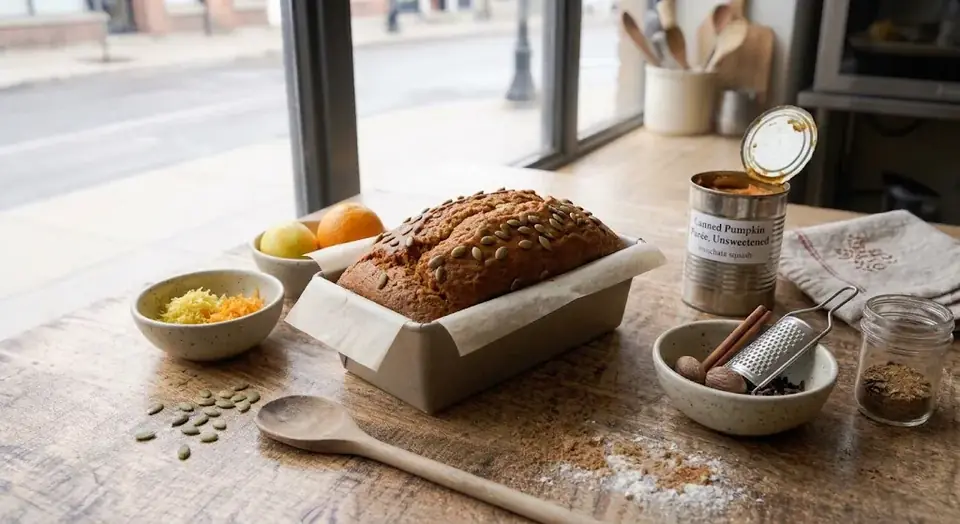
Read the label on the tin before you open it. Pumpkin purée is cooked squash and nothing else. Pumpkin pie filling is purée already sweetened, spiced and sometimes thickened, and using it here doubles the sugar and destroys the balance. They sit next to each other on the shelf and look identical.
-
Bring the oven up to 175°C / 350°F with a low rack, and line a greased 900 g loaf tin. If you are using a homemade purée from a roasted squash, spread it in a sieve for 30 minutes and discard the water that drains, or the loaf will not set.
-
Whisk the oil, both sugars and the eggs in a wide bowl for a minute, until the mixture is smooth and slightly thickened. Dark brown sugar is here for its molasses, which supplies acidity for the soda as well as color and a faint bitterness against the spice.
-
Beat in the pumpkin purée until the batter is a uniform deep orange with no streaks. It will be thick and hold soft peaks off the whisk — pumpkin brings a great deal of water but binds it in fibre and pectin, which is why this loaf stays moist rather than turning wet.
-
Whisk the flour, spice blend, soda, baking powder and salt together in a second bowl. The 10 g of spice looks excessive against 250 g of flour. It is not — pumpkin's own flavor is mild and vegetal, and without a heavy hand the loaf tastes of very little.
-
Fold the dry into the wet with a spatula in about 15 strokes, stopping while a few floury patches remain visible; they will hydrate in the tin. This is the muffin method, and its whole logic is that the flour never gets stirred long enough to build gluten.
-
Scrape into the tin, level the top and scatter the pumpkin seeds down the centre. Get it into the oven straight away: the soda is already reacting with the molasses and the acidic purée.
-
Bake 60–70 minutes. It is a long bake for a small loaf, and it must be, because the purée's water has to leave before the centre can set. Tent with foil at 45 minutes if the top is colouring faster than the middle is cooking.
-
Check with a skewer at 60 minutes — it should come out with moist crumbs but nothing wet — and confirm with a thermometer at 97–98°C. Pumpkin loaves are the most commonly underbaked bread in this chapter, and the fault always shows as a sunken, dense band at the base.
-
Cool in the tin 20 minutes, then turn out onto a rack for at least 90 minutes. The spice sharpens as it cools and settles further overnight, which is why this loaf is genuinely better the day after it is baked.
Cook’s notes
- To serve and keep
- Cut thick and eat with coffee, or toasted lightly and spread with salted butter or cream cheese. It is a breakfast bread as much as an afternoon one. Wrap it in foil and keep it on the counter; the fridge dulls the spice and dries the crumb within a day.

Where it comes from
Squash and pumpkin were staple American foods long before they were dessert flavors, roasted, stewed and dried by Indigenous cooks and adopted by colonists who baked the flesh into custards and puddings. The modern loaf, though, is a creature of the can. Commercial pumpkin canning in the American Midwest made a consistent, cooked, low-water purée available year round, and the product sold as canned pumpkin is not the field pumpkin of the porch step but a tan-skinned moschata squash — the Dickinson type is the best known — chosen for dense, sweet, dry flesh. Spice came pre-mixed too: blended pumpkin pie spice has been sold since the 1930s. The loaf recipes follow the ingredients rather than the other way round, spreading through American cookbooks in the middle of the twentieth century and turning into a seasonal fixture as autumn pumpkin flavoring became a commercial event in its own right from the early 2000s. No single kitchen invented it.
Pumpkin Bread: quick answers
How many does this Pumpkin Bread recipe make?
This recipe makes 1 loaf.
Where does Pumpkin Bread come from?
Squash and pumpkin were staple American foods long before they were dessert flavors, roasted, stewed and dried by Indigenous cooks and adopted by colonists who baked the flesh into custards and puddings. The modern loaf, though, is a creature of the can. Commercial pumpkin canning in the American Midwest made a consistent, cooked, low-water purée available year round, and the product sold as canned pumpkin is not the field pumpkin of the porch step but a tan-skinned moschata squash — the Dickinson type is the best known — chosen for dense, sweet, dry flesh. Spice came pre-mixed too: blended pumpkin pie spice has been sold since the 1930s. The loaf recipes follow the ingredients rather than the other way round, spreading through American cookbooks in the middle of the twentieth century and turning into a seasonal fixture as autumn pumpkin flavoring became a commercial event in its own right from the early 2000s. No single kitchen invented it.
The same dish in another volume
More from United States


More in Quick Breads & Batter Loaves
https://www.atlasserie.com/recipes/bread/pumpkin-bread/