Egypt · Fuul · 26.47° N, 29.86° E
Ful Medames
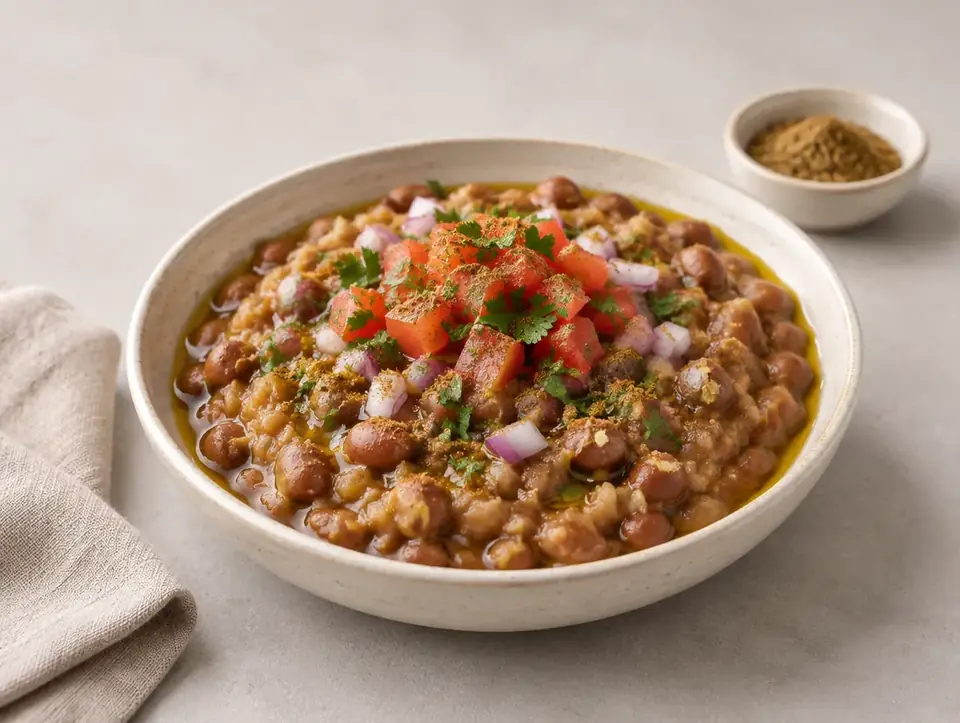
Small brown favas collapsed overnight, dressed hot with oil, lemon and cumin.
At a glance.
Ful Medames comes from Egypt · Fuul and appears in The Breakfast Atlas, in the chapter Breakfast Around the World. It serves 4, takes about 2 hr 30 min, and uses 18 ingredients and 10 steps.
- Yield
- Serves 4
- Method
- Stovetop
- Time
- 2 hr 30 min
Ingredients
Tap an ingredient to tick it off.
- For the beans
- For the dressing
- For the tahini sauce and the table
Method
-
Cover the dried favas with cold water by 8 cm, stir in the bicarbonate of soda, and leave 12–18 hours. The alkali softens the skins, which on this bean are tough enough to stay leathery after hours of boiling.
-
Drain and rinse thoroughly — bicarbonate left in the cooking water gives a soapy taste and destroys thiamine. Put the beans in a deep pot with the fresh water, the red lentils and the bay leaf.
-
Bring to a boil, skim the gray foam, then drop to the barest simmer with the lid ajar. Cook 2–2½ hours, topping up with boiling water so the beans stay just covered.
-
Add no salt and no acid until the beans are soft. Both slow the breakdown of pectin in the cell walls, and a bean simmered in salted or lemony water can cook for four hours and still crunch.
-
The beans are ready when one crushes to a smooth paste between finger and thumb with no chalky core, and the lentils have vanished into a thick, khaki liquor. Fish out the bay leaf.
-
For the tinned shortcut, simmer the drained beans in 200 ml water for 15 minutes until heated through and beginning to break, then proceed identically. They are softer and blander, so raise the garlic and the lemon.
-
Mash directly in the pot with a potato masher, but only about half of it. Egyptian fuul is a deliberate mixture of textures — a coarse purée carrying whole beans, not a hummus.
-
Stir in the garlic paste, cumin, coriander, chile, olive oil, lemon juice, salt and pepper while the pot is still over low heat. Warm beans absorb a dressing; cold beans merely wear it.
-
Taste and correct. It should be assertively lemony and clearly cumin-scented, with the garlic raw enough to prickle. If it has stiffened, loosen with a ladle of cooking liquor rather than water.
-
Spoon into shallow bowls, make a well in each, and pour in more olive oil. Scatter tomato, onion and parsley over the top, tuck the egg quarters at the edge, add the tahini sauce, and serve with hot bread for scooping.
Cook’s notes
- The technique
- Long, low, undisturbed heat is what makes fuul taste like fuul. Held between 85 and 95°C for hours, the beans hydrate evenly and their pectin dissolves without the agitation of a rolling boil, which shears the skins off and clouds the pot. The narrow-necked qidra was engineered for exactly this: minimal evaporation, no stirring, and a heat source that fades overnight rather than surges.
- Make ahead
- Cooked plain beans keep five days refrigerated in their liquor and freeze three months, which is the sensible way to live with this dish. Dress only the portion you are eating. Reheat with a splash of liquor over low heat, then add fresh garlic, lemon and oil at the last moment.
- Troubleshooting
- Beans still hard after three hours — they were old, the water was hard, or salt went in early. Soapy aftertaste — the soaking water was not rinsed away. Flat and heavy on the plate — under-acidified, so add lemon in stages. Gluey texture — mashed too far; keep a third of the beans whole.
- Variations
- Levantine ful mudammas, from Damascus to Nablus, mixes in chickpeas and finishes with tahini and a heavy hand of parsley. Sudanese ful is enriched with peanut oil and crumbled white jibna, sometimes with a hard-boiled egg mashed straight in. Cairene carts sell ful iskandarani, cooked with tomato, cumin and chile in the pot.
- Serve with
- Ta'amiya — Egypt's falafel, made from skinned dried favas rather than chickpeas and blitzed with enough parsley, coriander and dill to come out green inside — is the standard companion, with pickled turnips, hot bread and sweet black tea. Made in full within this recipe — Ful Dressing, Tahini Sauce. Also listed in the Component Index at the back.

Where it comes from
Fava beans are among the oldest things Egyptians have eaten. Carbonized favas turn up in archaeological deposits from pharaonic sites, and the bean was a staple crop of the Nile valley long before the Arab conquest; the second half of the name is often traced to a Coptic root meaning buried, which would describe the cooking rather than the burial of anything, though the etymology is argued over. The method has survived essentially unchanged. Beans go into a qidra — a bulbous copper or aluminum pot with a narrow neck that slows evaporation — and sit over embers or in the banked fire of a public bathhouse or bakery all night, so they are ready at dawn. In Cairo and Alexandria they are sold from the fuul cart, a handbarrow carrying an urn of that same shape, mashed to order and dressed while you wait. Fuul carries the working day: it is cheap, extremely filling, and eaten most intensively at suhoor during Ramadan, when it has to hold a person until sunset.
Ful Medames: quick answers
How long does Ful Medames take?
About 2 hr 30 min.
How many does this Ful Medames recipe make?
This recipe serves 4.
Where does Ful Medames come from?
Fava beans are among the oldest things Egyptians have eaten. Carbonized favas turn up in archaeological deposits from pharaonic sites, and the bean was a staple crop of the Nile valley long before the Arab conquest; the second half of the name is often traced to a Coptic root meaning buried, which would describe the cooking rather than the burial of anything, though the etymology is argued over. The method has survived essentially unchanged. Beans go into a qidra — a bulbous copper or aluminum pot with a narrow neck that slows evaporation — and sit over embers or in the banked fire of a public bathhouse or bakery all night, so they are ready at dawn. In Cairo and Alexandria they are sold from the fuul cart, a handbarrow carrying an urn of that same shape, mashed to order and dressed while you wait. Fuul carries the working day: it is cheap, extremely filling, and eaten most intensively at suhoor during Ramadan, when it has to hold a person until sunset.
More in Breakfast Around the World





https://www.atlasserie.com/recipes/breakfast/ful-medames/