China · Cantonese Jook · 36.75° N, 103.42° E
Congee
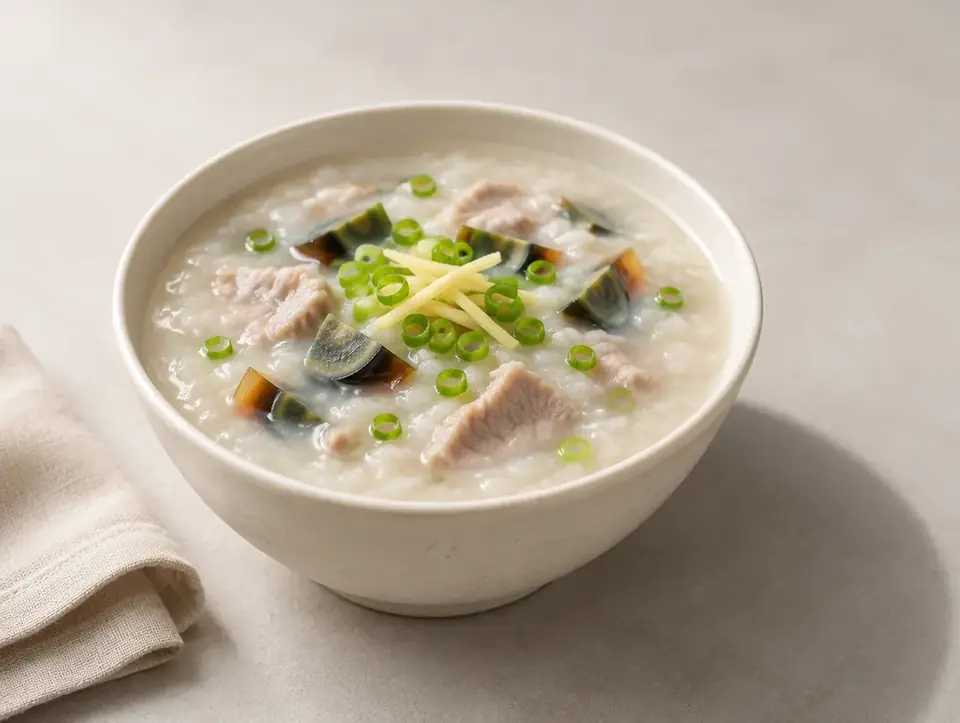
Cantonese jook simmered until the rice collapses, with century egg and pork.
At a glance.
Congee comes from China · Cantonese Jook and appears in The Breakfast Atlas, in the chapter Oats, Grains & Porridge. It serves 4, takes about 2 hours, and uses 19 ingredients and 10 steps.
- Yield
- Serves 4
- Method
- Stovetop
- Time
- 2 hours
Ingredients
Tap an ingredient to tick it off.
- For the jook
- For the marinated pork and century egg
- To serve
Method
-
Rinse the rice in three changes of cold water until it runs nearly clear, then drain. Toss it with the teaspoon of oil and the half teaspoon of salt and leave for 30 minutes.
-
That rest is the shortcut worth knowing. Oil and salt weaken the surface of each grain so it breaks down in half the time; freezing rinsed wet rice overnight does the same with ice crystals.
-
Mix the pork with the soy, Shaoxing, cornstarch, sesame oil and white pepper and refrigerate while the jook cooks. The cornstarch keeps the slices tender when they hit the hot pot.
-
Bring the water to a hard boil in a large heavy pot, add the rice and ginger and stir once. One part rice to roughly ten parts liquid is what allows total collapse.
-
Simmer with the lid ajar for 75–90 minutes, stirring thoroughly every 15 minutes and scraping the base. Rice sticks and scorches long before you can smell it.
-
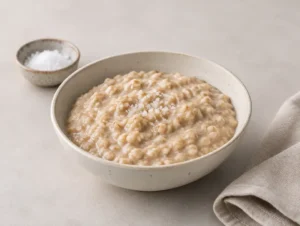
Watch for the change rather than the clock. It is right when no whole grain remains, the surface has a faint sheen, and a spoonful poured back falls as a single ribbon.
-
Season with sea salt and white pepper. If it has thickened past pourable, whisk in boiling water 100 ml at a time; cold water dulls the pot and makes it separate.
-
Slide the pork in, stir once and cook 4–5 minutes until the slices are opaque throughout with no pink remaining; pork should reach 63°C at the center.
-
Stir half the century egg through so it dissolves slightly and lends its dark, mineral savor, keeping the rest to place on top of the bowls.
-
Ladle into deep bowls, arrange the reserved egg, scallions, coriander and fried shallots over the surface, and serve with warm youtiao and soy sauce for dipping and tearing.
Cook’s notes
- The technique
- Collapse is the goal, and it comes from ratio and pre-treatment rather than force. At one part rice to ten parts water the grains have room to swell, shed amylose into the liquid and finally disintegrate; at one to six they thicken and set before they break. The oil-and-salt rest, or a night in the freezer, damages the grain surface in advance so starch escapes faster. Stir often — a scorched base taints the whole pot.
- Make ahead
- The plain jook base keeps four days refrigerated and freezes two months, though it thickens to a solid; reheat with boiling water, whisking. Cook the pork and egg fresh rather than reheating them. Rice can be rinsed, drained and frozen weeks ahead for the fast version.
- Troubleshooting
- Grains still intact after 90 minutes — the pot boiled dry and was topped up with cold water, or the rice was long-grain rather than jasmine. Scorched base — heat too high, stirring too rare. Watery and separated — it was left to stand; whisk hard over low heat and it will come back together.
- Variations
- Fish jook uses sliced sea bass or grouper added off the heat for 90 seconds. Sang yu juk, made with grass carp, is the classic Guangzhou bowl. A vegetarian version simmers dried shiitake and kombu into the base and finishes with silken tofu and preserved mustard greens instead of pork.
- Serve with
- Youtiao is the traditional partner, torn and dropped in at the last second. Hot jasmine tea is the drink, though in Hong Kong a glass of soy milk is equally common. Keep saucers of chilli oil and soy on the table. Made in full within this recipe — Marinated Pork and Century Egg. Also listed in the Component Index at the back.

Where it comes from
Rice gruel is among the oldest continuously eaten dishes in China, recorded in texts from the Zhou period and treated in later medical writing as food that restores rather than merely fills. Cantonese cooks pushed it furthest. In Guangdong and Hong Kong, jook is simmered until the grains disintegrate into a white, faintly glossy suspension with no rice left to see, and whole shops sell nothing else — the jook houses that open before dawn and the dai pai dong stalls that fed market workers. The canonical bowl is pei daan sau yuk juk, century egg and salted pork, eaten with a length of youtiao torn into it so the fried dough softens on one side and stays crisp on the other. Its social role is specific and still active: jook is what you are given when you are ill, what a new mother is fed, what is served to the very young and very old, and what appears at the end of a long night.
Congee: quick answers
How long does Congee take?
About 2 hours.
How many does this Congee recipe make?
This recipe serves 4.
Where does Congee come from?
Rice gruel is among the oldest continuously eaten dishes in China, recorded in texts from the Zhou period and treated in later medical writing as food that restores rather than merely fills. Cantonese cooks pushed it furthest. In Guangdong and Hong Kong, jook is simmered until the grains disintegrate into a white, faintly glossy suspension with no rice left to see, and whole shops sell nothing else — the jook houses that open before dawn and the dai pai dong stalls that fed market workers. The canonical bowl is pei daan sau yuk juk, century egg and salted pork, eaten with a length of youtiao torn into it so the fried dough softens on one side and stays crisp on the other. Its social role is specific and still active: jook is what you are given when you are ill, what a new mother is fed, what is served to the very young and very old, and what appears at the end of a long night.
More from China
More in Oats, Grains & Porridge


https://www.atlasserie.com/recipes/breakfast/congee/