
Britain · Leftovers Cookery · 53.77° N, 2.57° W
Bubble and Squeak
Monday's dish: Sunday's potato and cabbage fried into one crisp cake.
At a glance.
Bubble and Squeak comes from Britain · Leftovers Cookery and appears in The Breakfast Atlas, in the chapter Bacon, Sausage & Hash. It serves 4, takes about 35 minutes, and uses 10 ingredients and 8 steps.
- Yield
- Serves 4
- Method
- Stovetop
- Time
- 35 minutes
Ingredients
Tap an ingredient to tick it off.
Method
-
Melt 15 g of the dripping in a 24 cm heavy skillet and cook the onion gently for 8 minutes, until soft and sweet but not colored. Scrape it into a large bowl and wipe the pan.
-
Squeeze the cooked greens hard in your hands or in a tea towel. Cabbage holds a surprising amount of water, and water is the only thing standing between you and a crust.
-
Add the chopped greens and the cold potato to the softened onion, with the black pepper, grated nutmeg and the Worcestershire sauce if you are using it.
-
Fold the mixture together with a spatula in a dozen strokes. Stop while it is still streaky — a uniform purée cooks into a dense pancake with no texture.
-
If the mixture will not hold a loose shape in your hand, work in the flour a tablespoon at a time until it just does, and no further.
-
Heat the remaining 25 g dripping with the oil in the same pan over medium until it shimmers, then tip in the mixture and press it into an even cake about 2 cm deep, leaving the edge free rather than pushing it up the side.
-
Cook undisturbed 8–10 minutes. You will smell toasting before you see anything; when a browned edge appears all round and the cake slides when the pan is shaken, the base is set.
-
Loosen with a palette knife, slide the cake onto a plate, invert a second plate over it and flip. Add the extra fat, slide the cake back in and cook 6–8 minutes more, then turn onto a board, salt and cut into wedges.
Cook’s notes
- The technique
- Dryness decides everything. Every gram of water in the cabbage or the mash must boil off before the surface can climb past 100°C and start browning, and while it does the cake steams itself soft. Squeeze the greens until no more liquid comes, use cold potato rather than warm, and leave the cake alone through the whole first side so a continuous crust can form.
- Make ahead
- This is a make-ahead dish by definition — the potato and greens should already be a day old and cold from the fridge. Assemble the mixture the night before and refrigerate; it fries better chilled. Cooked wedges reheat in a 200°C oven in 8 minutes.
- Troubleshooting
- Collapses on the flip — too wet, or flipped before the base crusted; give it three more minutes. Pale and greasy — the fat was not hot when the mixture went in. Dense and pasty — the mixture was overmixed into a purée; fold less next time.
- Variations
- Rumbledethumps, from the Scottish Borders, adds cheese and finishes under a grill. Colcannon keeps the mixture soft with butter and cream and a well of melted butter in the middle. A version with leftover roast parsnip and swede is closer to what most Sunday tables actually leave behind. Leftover mash alone, without greens, gives potato cakes rather than bubble.
- Serve with
- Cold roast beef and pickle, or a fried egg on top with brown sauce. Bacon on the side if the roast is long gone. Tea, or the last of Sunday's red wine.

Where it comes from
The name is onomatopoeic and entirely literal — the bubbling of fat in a hot pan and the squeak that cabbage makes as steam forces its way out between the leaves. The phrase appears in print by the 1760s, but the eighteenth- and nineteenth-century dish it named was not this one: early recipes mean boiled beef, sliced cold and fried with cabbage, with no potato at all. Potato displaced the beef through the nineteenth century as it became the cheap staple of the British working diet and as cold roast beef proved more valuable in a sandwich. What fixed the dish in the week was the domestic rhythm: a roast on Sunday, cold cuts and bubble on Monday, which was also washday and therefore a day when nobody had time to cook properly. Rationing between 1940 and 1954 turned that thrift into something close to a patriotic duty, and the dish has never quite lost the association. Scotland's rumbledethumps and Ireland's colcannon are close relatives, though both are usually served soft rather than fried to a crust.
Bubble and Squeak: quick answers
How long does Bubble and Squeak take?
About 35 minutes.
How many does this Bubble and Squeak recipe make?
This recipe serves 4.
Where does Bubble and Squeak come from?
The name is onomatopoeic and entirely literal — the bubbling of fat in a hot pan and the squeak that cabbage makes as steam forces its way out between the leaves. The phrase appears in print by the 1760s, but the eighteenth- and nineteenth-century dish it named was not this one: early recipes mean boiled beef, sliced cold and fried with cabbage, with no potato at all. Potato displaced the beef through the nineteenth century as it became the cheap staple of the British working diet and as cold roast beef proved more valuable in a sandwich. What fixed the dish in the week was the domestic rhythm: a roast on Sunday, cold cuts and bubble on Monday, which was also washday and therefore a day when nobody had time to cook properly. Rationing between 1940 and 1954 turned that thrift into something close to a patriotic duty, and the dish has never quite lost the association. Scotland's rumbledethumps and Ireland's colcannon are close relatives, though both are usually served soft rather than fried to a crust.
More from United Kingdom


More in Bacon, Sausage & Hash
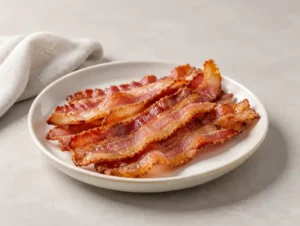 Crispy BaconBritain & United States · Cured Pork
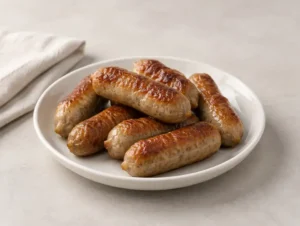 Breakfast Sausage LinksUnited States · Fresh Cased Sausage
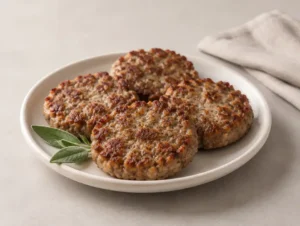 Sausage PattiesAmerican South & Midwest · Country Sausage
 Turkey Sausage PattiesUnited States · Lean Breakfast Meats
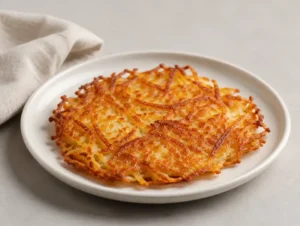 Hash BrownsUnited States · Diner Cooking
 Home FriesUnited States · Diner Griddle
https://www.atlasserie.com/recipes/breakfast/bubble-and-squeak/