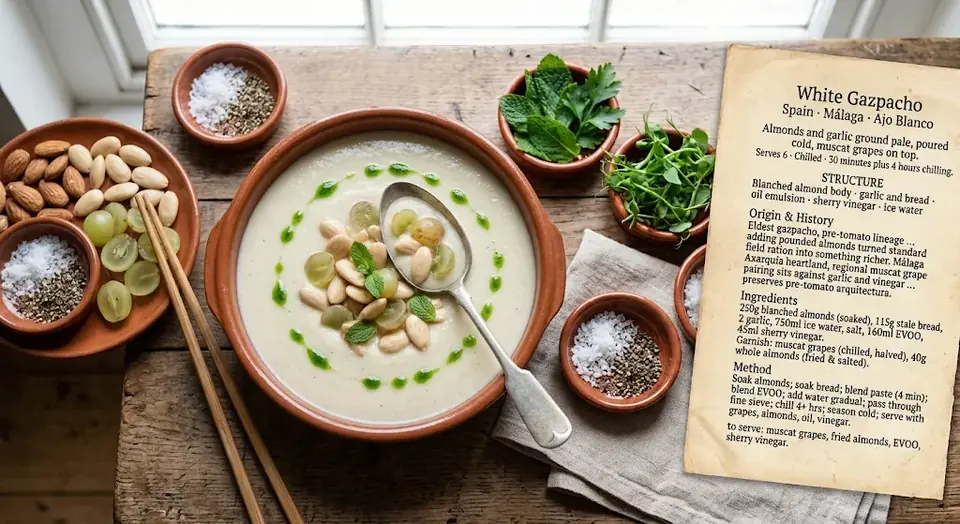
Spain · Málaga · Ajo Blanco · 40.32° N, 3.62° W
White Gazpacho
Almonds and garlic ground pale, poured cold, muscat grapes on top.
At a glance.
White Gazpacho comes from Spain · Málaga · Ajo Blanco and appears in The Soup Atlas, in the chapter Chilled & Light Soups. It serves 6, takes about 4 hr 30 min, and uses 12 ingredients and 10 steps.
- Yield
- Serves 6
- Method
- Chilled
- Time
- 4 hr 30 min
Ingredients
Tap an ingredient to tick it off.
- For the almond base
- For the emulsion
- For the grape and almond garnish
Method
-
Soak the blanched almonds in cold water for at least 4 hours, or overnight. Hydrated almonds shear apart in a blender instead of being battered into fragments, and the difference in the finished texture is larger than any amount of extra blending will make up.
-
Use blanched almonds and only sweet ones. Bitter almonds, sold in some countries for flavoring, contain amygdalin, which releases hydrogen cyanide when the nut is crushed and wetted — they have no place in a raw, uncooked preparation like this.
-
Fry the whole almonds for the garnish in a tablespoon of oil over medium heat for 3–4 minutes, moving them constantly until they are golden. Drain them on paper, salt them while hot, and leave them to cool and harden.
-
Tear the bread, soak it in cold water for 10 minutes and squeeze it out firmly. It contributes body and, more usefully, the starch that helps hold the oil in suspension later. Without it the soup is thinner and quicker to separate.
-
Blend the drained almonds, squeezed bread, garlic and salt with 250 ml of the ice water until you have a thick, pale paste. Then keep blending. Three to four minutes at full speed is not excessive; stop the machine twice and scrape the sides down.
-
Test it between finger and thumb. If you can feel any grain at all, blend for another minute. A pale soup offers a coarse almond fragment nowhere to hide, and grittiness is the single most common fault in a home ajo blanco.
-
With the machine still running, pour the olive oil in a thin, steady thread over about a minute. The paste will lighten, thicken and take on a satin sheen as the oil breaks into droplets fine enough for the almond protein and bread starch to coat and hold.
-
Add the sherry vinegar, then let the soup down with the remaining ice water in two or three additions until it runs like thin cream. Adding water gradually keeps the emulsion intact; a flood of water all at once thins it past the point where it can hold.
-
Pass it through a fine sieve into a jug, pressing with a ladle, and discard the small amount of almond grit left behind. Cover and chill for at least 4 hours, until it is thoroughly cold and has thickened slightly.
-
Taste it cold. It will want more salt, and it may want another few drops of vinegar; the garlic, meanwhile, will have grown stronger than it was, so never add more at this stage. Serve in chilled bowls with halved grapes, fried almonds, oil and a drop of vinegar.
Cook’s notes
- The technique
- An almond is roughly half fat, and that fat is the engine of this soup. Ground fine enough, the nut supplies both the oil-in-water emulsion's internal phase and much of what stabilizes it, since almond proteins gather at the boundary between fat and water and hold droplets apart. Fineness is therefore not a cosmetic matter. Particles above about 30 microns register as grit on the tongue, and once you can feel them in a cold soup they are all you notice. Soaking softens the cell walls, a long blend does the shearing, and the sieve catches what escaped.
- Make ahead
- It is better made a day ahead, when the almond flavor rounds out and the bread has fully hydrated. It holds two days refrigerated, covered, though the garlic strengthens noticeably by the second, so start with one clove if you intend to keep it. It does not freeze; the emulsion breaks and the almond turns mealy. Whisk before serving if it has settled.
- Troubleshooting
- Gritty — under-soaked or under-blended almonds, and the sieve will only mask it. Sharp and burning — too much raw garlic; make a second batch without any and combine them. Split, with oil on the surface — the water went in too fast after the oil; re-blend with a spoonful of soaked bread. Grey rather than white — the almonds were not blanched, or the bread had crusts left on.
- Variations
- Extremadura and Córdoba make versions with pine nuts or walnuts, which are sweeter and darker. Some Málaga cooks use fewer almonds and more bread, giving a thinner, more bread-led soup. Chilled honeydew or salted fried aubergine replace the grapes in modern restaurant versions. A little of the almond soaking water blended in adds body without diluting flavor.
- To serve and keep
- Serve very cold in shallow white bowls, so the grapes and the oil show, or in small glasses as an aperitif. Muscat grapes are the traditional garnish and worth seeking out. Drink a dry Málaga white or a cold fino; a sweet Moscatel alongside repeats the grape deliberately. Made in full within this recipe — Soaked Almond and Bread Paste, Olive Oil Emulsion, Fried Almond and Grape Garnish. Also listed in the Component Index at the back.

Where it comes from
Ajo blanco is the eldest of the three gazpachos in this chapter, and the lineage runs in one direction only. Almonds have been cultivated in southern Spain since antiquity and were central to the agriculture and cooking of Al-Andalus, where ground almonds thinned with water served as a milk substitute across the medieval Mediterranean, in Christian Lenten kitchens as much as in Muslim ones. Bread, garlic, oil, vinegar and water were already the standard cold field ration; adding pounded almonds turned it into something richer, and the result is documented in Andalusia long before the tomato was eaten there. Málaga is its heartland, and specifically the Axarquía, the hill country east of the city where muscat grapes are grown for raisins and sweet wine. The pairing with those grapes is old, regional and exact: the fruit is heavily perfumed and low in acid, which sits against the garlic and vinegar rather than repeating them. Almuñécar in Granada province holds an annual ajoblanco festival. Where the bowl at 76 preserves the pre-tomato architecture, this one preserves the pre-tomato ingredient list too.
White Gazpacho: quick answers
How long does White Gazpacho take?
About 4 hr 30 min.
How many does this White Gazpacho recipe make?
This recipe serves 6.
Where does White Gazpacho come from?
Ajo blanco is the eldest of the three gazpachos in this chapter, and the lineage runs in one direction only. Almonds have been cultivated in southern Spain since antiquity and were central to the agriculture and cooking of Al-Andalus, where ground almonds thinned with water served as a milk substitute across the medieval Mediterranean, in Christian Lenten kitchens as much as in Muslim ones. Bread, garlic, oil, vinegar and water were already the standard cold field ration; adding pounded almonds turned it into something richer, and the result is documented in Andalusia long before the tomato was eaten there. Málaga is its heartland, and specifically the Axarquía, the hill country east of the city where muscat grapes are grown for raisins and sweet wine. The pairing with those grapes is old, regional and exact: the fruit is heavily perfumed and low in acid, which sits against the garlic and vinegar rather than repeating them. Almuñécar in Granada province holds an annual ajoblanco festival. Where the bowl at 76 preserves the pre-tomato architecture, this one preserves the pre-tomato ingredient list too.
More from Spain



More in Chilled & Light Soups
https://www.atlasserie.com/recipes/soup/white-gazpacho/