Italy · Tuscany · 43.43° N, 12.37° E
Tuscan Bean Soup
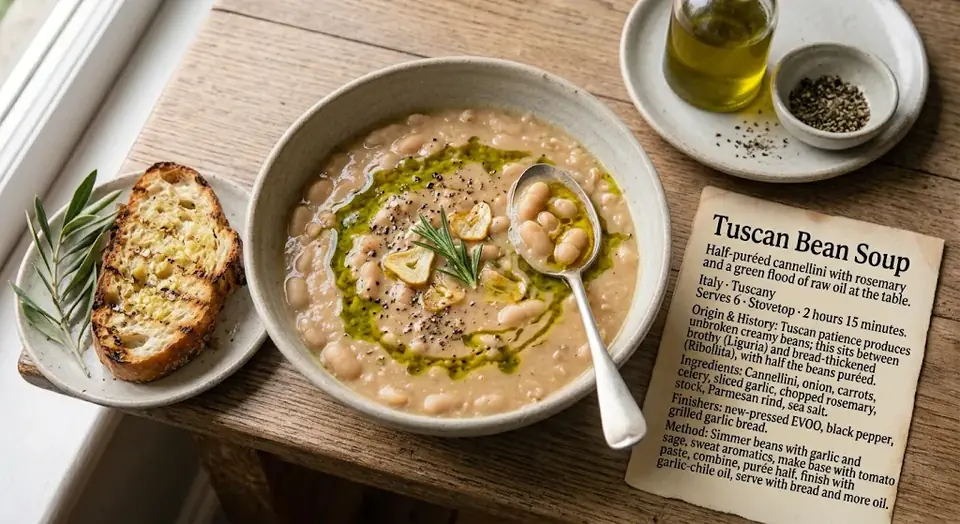
Half-puréed cannellini with rosemary and a green flood of raw oil at the table.
At a glance.
Tuscan Bean Soup comes from Italy · Tuscany and appears in The Soup Atlas, in the chapter Beans, Lentils & Grains. It serves 6, takes about 2 hr 15 min, and uses 23 ingredients and 10 steps.
- Yield
- Serves 6
- Method
- Stovetop
- Time
- 2 hr 15 min
Ingredients
Tap an ingredient to tick it off.
- For the beans
- For the soup
- For the finishing garlic oil
- At the table
Method
-
Drain and rinse the soaked beans, then put them in a heavy pot with the fresh water, crushed garlic cloves, sage and the 30 ml of oil. Bring them slowly to the very edge of a simmer — you want a bubble breaking every few seconds, no more — and hold them there.
-
Cook for 60–90 minutes, lid ajar, until a bean crushes to cream between two fingers with no chalk in the middle and no resistance in the skin. Never let them boil hard. Skins split, starch escapes, and what should be creamy turns mealy and cloudy.
-
Leave the beans to cool in their liquid while you build the base; they will keep absorbing it and seasoning themselves. Reserve all of that liquid, which is starchy and worth more to this soup than an equal amount of stock.
-
Warm the 45 ml of oil in a wide pot over medium-low heat and cook the onion, carrot and celery for 12 minutes, stirring, until soft, sweet and beginning to take a little color at the edges.
-
Add the six sliced garlic cloves and the chopped rosemary and cook for 90 seconds. Stir in the tomato paste and cook 2 minutes more, until it darkens to brick and the pot smells resinous from the rosemary.
-
Add the beans with 500 ml of their liquid, the stock and the Parmesan rind. Simmer gently, uncovered, for 25 minutes, so the flavors settle together. Keep the heat low for the same reason as before.
-
Remove the rind. Blend half the soup until entirely smooth — jug a third full, center cap out, folded towel over the hole — and stir it back into the whole beans. The result should be thick enough that a spoon dragged across the surface leaves a trail that closes slowly.
-
Season with the salt and taste, then taste again a minute later. Beans swallow salt, and a pot this size will usually take a good deal more than the two teaspoons listed. Grind in plenty of black pepper.
-
Make the finishing oil. Put the 60 ml of extra virgin oil, the paper-thin garlic, chile flakes and rosemary in a small cold pan over low heat. Let it come up slowly for 4–5 minutes, until the garlic is pale gold and the oil fragrant, then pull it off.
-
Stir most of the garlic oil into the pot and keep some back. Ladle into bowls, spoon the reserved oil over each, then add still more raw new-pressed oil on top. Serve with the grilled garlic-rubbed bread, either alongside or set in the base of the bowl.
Cook’s notes
- The technique
- Old beans never soften, and no technique rescues them. As dried beans sit — especially warm, dry and above about 25°C — their seed coats lose permeability and pectin in the cell walls cross-links with calcium and magnesium into a form that does not dissolve at cooking temperature. Food scientists call it the hard-to-cook defect, and once it sets in you can boil for six hours and still get chalk. Buy from a shop that turns stock over, look for a harvest year on the bag, and treat anything over eighteen months old as a lost cause. Hard tap water makes it worse; use filtered.
- Make ahead
- This is better on day two, when the puréed half has fully set into the whole beans. It keeps five days refrigerated and freezes for four months. It thickens to a paste when cold: reheat gently with hot stock or reserved bean liquid whisked in, stirring from the base. Make the garlic oil fresh each time, since it dulls within a day.
- Troubleshooting
- Mealy and cloudy — the beans boiled instead of trembling. Chalky centers after two hours — the beans are too old, and the only fix is a new bag. Thin — blend more of the pot, or reduce it uncovered. Grainy after blending — the beans were not fully tender when they went in the jug. Bitter garlic oil — the pan was too hot, so start it cold and go slowly.
- Variations
- Zolfino or Sorana beans, if you can find them, give a finer, sweeter pot that needs less blending. Adding a sprig of sage and a strip of pork rind at the bean stage takes it toward the older farmhouse version. A spoonful of the soup blended with more oil and spread on toast becomes crostini di fagioli. Farro stirred in for the last twenty minutes makes it a fuller dish.
- To serve and keep
- Warm shallow bowls, grilled bread rubbed with garlic, and a bottle of the best oil you own left open on the table. Black pepper, no cheese. Drink a Chianti Classico or a Morellino di Scansano, and pour the oil again over the second helping. Made in full within this recipe — Slow-Simmered Cannellini, Blended Bean Purée, Garlic and Chile Finishing Oil. Also listed in the Component Index at the back.

Where it comes from
Tuscany cooks beans with a patience that borders on ceremony. The classic method, fagioli al fiasco, seals them in a straw-covered wine flask with oil, garlic and sage and stands it in the cooling embers of the fire overnight, so the beans never approach a boil and come out whole, creamy and unbroken. The region grows beans worth that trouble: the fagiolo di Sorana from the Pescia valley, silky and thin-skinned, and the small yellow zolfino of the Pratomagno hills, both of which have been pulled back from near-disappearance. The other half of the equation is oil. Tuscan olives are picked early and pressed green, giving an oil that is peppery, bitter and grassy, and in November the olio nuovo goes onto everything — including a bowl of beans, which exists partly as a way to eat it. Three bean soups in this chapter lean Tuscan and they are not interchangeable: ribollita at 48 is bread-thickened and cooked twice, the Ligurian pot at 52 is deliberately brothy with whole beans, and this one sits between them — no bread, no second day, half the beans puréed for a thick, spoon-coating body.
Tuscan Bean Soup: quick answers
How long does Tuscan Bean Soup take?
About 2 hr 15 min.
How many does this Tuscan Bean Soup recipe make?
This recipe serves 6.
Where does Tuscan Bean Soup come from?
Tuscany cooks beans with a patience that borders on ceremony. The classic method, fagioli al fiasco, seals them in a straw-covered wine flask with oil, garlic and sage and stands it in the cooling embers of the fire overnight, so the beans never approach a boil and come out whole, creamy and unbroken. The region grows beans worth that trouble: the fagiolo di Sorana from the Pescia valley, silky and thin-skinned, and the small yellow zolfino of the Pratomagno hills, both of which have been pulled back from near-disappearance. The other half of the equation is oil. Tuscan olives are picked early and pressed green, giving an oil that is peppery, bitter and grassy, and in November the olio nuovo goes onto everything — including a bowl of beans, which exists partly as a way to eat it. Three bean soups in this chapter lean Tuscan and they are not interchangeable: ribollita at 48 is bread-thickened and cooked twice, the Ligurian pot at 52 is deliberately brothy with whole beans, and this one sits between them — no bread, no second day, half the beans puréed for a thick, spoon-coating body.
More from Italy






More in Beans, Lentils & Grains



https://www.atlasserie.com/recipes/soup/tuscan-bean-soup/