Morocco · 29.82° N, 8.69° W
Pastilla
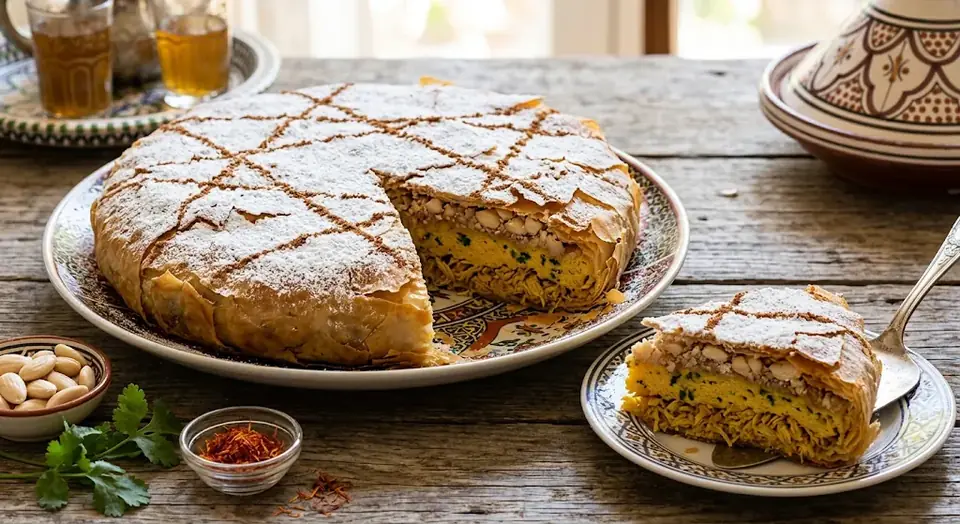
Saffron chicken shredded fine, a soft layer of eggs cooked in the reduced broth, and sugared almonds above them, sealed in crackling leaves and dusted white.
At a glance.
Pastilla comes from Morocco and appears in The Pie Atlas, in the chapter Pies Around the World. It serves 8, bakes at 375°F (190°C) for 35–40 minutes, and uses 12 ingredients and 8 steps.
- Yield
- Serves 8
- Method
- Oven
- Oven
- 375°F / 190°C
- Bake
- 35–40 minutes
Ingredients
Tap an ingredient to tick it off.
Method
-
Simmer the chicken, covered, with the grated onion, saffron, ginger, salt, 3 tbsp of the butter, and 1 cup (237 ml) of water for 45 minutes, until the meat pulls from the bone without resistance.
-
Lift the chicken out, cool it, and tear the meat along the grain into threads. Torn meat holds sauce in its frayed edges where knife-cut pieces shed it.
-
Boil the onions and broth left in the pan, uncovered, until almost no liquid moves when you tilt it, 15 to 20 minutes. Everything after this depends on a dry middle, because a wet one steams the pastry from the inside.
-
Lower the heat, pour in the beaten eggs and the cilantro, and stir constantly for 4 to 5 minutes until they set in small, moist curds. Take them off looking slightly underdone; they carry on firming in the pan.
-
Toast the almonds in a dry skillet 6 to 8 minutes, cool them, then pulse with the granulated sugar to a coarse rubble with pieces still recognizable.
-
Brush a 10 inch (25 cm) round pan with butter and lay in 6 sheets of filo in a fan, buttering each and letting each hang well over the rim. Keep the rest covered — an exposed sheet turns to parchment in about 3 minutes.
-
Spread the chicken over the base, the egg curds over that, the almonds last, then bring the overhang up and lay on the final 4 buttered sheets, tucking their edges down inside the pan wall.
-
Bake at 375°F (190°C) for 35 to 40 minutes, until deep gold and loose enough to slide when the pan is shaken. Rest 10 minutes, invert, dust heavily with confectioners' sugar, and draw lines of cinnamon across it.
Cook’s notes
- Good to know
- Warqa is cooked before it is used and goes into the oven already dry, so it needs far less added fat than filo, which arrives raw and depends on what you brush between the leaves. The almonds do structural work as well as flavoring, sitting between the wet fillings and the top sheets and taking up the steam that would soften them.

Where it comes from
Pastilla carries its Iberian past in its name, which comes from the Spanish word for a small pie, and the dish is traced to the Andalusi kitchens that moved south into Fez and Tetouan with Muslims and Moriscos leaving Spain. Its older filling is squab rather than chicken, and its proper wrapper is warqa, a pastry made by dabbing a wet, elastic dough onto a hot metal dome until a film lifts away; filo is the accepted stand-in outside Morocco. Sugar scattered over meat is a survival rather than a flourish — sweet and savory shared a plate routinely in medieval Islamic cooking.
Pastilla: quick answers
How long does Pastilla take to bake?
Pastilla bakes at 375°F (190°C) for 35–40 minutes. Use the visual cues in the method as well as the clock.
How many does this Pastilla recipe make?
This recipe serves 8.
Where does Pastilla come from?
Pastilla carries its Iberian past in its name, which comes from the Spanish word for a small pie, and the dish is traced to the Andalusi kitchens that moved south into Fez and Tetouan with Muslims and Moriscos leaving Spain. Its older filling is squab rather than chicken, and its proper wrapper is warqa, a pastry made by dabbing a wet, elastic dough onto a hot metal dome until a film lifts away; filo is the accepted stand-in outside Morocco. Sugar scattered over meat is a survival rather than a flourish — sweet and savory shared a plate routinely in medieval Islamic cooking.
What is the secret to a good Pastilla?
Build the pie the moment the fillings are cold and bake it the same day — left assembled overnight, the broth migrates into the base sheets and no oven brings them back.
More from Morocco
More in Pies Around the World
https://www.atlasserie.com/recipes/pie/pastilla/